
 There are many structures across the world that have pushed architectural limits to new heights in many ways and engineering feats designed to outdo everything that came before them. These buildings showcased the bold imagination of builders who gave life to their quirky imaginations, and people watched their results in awe. Here, we will discuss one such building that doesn’t compete for height or elegance, but for sheer physical dominance. It’s the Palace of the Parliament set in the heart of Bucharest, a structure that holds the title of the world’s heaviest building. More than a seat of governance, it was to show off this colossal symbol of power, excess, and uncompromising ambition. Weighing over four million tonnes, the palace remains both a technical wonder and a deeply political relic.The Palace of the Parliament traces its origins to Nicolae Ceaușescu, Romania’s former communist dictator. After a visit to North Korea in the early 1970s, Ceaușescu became captivated by monumental state architecture and sweeping urban layouts. This inspiration soon translated into an aggressive plan to reshape Bucharest through large-scale demolitions and redevelopment. Entire historic neighbourhoods were erased to create vast boulevards and imposing civic structures. At the centre of this transformation stood the House of the Republic, later renamed the People’s House, and eventually the Palace of the Parliament. Construction officially began in 1984, and Ceaușescu himself attended its inauguration, though the building remained unfinished at the time.
 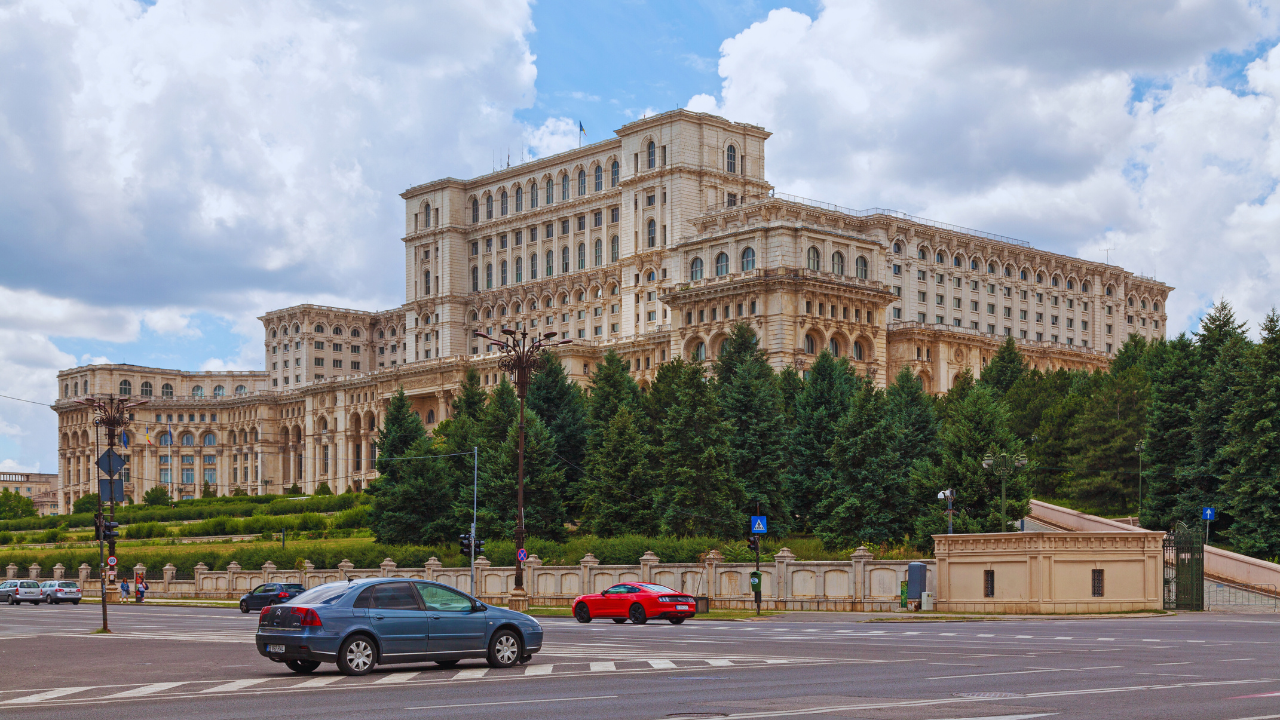 What truly distinguishes the Palace is not just its size, but its extraordinary mass. Constructed using approximately 700,000 tonnes of steel and bronze, one million cubic metres of marble, 900,000 cubic metres of wood, and 3,500 tonnes of crystal, the combined weight reaches an estimated 4.1 million tonnes. The structure rises 84 metres above ground, plunges 92 metres below it, and spans a floor area of 365,000 square metres. The pressure exerted by this enormous weight is so intense that the building reportedly sinks about six millimetres every year into Bucharest’s soil.Read more: No Birth Tourism permitted on visitor visas’, U.S. Embassy warns Indian visa applicantsThe project’s chief architect was Anca Petrescu, who was just 28 years old when she won the national design competition. She went on to lead a team of nearly 700 architects and oversee tens of thousands of workers. Construction stretched over 13 years, from 1984 to 1997, with up to 100,000 labourers working in rotating shifts at its peak. These workers included civilians, soldiers, and individuals reportedly subjected to forced labour. While official records acknowledge 27 deaths, unofficial accounts suggest the real number may have been far higher. Architecturally, the palace combines neoclassical elements with socialist realism—an aesthetic that continues to divide opinion.The Palace’s interior is just as opulent as its appearance. It has about 1,100 rooms, many of which are still unoccupied. Large halls, ornate stairs, and expansive galleries adorned with 480 chandeliers, 1,409 ceiling lights, enormously large handwoven rugs, and thick velvet drapes embroidered with silver and gold threads await visitors. The structure is a display of Romania’s natural riches, from locally harvested hardwoods to native marble, since nearly all of the materials were acquired from Romania.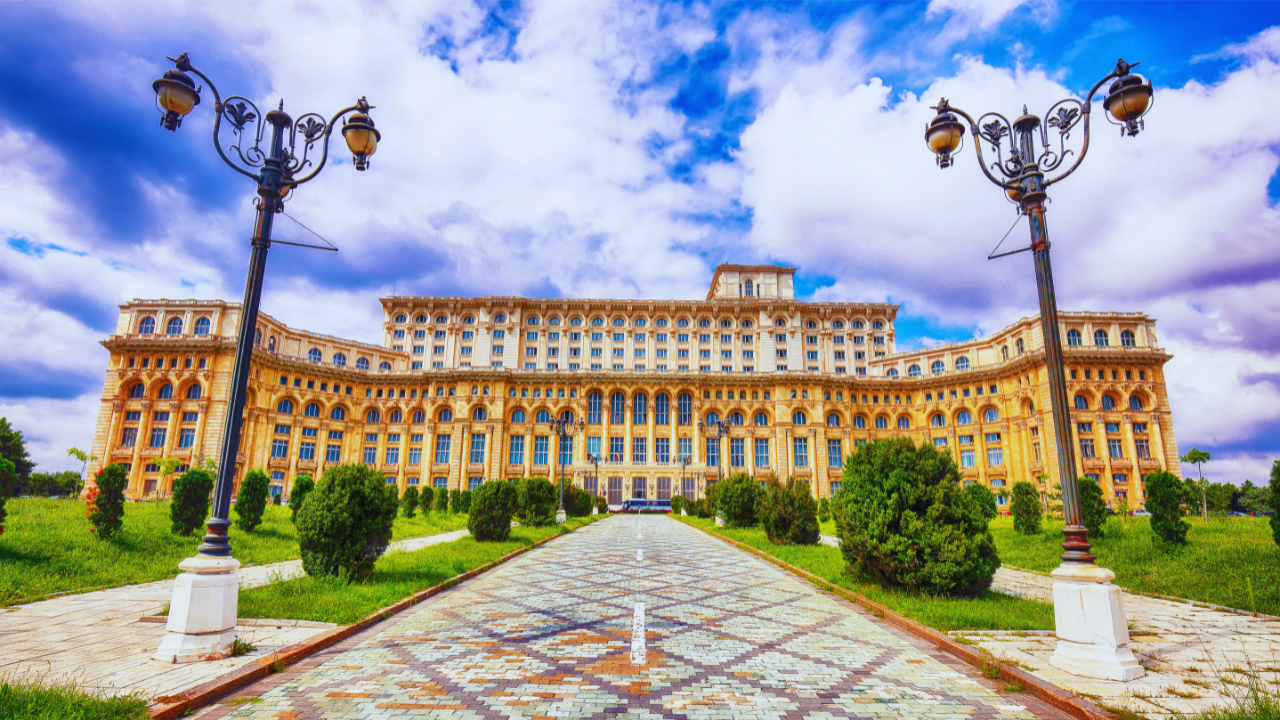
Too large for its own purpose
Today, the Palace of the Parliament houses Romania’s Senate, Chamber of Deputies, the Constitutional Court, and several museums, including the National Museum of Contemporary Art. Yet despite its vastness, only about 30% of the building is actively used. Valued at approximately €4 billion in 2020, it is considered the most expensive administrative building in the world. Maintenance costs remain staggering, with annual expenses exceeding $6 million just to heat and illuminate the structure.Read more: 10 cleanest countries in the world as per EPI index
An enduring and uneasy legacy
The Palace of the Parliament, one of Romania’s most popular tourist destinations, still evokes both wonder and unease. While many residents view it as a permanent reminder of totalitarian excess and human cost, tourists are in awe of its size. It is sometimes compared to the Great Pyramid of Giza, which it surpasses in volume, and is referred to as a “pharaonic” project. The Palace is still there, immovable, enormous, and impossible to ignore, even after the demise of its builder.