
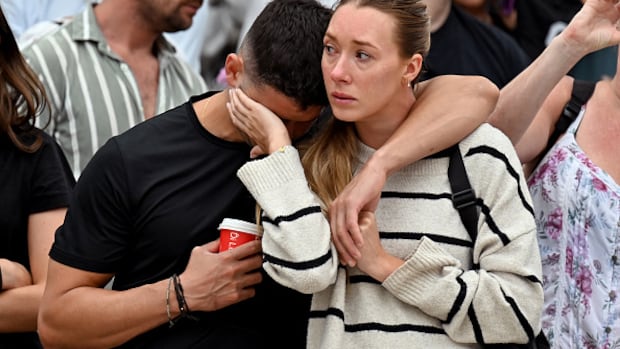
Australian Prime Minister Anthony Albanese on Monday proposed tougher national gun laws after a mass shooting targeted a Hanukkah celebration on Sydney’s Bondi Beach, leaving at least 15 people dead.
Albanese said he would propose new restrictions, including limiting the number of guns a licensed owner can obtain. His proposals were announced after the authorities revealed that the older of the two gunmen — who were a father and son — had held a gun licence for a decade and amassed his six guns legally.
“The government is prepared to take whatever action is necessary. Included in that is the need for tougher gun laws,” Albanese told reporters.
“People’s circumstances can change. People can be radicalized over a period of time. Licenses should not be in perpetuity,” he added.
At least 38 people were being treated in hospitals after the massacre on Sunday, when the two shooters fired indiscriminately on the beachfront festivities. Those killed included a 10-year-old girl, a rabbi and a Holocaust survivor.
WATCH | Attack was act of terrorism, says Australia’s government: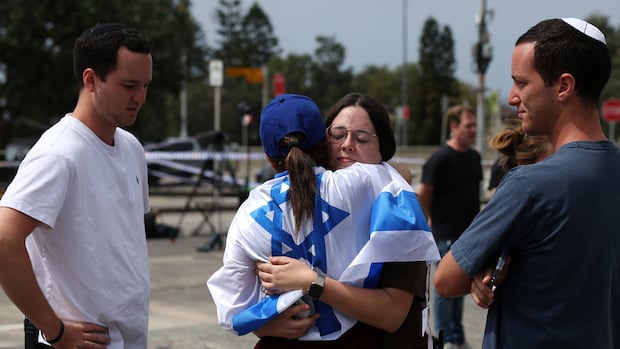
Deadly mass shooting at Hanukkah event in Australia
Officials in Australia say a father and son were behind a mass shooting at a Hanukkah event at Bondi Beach that killed at least 15 people and injured more than 40. One of the suspected shooters was killed by police and the other remains in hospital.
The horror at Australia’s most popular beach was the deadliest shooting in almost three decades in a country with strict gun control laws primarily aimed at removing rapid-fire rifles from circulation. Albanese called the massacre an act of antisemitic terrorism that struck at the heart of the nation.
He pledged swift change, planning on Monday afternoon to present his gun law proposals to a national cabinet meeting that includes state leaders. Some of the measures would also require state legislation.
“Some laws are commonwealth and some laws are implemented by the states,” the Australian leader said. “What we want to do is to make sure that we’re all completely on the same page.”
Christopher Minns, premier of New South Wales where Sydney is the state capital, agreed with Albanese that gun licenses should not be granted in perpetuity.
Minns said his state’s gun laws would change, but he could not yet detail how.
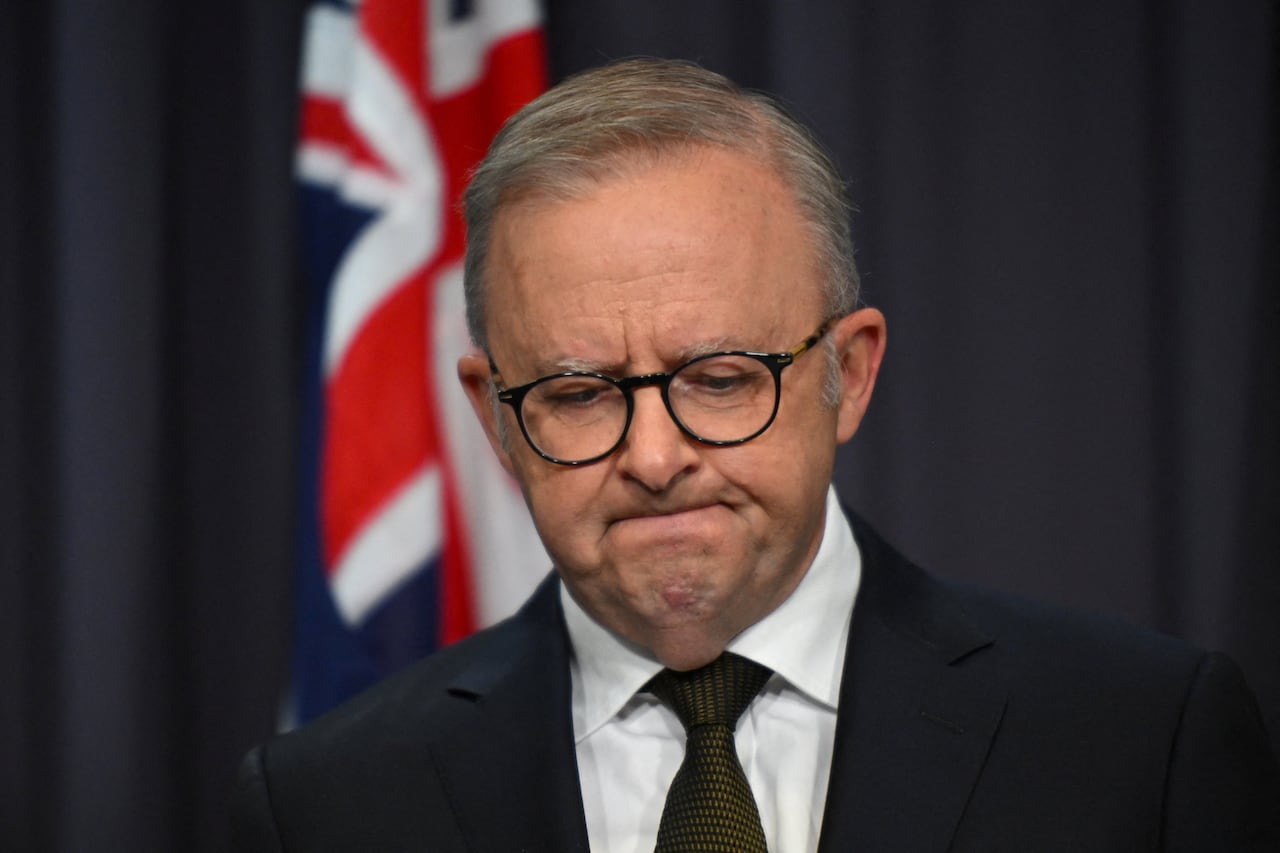 Australian Prime Minister Anthony Albanese Albanese called the massacre an act of antisemitic terrorism that struck at the heart of the nation. (Lukas Coch/Reuters)
“It means introducing a bill to Parliament to — I mean to be really blunt — make it more difficult to get these horrifying weapons that have no practical use in our community,” Minns told repoters.
Gun laws revised after 1996 massacre
“If you’re not a farmer, you’re not involved in agriculture, why do you need these massive weapons that put the public in danger and make life dangerous and difficult for New South Wales Police?” Minns asked.
Australia’s gun laws were revised after a 1996 massacre in the Tasmanian town of Port Arthur, where a lone gunman killed 35 people.
Meanwhile, the massacre provoked questions about whether Albanese and his government had done enough to curb rising antisemitism. Jewish leaders and the massacre’s survivors expressed fear and fury as they questioned why the men hadn’t been detected before they opened fire.
“There’s been a heap of inaction,” said Lawrence Stand, a Sydney man who raced to a Bar Mitzvah celebration in Bondi when the violence erupted to find his 12-year-old daughter. “But the people were warned about this. … And still not enough has been done by our government.”
“I think the federal government has made a number of missteps on antisemitism,” Alex Ryvchin, spokesperson for the Australian Council of Executive Jewry, told reporters gathered on Monday near the site of the massacre.
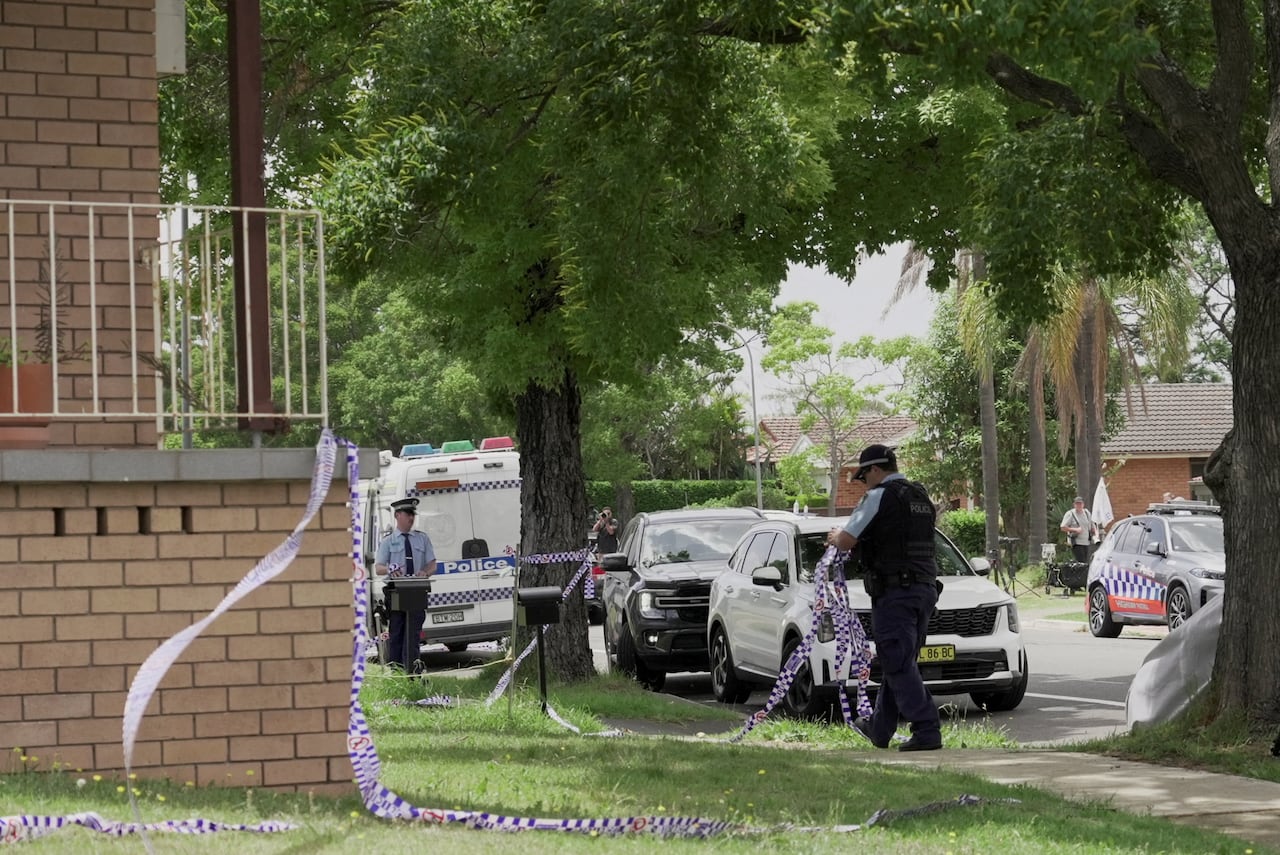 A police officer removes police tape from outside the house of the suspects of Sunday’s shooting at Bondi Beach near Sydney. (Alasdair Pal/Reuters)
“I think when an attack such as what we saw yesterday takes place the paramount and fundamental duty of government is the protection of its citizens, so there’s been an immense failure.”
An investigation was needed, Ryvchin said, into “how that was allowed to take place.” Those investigations were beginning to unfold Monday.
Shooter had gun licence
Little was publicly confirmed about the men. Police said they were a father and son but wouldn’t supply their names.
The father, 50, who was shot dead, had a gun licence that allowed him to legally acquire the six firearms recovered from his property and also held a gun club membership, New South Wales Police Commissioner Mal Lanyon said.
The particular gun licence he held entitled an adult with a “genuine reason” to own a rifle or shotgun. Accepted reasons include target shooting, recreational hunting and vermin control, but self-defense is not an accepted reason.
The man arrived in Australia in 1998 on a student visa, authorities said, and was an Australian resident when he died. Officials wouldn’t confirm what country he had migrated from.
His 24-year-old Australian-born son, who was shot and wounded, is being treated at a hospital. Lanyon said the man “may well” face criminal charges and police wouldn’t divulge what they knew about him to avoid marring a prosecution case against him.
Albanese confirmed that Australia’s main domestic spy agency, the Australian Security Intelligence Organization, had investigated the son for six months in 2019.
Australian Broadcasting Corp. reported that ASIO had examined the son’s ties to a Sydney-based Islamic State group cell. Albanese did not describe the associates, but said ASIO was interested in them rather than the son.
“He was examined on the basis of being associated with others and the assessment was made that there was no indication of any ongoing threat or threat of him engaging in violence,” Albanese said.