
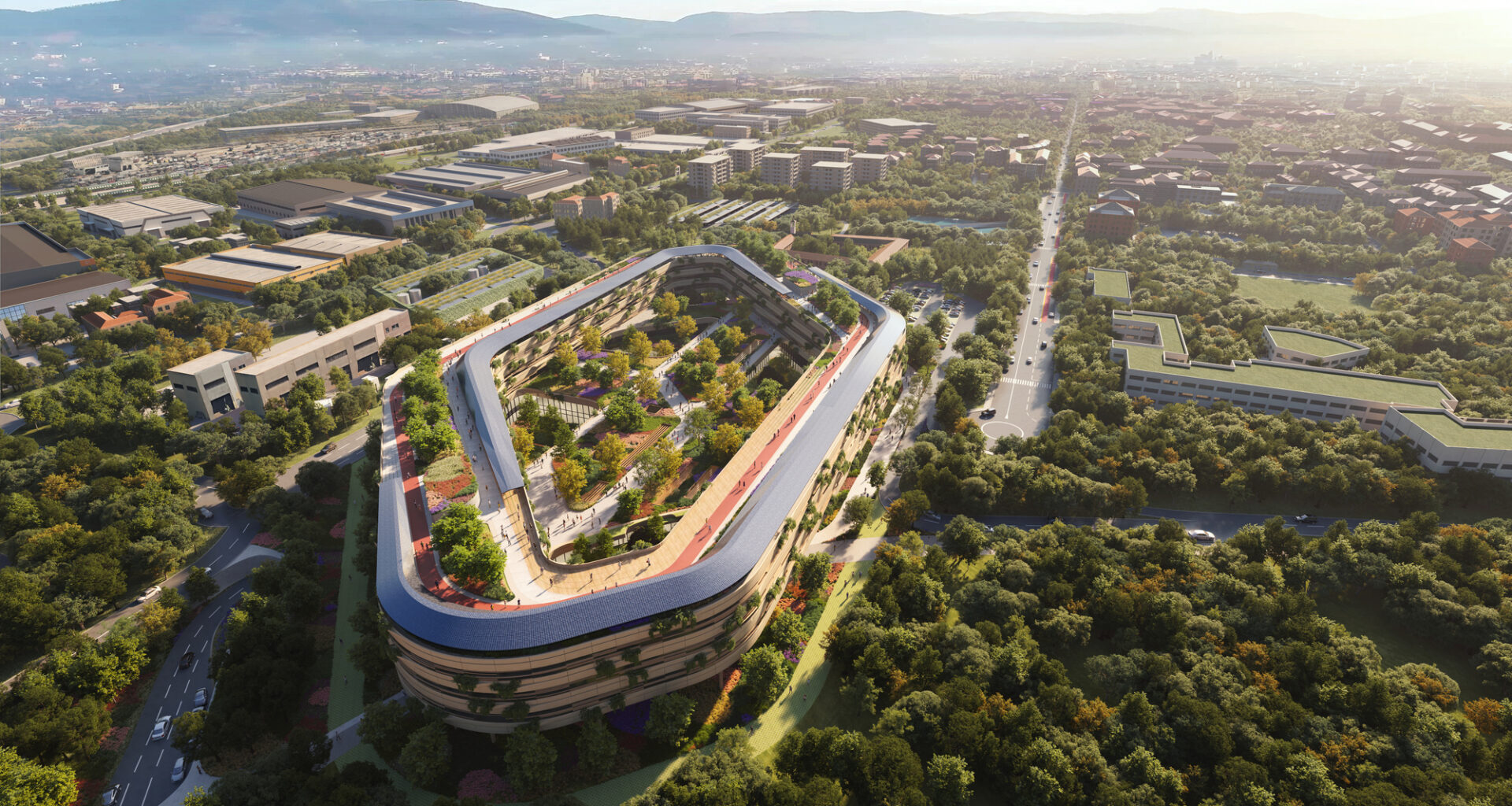
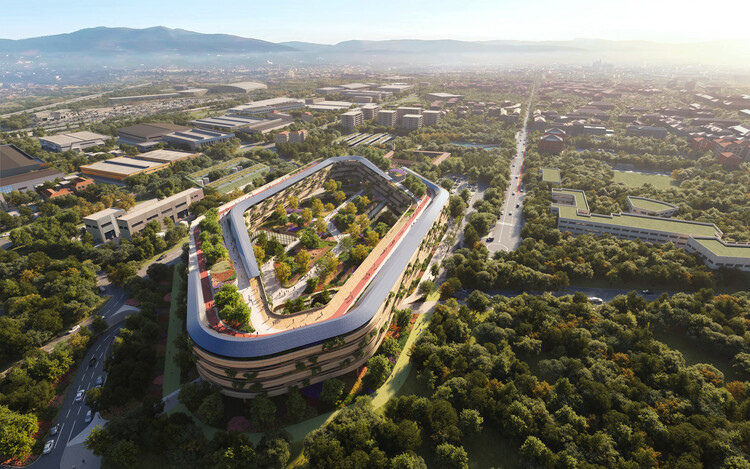
 Grande Ospedale della Malpensa, Italy, Render. Image © X Universe
Share
Or
https://www.archdaily.com/1037002/rina-led-team-with-zaha-hadid-architects-wins-malpensa-hospital-competition-in-italy
Zaha Hadid Architects, in collaboration with RINA as team leader, Studio Plicchi, WSP, STI Engineering, and BC Building Consulting, has won the international competition to design Malpensa Hospital (Grande Ospedale della Malpensa) in Italy. Commissioned by the Lombardy Regional Health Authority, the project will consolidate the existing Gallarate and Busto Arsizio hospitals into a single medical campus serving the area between Milan and Varese, with a catchment of nearly one million residents.
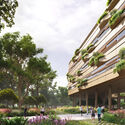
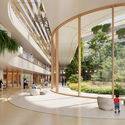
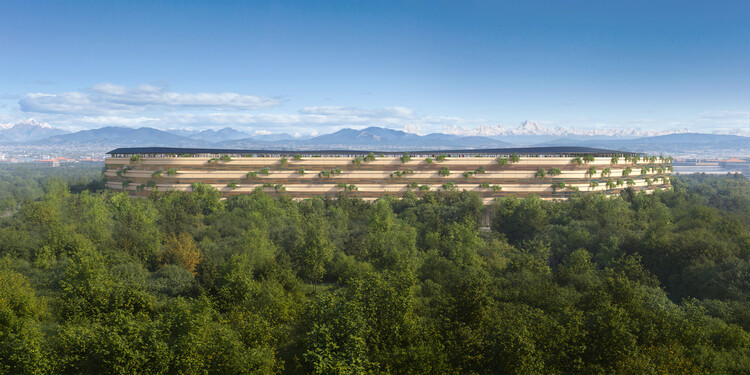 Grande Ospedale della Malpensa, Italy, Render. Image © X Universe
The new hospital is planned as a compact facility of approximately 90,000 square meters, organized across five above-ground levels and one basement. Spaces are arranged according to intensity of care, with emergency services, surgery, and critical care concentrated within a multifunctional operating block that integrates radiology, interventional, and diagnostic areas. The program also includes outpatient and inpatient services, maternal and infant care wards, diagnostic and therapy zones, rehabilitation areas, laboratories, logistics facilities, and first- and second-level clinics. All spaces are designed to allow for reconfiguration in response to future operational and technological requirements.
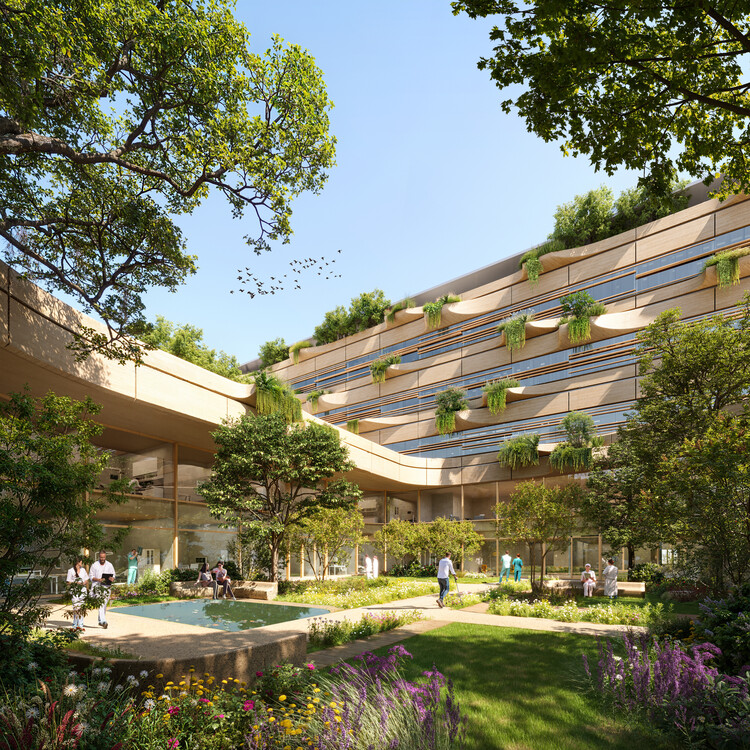 Grande Ospedale della Malpensa, Italy, Render. Image © X Universe
The hospital site is located within a landscape characterized by woodland and agricultural land that forms part of the Regional Ecological Network and lies near the Parco Regionale della Valle del Ticino. The landscape strategy retains existing woodland and introduces new wetlands, bioswales, and planted areas to support stormwater management and biodiversity. The historic Cascina dei Poveri, a rural complex dating to the 12th and 13th centuries, is preserved and incorporated into the campus layout.
Related Article Zaha Hadid Architects’ Danjiang Bridge Nears Completion Ahead of 2026 Opening in Taipei, Taiwan
Circulation within the hospital is structured through the separation of routes for patients, visitors, staff, and goods, to reduce cross-interference and support hygiene protocols. Dedicated elevators for medical materials, supplies, and waste are distributed throughout the building, alongside an automated delivery system intended to support internal logistics. At ground level, a central circulation spine functions as a public axis connecting the entrance plaza with landscaped outdoor areas.
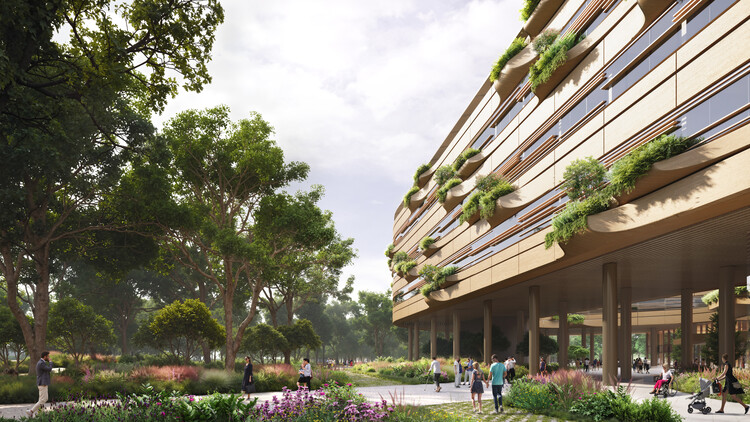 Grande Ospedale della Malpensa, Italy, Render. Image © X Universe
The facades are composed of modular aluminum rainscreen panels incorporating solar shading and integrated planters, selected for durability and recyclability. Interior finishes include natural materials such as wood and textiles. The building is designed to accommodate smart building management systems and digital twin technologies to support monitoring, maintenance, and energy optimization over time.
Interior spaces are designed to prioritize daylight access, acoustic control, and clear orientation. Courtyards, gardens, and rooftop terraces are incorporated throughout the campus, providing outdoor areas associated with patient recovery and staff use. Universal design measures, including barrier-free circulation, tactile maps, and multilingual signage, are integrated across the building. In addition to clinical functions, the hospital program includes areas intended for educational, social, and community-related activities.
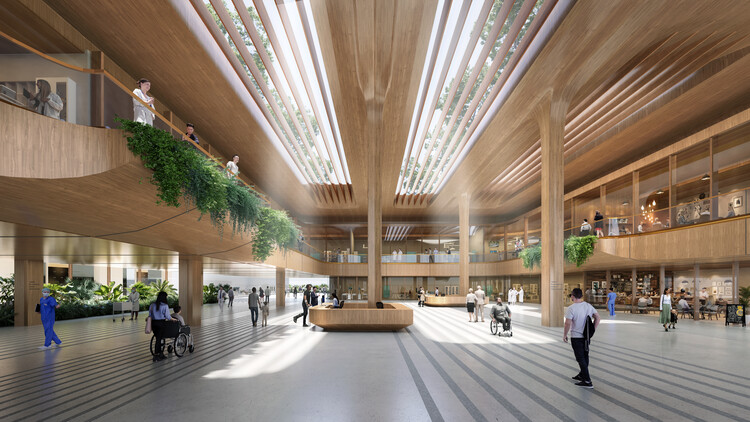 Grande Ospedale della Malpensa, Italy, Render. Image © X Universe
Environmental strategies include passive design measures, a high-performance building envelope, and integrated solar shading systems intended to reduce cooling demand. The project is designed to exceed CAM environmental performance requirements and includes a photovoltaic system exceeding 1 MWp, expected to supply approximately 25 percent of the hospital’s electricity demand. A hybrid heating system is planned with the capacity for future hydrogen integration. Construction methods include modular prefabrication, with material selection based on recycled content, low embodied carbon, and compliance with EPD and LCA standards.
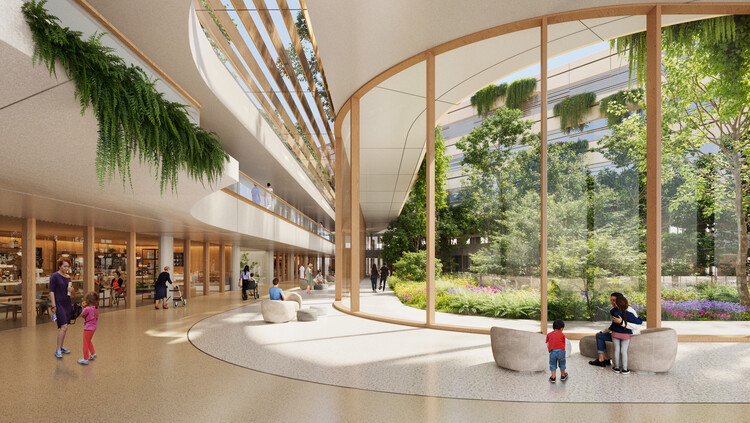 Grande Ospedale della Malpensa, Italy, Render. Image © X Universe
Malpensa Hospital will be connected to surrounding communities through dedicated access routes from Via Quintino Sella and SS33, as well as public transport links, cycling infrastructure, and pedestrian paths. The project is conceived as a consolidated healthcare facility that brings together clinical services, logistical infrastructure, and landscape systems within a single campus.
In other recent news from Zaha Hadid Architects, the Yidan Center in Shenzhen has recently topped out, marking a milestone in the development of the education-focused complex. In Taiwan, the firm’s Danjiang Bridge in Taipei, winner of the 2015 Danjiang Bridge International Competition, is progressing toward completion, with an opening scheduled for 2026. Meanwhile, in Dubai, Imtiaz Developments has unveiled Symphony Tower, a 42-storey residential project in the city’s Horizon district designed by Zaha Hadid Architects.