
An international criminal lawyer, a tragic loss, and the fight to build Africa’s cycling future
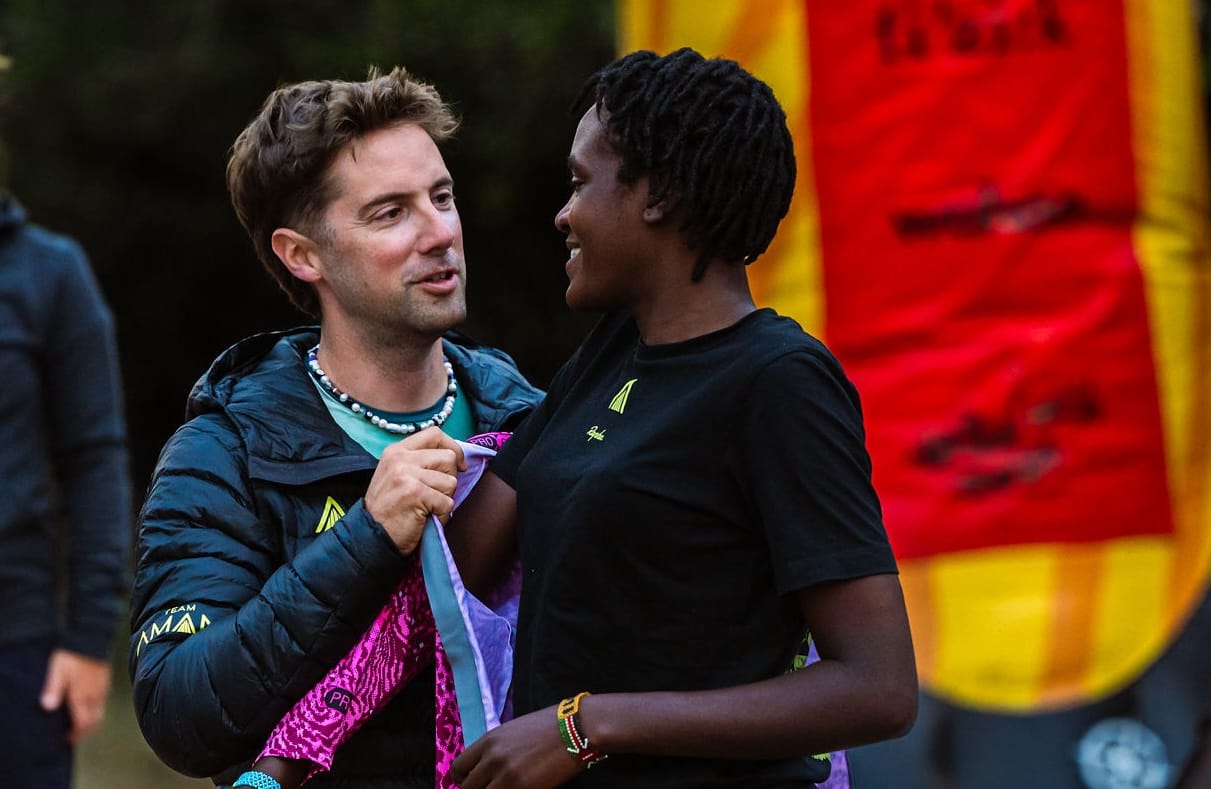
Mikel Delagrange and Xaverine Nirere

The first thing you need to know about Mikel Delagrange is that he never wanted this job.
The second thing is that he’s probably the only person in the world who could do it.
Sitting across from me, virtually, is a man who humbly calls himself the “head cheerleader” of the Amani Project, the groundbreaking initiative working to build Africa’s first UCI women’s team to race the Tour de France Femmes in 2028, and eventually to field an all-African squad at the Tour de France. But that modest self-description belies the weight he carries. Since the tragic death of the project’s founder, Sule Kangangi, in a high-speed crash at a gravel race in Vermont, Mikel has found himself thrust into the role of guiding what may be African cycling’s most ambitious project.
“Right after his funeral, we’re all just devastated and looking around the table like, do we continue this or not?” Mikel recalls. “And then I said, okay, if we’re going to keep doing this, and I was inspired by what they said, which of one of you is going to step up? And it doesn’t need to be one, because there are massive shoes to fill, but a number of you need to step up to take over some of these responsibilities.”
He pauses. “And that’s where it went quiet.”
An Unlikely Path to Kenyan Cycling
To understand the man now steering this ship requires rewinding to Miami, Florida, where Mikel grew up in the household of a Cuban mother and trial attorney stepfather who used the family dinner table as a practice jury.
“I just came at some point to admire the logic that went into it, the human approach, trying to be able to convey and get an emotive response from people concerning the plight of another human being,” Mikel explains.
That dinner table training would prove formative. After a college football injury ended his days as a wide-receiver and quarterback, Mikel pivoted to the world of cycling. But his professional trajectory remained laser-focused: nine years of education aimed at practicing international law. First Cambodia, where he met his wife while working on the Khmer Rouge tribunal. Then Nepal during the early 2000s civil war. Eventually, his wife got a job that brought the family to The Hague, Netherlands, where Mikel worked at the International Criminal Court.
It’s a theme that runs through everything about Mikel: the ability to exist between worlds, to see systems from the outside, to understand both the letter and spirit of what needs to change. These aren’t just useful skills for an international lawyer. They’re essential for someone trying to create the ecosystem that will build African cycling from the ground up.
The Genesis of a Movement
Team Amani didn’t emerge from a vacuum. It’s the continuation of a vision that Sule Kangangi had been nurturing for years. A dream rooted in his own journey from riding “Black Mamba” Chinese bikes on the roads of Kenya to becoming a professional cyclist.
“I always remember the day that I saw my first bike race,” Sule said in an interview preserved on Ian Boswell’s ‘Breakfast with Boz‘ podcast. “I was fascinated to see how those bikes were going that fast. I wanted to be like them. I wanted to be like one of those racers. From that moment on, I never looked back.”
But Sule understood something crucial: his own success, while meaningful, wasn’t enough. “I’ll not always be a professional cyclist,” he acknowledged. “So I have to try and think how I can involve myself in the community. I have ambitions to run a team someday.”
That ambition became Team Amani. With a name that means “peace” in Swahili, the project represents something far more comprehensive than a traditional development team. It’s an ecosystem designed to identify, nurture, and elevate African talent through a high-altitude training center in Kenya, participation in events like the Migration Gravel Race, and a pathway to the sport’s highest levels.
The ‘moonshot,’ as Mikel describes it? An all-African team at the Tour de France in ten years. A women’s team at the Tour de France Femmes within three years.
When Sule died, that vision could have died with him. Instead, Mikel found himself carrying it forward, even as he grappled with profound grief and the magnitude of what it meant to continue.
“I was completely destabilized by the loss of Sule,” he admits.
This post is for subscribers only
Subscribe now
Already have an account? Sign in
Did we do a good job with this story?
👍Yep
👎Nope