
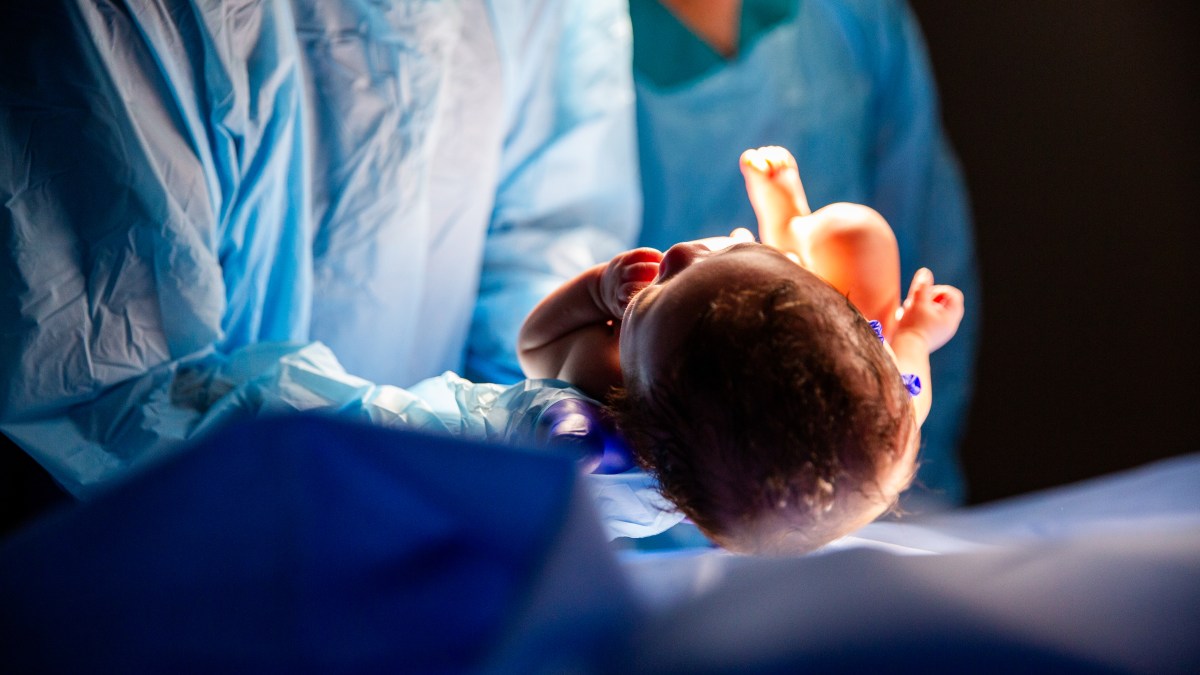
Births by caesarean section have overtaken “natural” deliveries for the first time, NHS data has revealed.
About 45 per cent of births in England last year were caesareans, and nearly half of these were elective operations, planned in advance.
This compares with 43 per cent of women who had unassisted vaginal births, with the remainder having assisted vaginal births involving tools such as forceps or a ventouse.
Caesarean births have doubled in the past two decades, after NHS guidance was changed to give women the right to choose surgical delivery for non-medical reasons.
Women from wealthy parts of the country are much more likely to have elective caesareans than those from deprived areas. Last year, 80 per cent of babies born at Chelsea and Westminster NHS Trust were delivered by caesarean, the highest rate in the country.
Experts believe demographic factors, including rising obesity and more women having babies in their thirties, mean a greater proportion are at risk of pregnancy complications and therefore need caeasareans.
Since 2011, women have been able to request an elective c-section on the NHS if that is their preference, including for reasons such as anxiety or fear of childbirth.
Guidance to NHS doctors states: “If, after an informed discussion about the options for birth, the woman or pregnant person requests a caesarean birth, support their choice.”
In 2022 the NHS abandoned targets to limit c-section births after a series of maternity scandals exposed how a “normal birth” ideology had led to the deaths of mothers and babies who were wrongly denied caesareans.
Hospitals are also performing more emergency caesareans, which is linked to technological improvements in fetal monitoring during labour that mean doctors are able to intervene sooner if a baby is in distress.
Caesareans were usually performed only in case of a medical emergency, with those choosing the surgery portrayed as “too posh to push”. The term was coined in 1999 when Victoria Beckham, then known as Posh Spice, revealed she had her first baby through an elective c-section.
Dr Alison Wright, president of the Royal College of Obstetricians and Gynaecologists, said: “The caesarean birth rate in England and globally, has steadily increased over the past decade. There are varied and complex factors contributing to this, including improvements in our ability to detect when a baby’s wellbeing is deteriorating during labour, and therefore respond appropriately.”
She said the increase in caesarean rates means it is vital there is “adequate staffing and appropriate [operating] theatre resource to ensure that all babies and women receive safe, high quality, personalised and compassionate care.”
The NHS data showed that caesarean births become more common as women get older. The average age at which women give birth in England and Wales is now 31, up from 28 in 1990. Some 24 per cent of births are now in women aged over 35, up from 20 per cent a decade ago.
One in four women in England are classed as obese. Tommy’s, the pregnancy and baby charity, said that “being overweight or obese does increase the risk of complications to both you and your baby”. It adds: “If you had a high Body Mass Index (BMI) before or at the start of pregnancy you are more likely to need a c-section, but you won’t be given one based on BMI alone.”
The RCOG emphasises that “most women recover well and have healthy babies whether they have a vaginal or a caesarean birth” and that women should weight up the risks and benefits of different modes of delivery.
Having a caesarean reduces the risk of incontinence or tearing during birth. However, there can be complications during surgery and it takes about six weeks to recover.
The annual NHS figures, published on Tuesday, also revealed that the number of babies born in England has fallen to the lowest number in 25 years, heightening anxiety about falling birth rate. In total there were 542,235 babies born on the NHS last year, down from a peak of 671,225 in 2014-15.