
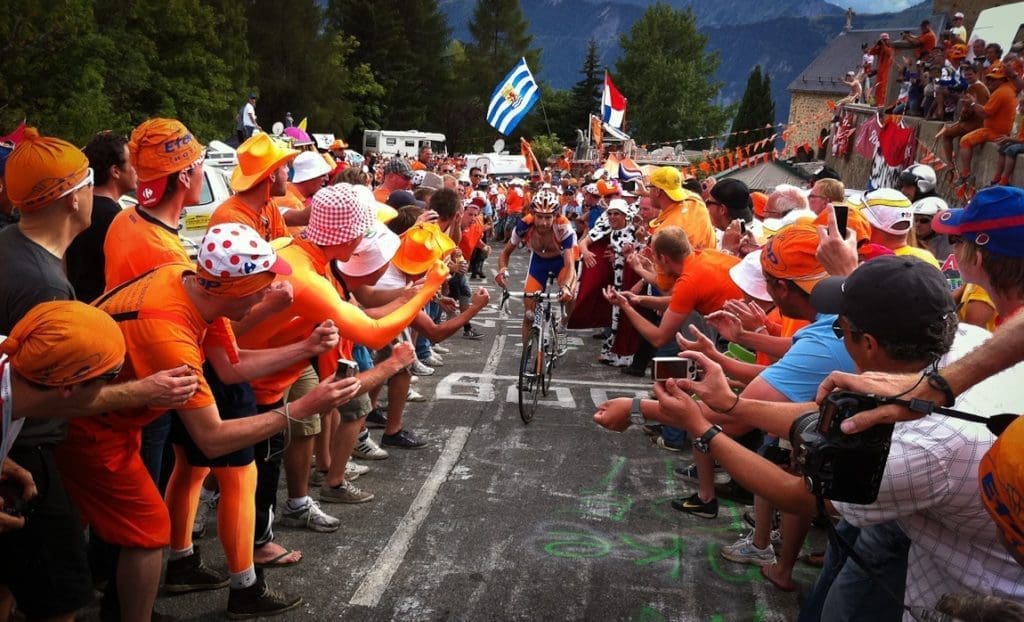
Alpe d’Huez has never needed to be the steepest climb in the Tour de France to feel like the hardest. It simply has to be itself: a road that launches from the Romanche valley, bites immediately, and then forces you to keep re-finding rhythm all the way to a ski station finish that turns racing into theatre.
In 2025, the Alpe sits in a familiar space between memory and expectation. The men last raced to the summit in 2022. The Tour de France Femmes used it to decide the race in 2024. Even when it is absent, the climb still shapes how fans talk about mountain-top finishes, pressure, crowds, and what it means to win when the noise is so loud you can feel it in your chest.
What makes Alpe d’Huez fearsome as a climb, not just a symbol
The numbers are clean and famous: 13.8 kilometres from Le Bourg-d’Oisans, 1,120 metres of vertical gain, an average gradient a touch over 8 per cent, and ramps that push higher when the road tightens. It is demanding without being absurd. That is part of the trap.
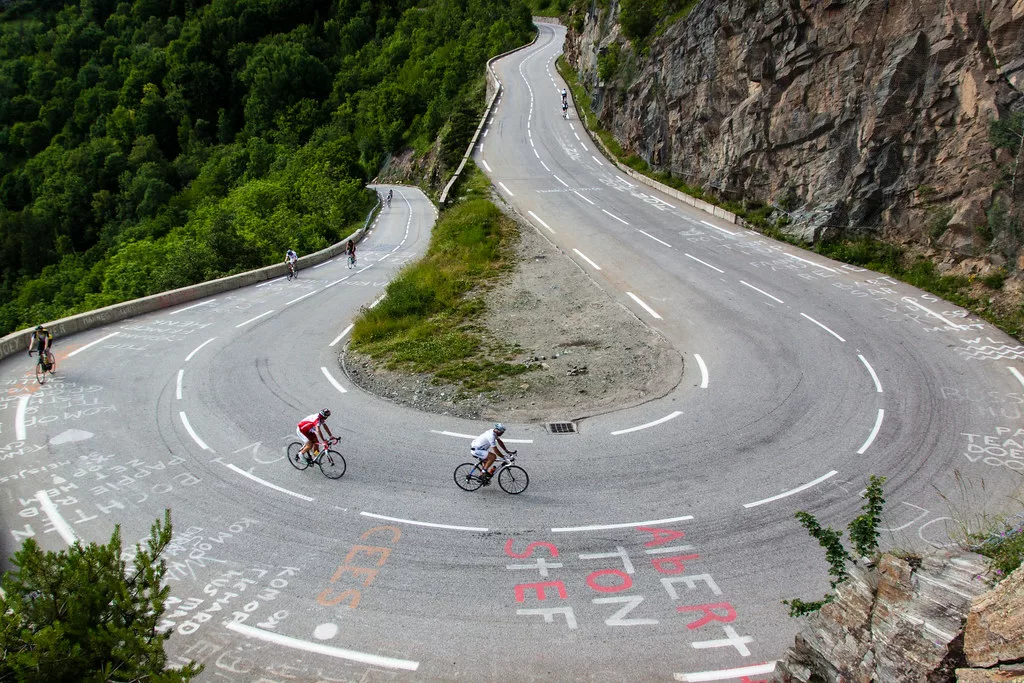
Alpe d’Huez hurts because it rarely gives you long, generous recovery. The gradient comes in steps. Corners arrive like punctuation marks. You accelerate out of each bend, then have to settle again before the next kick. The climb becomes a sequence of repeated efforts rather than one smooth, steady grind.
Then there is the exposure. This is a south-facing slope above a valley that can hold heat in July. When the sun is high the climb can feel like it is reflecting warmth back at you, and the air often feels thinner sooner than you expect because the road rises so quickly from the valley floor. Even when the temperature is not extreme, the sensation of heat, glare, and effort can stack up.
Finally, there is the crowd, which changes the climb’s psychology. Alpe d’Huez is not just lined with spectators. It is narrowed by them. The road becomes a corridor. Riders climb through sound as much as altitude, and that makes pacing harder. The temptation to respond, to accelerate, to prove you are strong, arrives much earlier than it should.
A mountain built by geology and sharpened by the road
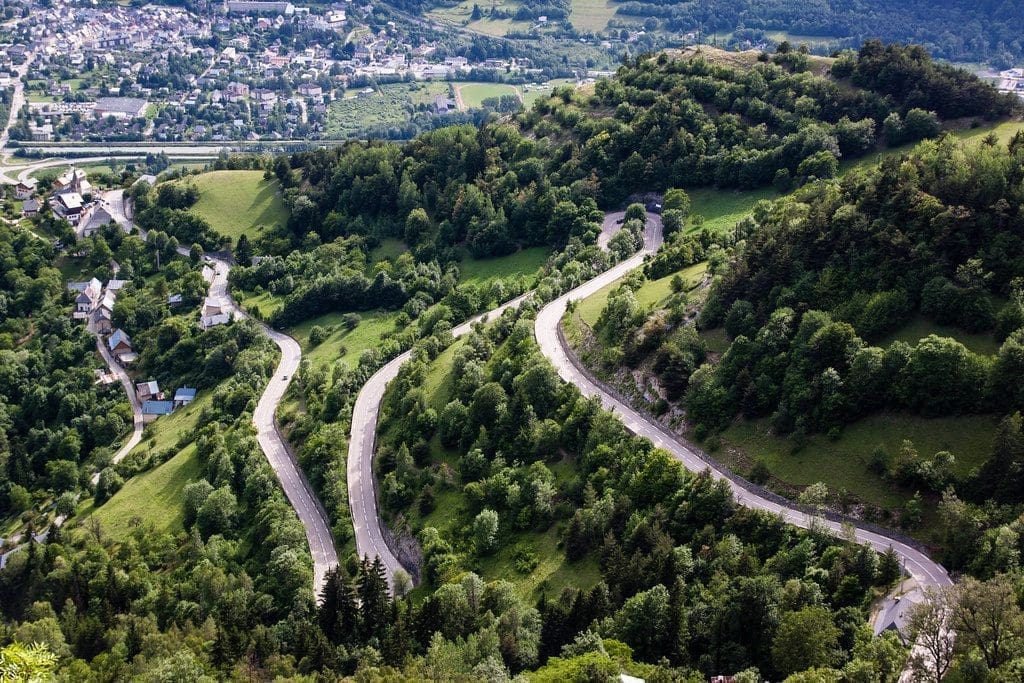
The Alpe’s intimidation starts with its setting. You are riding into the Western Alps, into a landscape shaped by glaciation and steep relief. The Grandes Rousses massif above the resort is a big, high block of rock and ice, and even without knowing the science, you feel the seriousness of the terrain in the way the valley walls rise and the upper slopes open into harsher, higher ground.
That matters for racing because it creates a climb that feels immediate and unbroken. There is no gentle introduction. The road has been engineered to rise quickly and consistently to the resort, and the geometry of the mountain forces those tight, relentless switchbacks. The famous bends are not decorative. They are a solution to a slope that would otherwise be too direct.
There is also older human history embedded in the place. Long before it became a ski resort and a Tour stage, the area above Huez was settled and worked, including medieval mining activity. It is a reminder that this is a lived landscape, not a made-for-TV backdrop, which is part of why the climb feels so “real” when racing arrives.
 Photo Credit: Hilmar Buschow
1952: the climb that changed the Tour’s language
Alpe d’Huez first appeared in the Tour de France in 1952, and it did not arrive quietly. It was the race’s first true mountain-top finish, and that matters more than any single time gap.
When Fausto Coppi won on the Alpe, it helped set a template the Tour would return to again and again. Bring the finish to a summit and you create something different: not just a climb on the route, but a place where the race must reveal itself. Riders cannot hide behind drafting. Teams cannot control every variable. The mountain becomes the organiser.
That is why Alpe d’Huez holds such a privileged place in Tour history. Plenty of climbs have produced famous days. Very few changed what the Tour could be.

Why the 21 bends are more than a gimmick
The 21 hairpins are iconic because they make the climb legible. They give fans a countdown. They give television a structure. They give every rider a set of landmarks to measure suffering against.
But the deeper impact is physical.
Each bend interrupts rhythm. Each bend demands a small surge out of the corner. Each bend forces riders to shift their weight, re-accelerate, and stabilise breathing. Over 40 minutes or more, those repeated micro-efforts add up. The Alpe rewards riders who can keep the bike moving smoothly and keep their effort controlled, even when the instinct is to punch harder.
The bends also build pressure. A numbered corner is an invitation to think about the finish. A sign with a former winner’s name is an invitation to compare yourself to history. The Alpe does not let you climb anonymously. It asks you to perform.

The Alpe’s golden decades: when theatre became tradition
The 1970s and 1980s helped turn Alpe d’Huez into an annual character rather than an occasional location. The climb became a natural amphitheatre: a broad, open mountainside where crowds could gather and television could capture the scale of the spectacle.
This is also where the “Dutch Mountain” identity took hold, fuelled by repeated Dutch success on the summit and the sea of orange that became a mid-summer ritual. That atmosphere did not just decorate the racing. It shaped it. When the road is loud, riders race differently. The Alpe became a place where emotion and effort overlapped more obviously than almost anywhere else in the Tour.

Modern Alpe d’Huez: why it still decides races
Two recent visits underline why the climb remains such a reliable Tour instrument.
In 2022, the Tour de France placed Alpe d’Huez at the end of a brutal Alpine day. By the time riders hit the first ramps, the stage had already stripped away freshness and left only durability, judgement, and the ability to commit when everyone else is looking for survival. The winner did not simply climb well. He managed the day, took risks at the right moment, and finished it with clarity.
In 2024, the Tour de France Femmes used the Alpe as a finale, and it delivered the purest form of mountain drama: a race decided not by minutes, but by seconds, with the climb forcing truth out of both the attacker and the defender. The Alpe is ideal for that kind of tension because it is hard enough to create separation, yet structured in a way that keeps the possibility of reversal alive until late.
That is the climb’s enduring strength. It does not guarantee a single type of race. It guarantees significance.
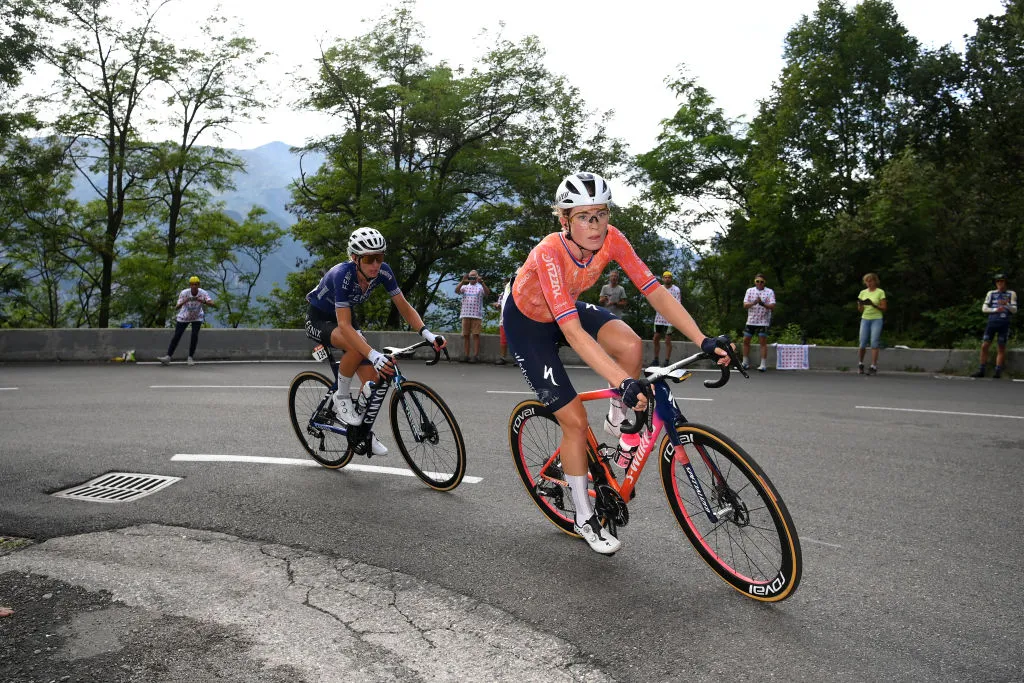 Photo Credit: Getty
Why Alpe d’Huez still matters in 2025
Alpe d’Huez endures because it is both a climb and an idea.
As a climb, it is a sustained test of pacing, repeated acceleration, and composure under noise and heat. As an idea, it is the place where the Tour’s mythology feels tangible: the switchbacks, the names, the crowds, the sense that you are riding into a history that is already waiting for you at the top.
That is why the Alpe is fearsome in its own right. It does not need to be the steepest, the highest, or the longest. It only needs to place a rider on a road that never quite relaxes, in an arena that never quite quietens, and ask them to produce the best effort of their life while the entire sport watches the same 21 corners tick away.