

Listen to this article
Estimated 3 minutes
The audio version of this article is generated by AI-based technology. Mispronunciations can occur. We are working with our partners to continually review and improve the results.
Prime Minister Mark Carney reaffirmed he’ll protect Canada’s supply management system, as the United States signalled it’s ready to fight over this country’s dairy rules at the negotiating table.
U.S. Trade Representative Jamieson Greer told members of U.S. Congress Wednesday that Washington is not prepared to extend the Canada-U.S.-Mexico agreement (CUSMA) without addressing “specific and structural issues.”
In remarks made public after Greer met with lawmakers behind closed doors, President Donald Trump’s point-person on trade said Americans have concerns about “dairy market access in Canada” and “Canada’s exports of certain dairy products.”
Responding Thursday morning, Carney said supply management is “not on the table.”
“We’ve been clear about our approach to supply management. We continue to stand by that. We will continue to protect supply management,” the prime minister said.
WATCH | Carney, Ford on CUSMA review: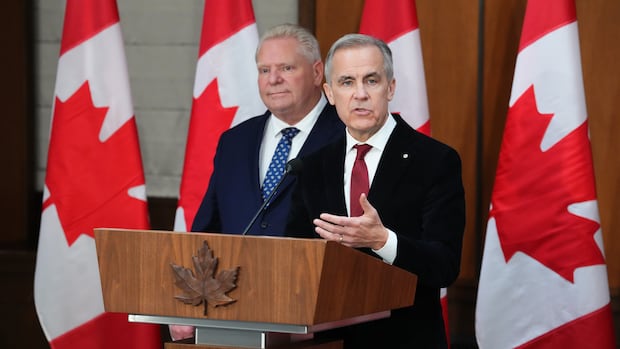
Carney, Ford respond to questions about U.S. demands ahead of CUSMA review
Prime Minister Mark Carney, appearing alongside Premier Doug Ford Thursday at an event outlining steps to align approaches around major projects, took questions on their response to recent demands put forth by the U.S. trade representative around access to Canada’s dairy market and how provinces are handling the sale of U.S. alcohol.
It’s a position he’s made clear in the past, including on the election campaign this spring.
Carney was asked a question on supply management in English, and responded in French — a transparent message to Quebec where the system is fiercely protected by the dairy industry.
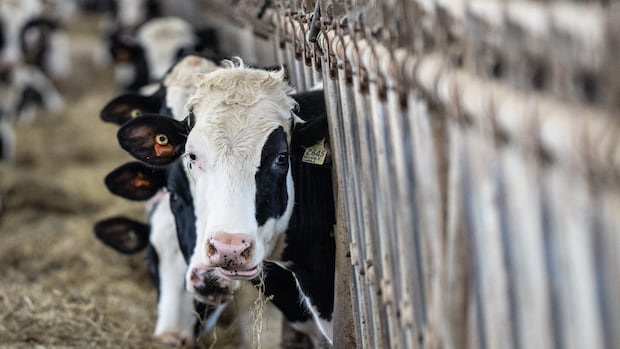
The policy, which dates back to the 1970s, is meant to ensure predictable and stable prices by guaranteeing supply-managed farmers a minimum price for their products.
Greer linked expanded access to the dairy market as a crucial step for CUSMA talks to be successful, arguing that Canada “maintains policies that unfairly restrict market access for U.S. dairy products.”
Canada does allow some U.S. dairy products to trade into Canada tariff-free.
The import quotas negotiated under CUSMA during Trump’s first term are designed to give U.S. producers tariff-free access worth roughly 3.5 per cent of Canada’s domestic demand for dairy products.
The U.S. dairy lobby has been pushing for those rules to be loosened and has flagged two main irritants: how the Canadian government allocates the existing quotas for tariff-free imports of dairy products, and how Canadian producers dump milk protein into the international market.
The formal review of CUSMA begins next year, when the three countries can decide to extend the agreement past its 2036 expiration date.
Carney says he was close to a deal
Outside of the dairy market, Greer named two other trade grievances with Canada: its laws impacting online platforms like Netflix, Spotify and YouTube, and the ongoing boycotts in some provinces of U.S. alcohol.
Carney said Thursday the issues flagged by Greer are elements of a much bigger discussion.
He said the government will “only sign an agreement” that works for Canadians.
WATCH | Carney says they were close to a deal with Trump: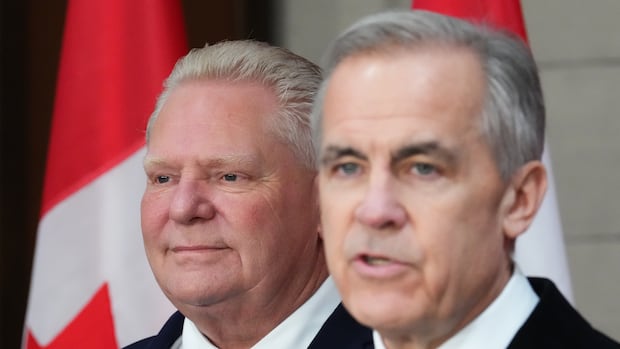
‘We were close to an agreement’ with U.S., says Carney when asked about Ontario’s anti-tariff ad
During an announcement with Ontario Premier Doug Ford, a reporter asks Prime Minister Mark Carney whether he thinks Ontario’s anti-tariff ad impacted U.S. tariffs on Canada. Responding to the same question, Ford said ‘that was the best ad that’s ever been run.’
The United States has also put out a list of frustrations with Mexico related to supply chains, energy policies and labour laws.
Carney was asked Thursday about U.S. trade talks while standing next to Ontario Premier Doug Ford. Trump abruptly called off talks in late October citing an ad Ford’s government ran featuring former U.S. president Ronald Reagan speaking out against tariffs.
Carney said the two sides “were close to an agreement” before the ad aired.