
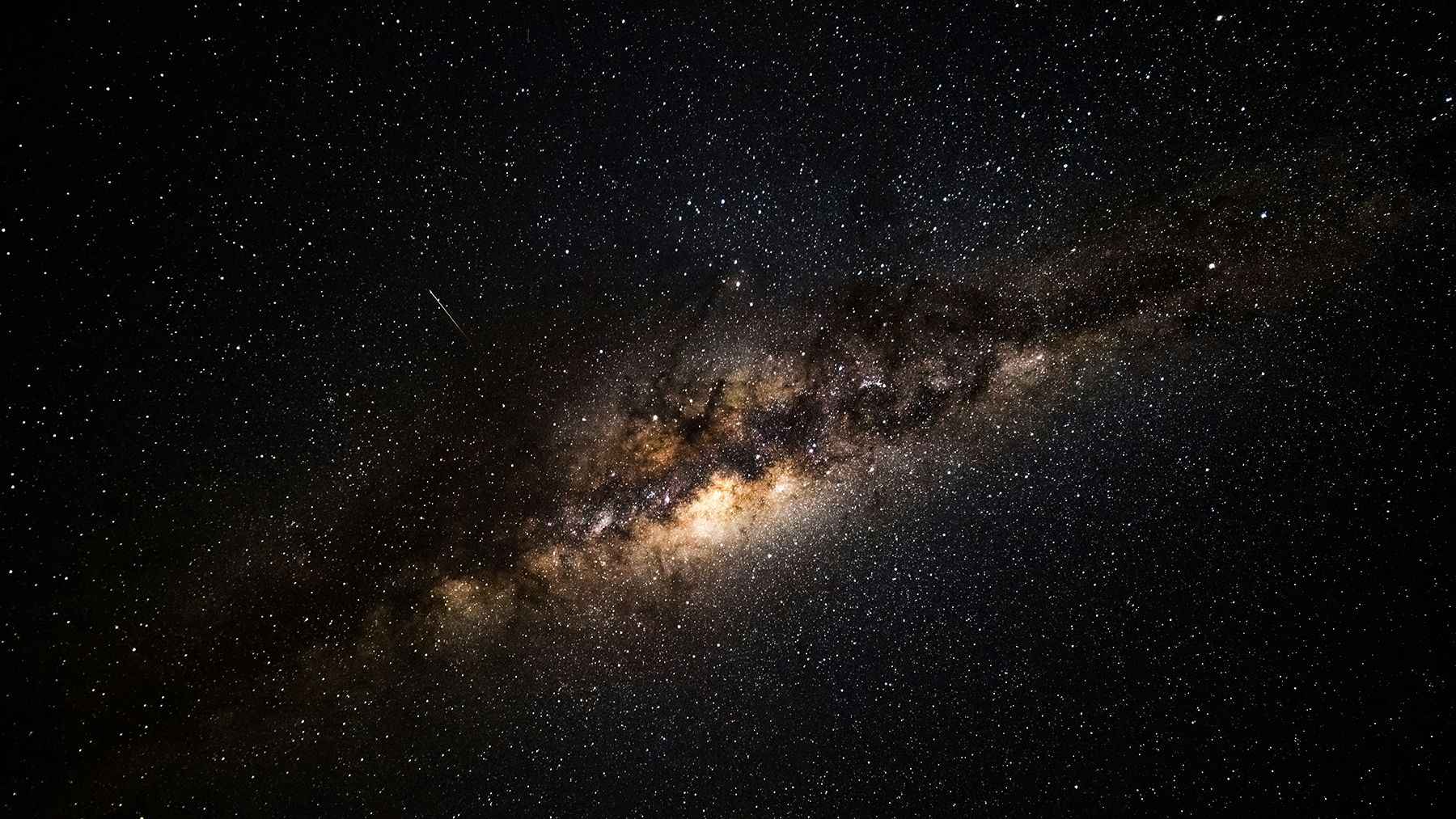
Beyond our night sky is the sight of distant galaxies, such as Andromeda. These galaxies are celestial objects like our Milky Way galaxy that make up the fabric of our universe. However, they are often hidden from plain sight because of the brightness of our moon. In this article, we discuss the role the moon plays and how to observe these galaxies without a telescope.
Opportunity to observe the wonders of galaxies
One of the beauties of astronomy is the chance to observe the universe and galaxies in their numbers. Although timing is a crucial element in catching these wonders, this is why astronomers depend on tools such as maps and weather forecasts. In fact, every tool capable of counting plays a role in the act of stargazing.
However, when it comes to observing galaxies, the most important counting tool is the cycle of the Moon. The Moon observes a cycle every 29 days through its orbit around Earth. On some of those days, there are periods where the sky would appear the brightest or darkest. What astronomers look out for are days when the brightness has completely phased out.
These days could be weeks, but in those days when the sky is completely dark, some things become noticeable. We begin to see faint structures across the edge of the universe. Together with them are interstellar dust and a glow of distant galaxies. Over the years, stargazers have referred to these nights as moments when the sky opens up.
Astronomers discuss the best time to view Andromeda
As many who are stargazers understand, moonlight is a bane when it comes to observing distant galaxies. Therefore, the best time to observe these galaxies is in the absence of light. For example, at the end of December, galaxies like Andromeda would be obvious in the sky.
The Andromeda is a galaxy 2.5 million light-years away from Earth. To find this galaxy, one should start by locating the Great Square of Pegasus. This is a familiar arrangement of stars in squares, just like the By tracing a curve, one can find this star in its own constellation, like this unique cosmic event, displayed across 50 states.
Therefore, the best time to view Andromeda is on December 19. Stargazers should also try to observe between the hours of midnight and 5:00 a.m. local time. At the time, the galaxy would be at its highest point in the night sky. Remember, the darker the night sky, the cleaner the observation that would be made.
Can you observe galaxies without telescopes?
The truth is, the whole essence of observing these galaxies at night is to view them in isolation. Even if one is unable to observe the galaxy in 4k, the night sky would produce enough darkness to highlight its galactic outlines. For Andromeda, one would see a smudge indicating the core of the galaxy.
Why the pitch darkness is important for stargazing
Among all the stars from Earth’s perspective, the moon has the closest proximity. Hence, when its brightness is shunned, it washes away background stars within its neighborhood.
On December 19, stargazers are to prepare for the gift when the night sky highlights several galaxies across its expanse. Most especially Andromeda. Whether this is your first time observing a galaxy or not. Location doesn’t matter, but you can observe this grand event in isolation or with family in the spirit of the holiday season.
In conclusion, it’s not every day we get to observe or spot distant objects beyond our Milky Way galaxy. But now, we have an opportunity to do so. In a world occupied with artificial excitement and screens. This moment stands as a moment where we observe a part of our universe that has remained hidden by our pale moonlight, just like this extraordinary cosmic event, lighting up the sky during Thanksgiving.