
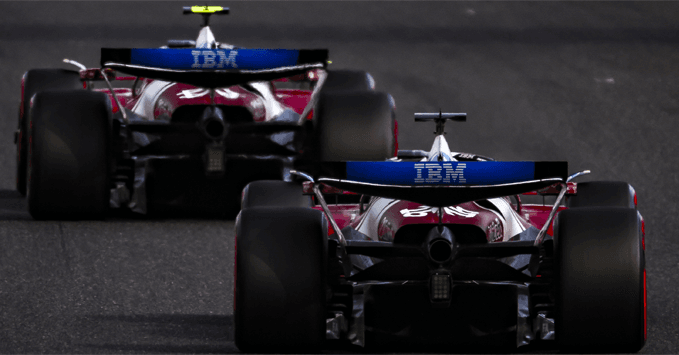
Ferrari intensify 2026 development push under Fred Vasseur
Ferrari team principal Fred Vasseur is driving an uncompromising development programme in Maranello as the Scuderia prepares the all-new 2026 Formula 1 car that will be raced by Lewis Hamilton and Charles Leclerc. With Formula 1 set to introduce the most radical technical overhaul in its history, Ferrari have committed early and aggressively to the next regulatory cycle, accepting short-term pain in order to maximise long-term competitiveness.
The 2025 season quickly slipped away from Ferrari’s original ambitions. Fred Vasseur began the year hoping to mount a genuine title challenge, but it became clear within the opening races that the performance ceiling of the SF-25 would not allow that objective to be met. As a result, Ferrari made the strategic decision to redirect resources towards the 2026 regulations far earlier than most rivals, prioritising the future rather than chasing diminishing returns.
Early sacrifice in 2025 to unlock long-term gains
Ferrari effectively froze development of the 2025 car as early as April, with Fred Vasseur choosing not to spend valuable wind tunnel and CFD allocation on aerodynamic updates that would offer only marginal gains. Aside from a limited number of refinements, including a rear suspension update introduced mid-season in Belgium, the SF-25 was largely left behind. That update failed to solve the chronic ride-height sensitivity that undermined Ferrari’s campaign and exposed the limitations of the 2025 concept.
By stepping away from 2025 development, Ferrari ensured that their engineering groups could fully focus on the clean-sheet design demanded by the 2026 regulations, which introduce new power unit rules, revised chassis dimensions and a fundamentally different aerodynamic philosophy. Power units are widely expected to define the competitive order in the early years of the new era.
Ferrari push hard to address reliability concerns with the 2026 engine
As Ferrari accelerate development of the 2026 package, challenges are emerging alongside encouraging signs. According to reports from the Italian media, the Scuderia are working at maximum intensity on their 2026 car, pushing development limits before refining and optimising solutions. This aggressive approach has boosted confidence within Ferrari’s power unit department, even though there is acceptance that outright performance may not initially match the strongest rivals.
However, there is acknowledged concern in Maranello regarding the reliability of Ferrari’s 2026 Formula 1 engine. The new power unit regulations represent a major technical leap, increasing the electrical contribution to total output from roughly 20 percent to an even 50/50 split with internal combustion power. At the same time, Formula 1 is removing the MGU-H system and mandating the use of 100 percent advanced sustainable fuels.
This combination dramatically alters thermal management, energy recovery strategies and overall power unit integration. Ferrari engineers are therefore working relentlessly to resolve reliability weaknesses that have appeared during development, knowing that any early-season fragility in 2026 could severely compromise championship ambitions.
 Continuous updates planned for the start of the new era
Ferrari are not only focused on fixing reliability issues but are also planning a programme of continuous updates once the 2026 season begins. The aim is to progressively unlock performance across the power unit, energy deployment systems and associated components, allowing Lewis Hamilton and Charles Leclerc to benefit from steady gains as understanding of the new regulations improves.
Within the paddock, there has been persistent speculation that Ferrari could start the 2026 cycle slightly behind competitors, particularly Mercedes, who are widely tipped to deliver the strongest engine under the new rules. Given that aerodynamic regulations have been reshaped to accommodate the increased electrical output, engine performance is expected to be the primary differentiator in the opening phase of the new era.
High stakes as new regulations reshape the competitive order
The consequences of a slow start in 2026 could be severe. Teams that misjudge the power unit regulations may find themselves trapped in a cycle of recovery that lasts several seasons. Charles Leclerc has previously expressed concern that a manufacturer emerging with a clear early advantage could dominate the sport for multiple years, particularly once the true hierarchy becomes clear after the opening six or seven races.
The urgency in Maranello is therefore understandable. Charles Leclerc endured another winless campaign in 2025, extending a frustrating run for both driver and team. Ferrari are determined to ensure that the arrival of Lewis Hamilton alongside Charles Leclerc coincides with a competitive reset rather than a continuation of missed opportunities.
Chassis and suspension changes add further complexity
The power unit is not the only major technical shift underway at Ferrari. For 2026, the team will revert to a push-rod suspension layout after experimenting with pull-rod geometry in 2025. That change proved costly last season, contributing to setup difficulties and inconsistent performance. By returning to push-rod suspension, Ferrari believe they can achieve a more predictable aerodynamic platform that better complements the demands of the new regulations.
With sweeping changes to the engine, aerodynamics and mechanical layout, Ferrari’s all-in approach for 2026 represents one of the most ambitious projects in recent Formula 1 history. The success of this strategy will ultimately determine whether Lewis Hamilton and Charles Leclerc can lead the Scuderia back to sustained title contention in the new era.
Dec 20, 2025Maria Lombardi
Let other Scuderia Fans know about us


