
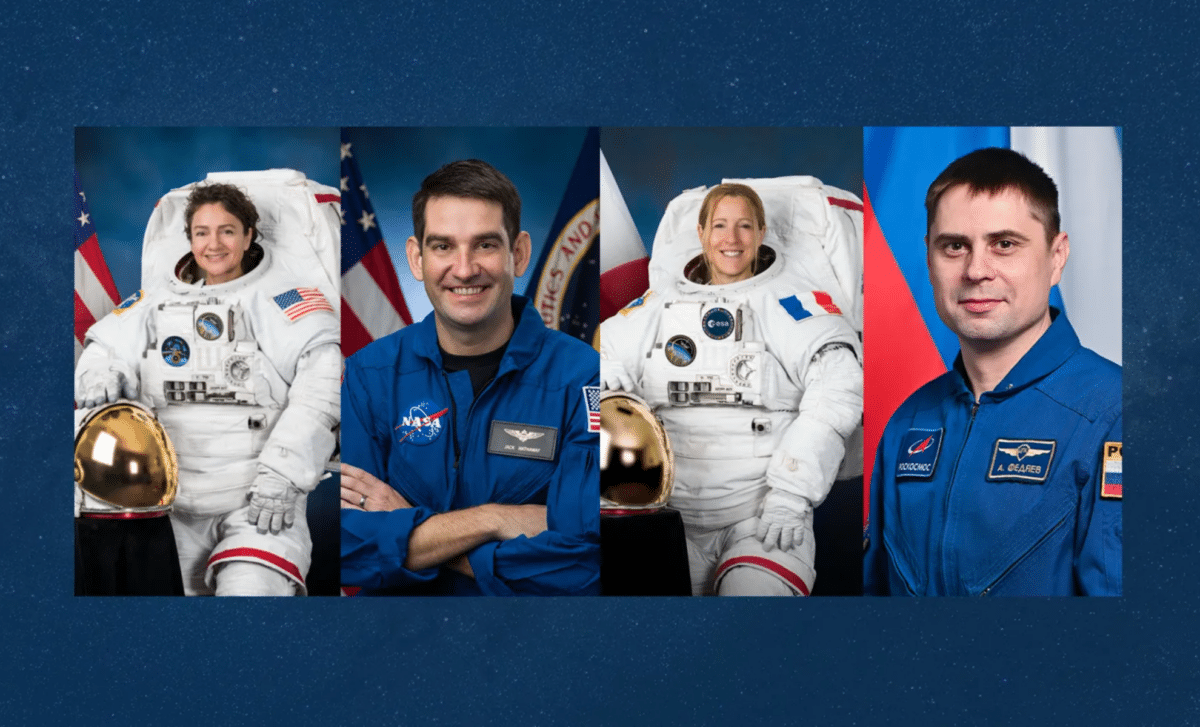
NASA’s SpaceX Crew-12 mission, scheduled for launch in February 2026, marks an important milestone in the exploration of space. The mission will feature a diverse team of astronauts from NASA, ESA, and Roscosmos, who will undertake long-duration science expeditions aboard the International Space Station (ISS). The crew’s assignments and backgrounds were shared in a recent NASA announcement, and the mission’s impact promises to benefit both scientific advancement and the future of human space exploration.
Pioneering Science and Exploration with NASA’s SpaceX Crew-12
The International Space Station (ISS) has been a symbol of international collaboration and scientific discovery for over two decades. NASA’s SpaceX Crew-12 mission, set to launch no earlier than February 15, 2026, continues this legacy, with astronauts from NASA, ESA, and Roscosmos joining forces. This mission is not just a routine flight to the ISS; it’s a critical step forward in preparing for humanity’s next giant leap: exploration beyond Earth, to the Moon and Mars. In a recent NASA release, the agency revealed the crew assignments and underscored the importance of this mission for advancing human spaceflight capabilities.
NASA astronaut Jessica Meir will serve as the mission commander, bringing her invaluable space experience to lead the Crew-12 mission. Meir, a biologist and marine scientist, previously made history by completing the first all-female spacewalks with fellow astronaut Christina Koch. Her background makes her an ideal leader for this multi-national crew, as her expertise will be key in carrying out the scientific and operational tasks aboard the ISS. This mission will be Meir’s second spaceflight, and she’ll be joined by first-time space traveler, Jack Hathaway, a U.S. Navy commander with a strong background in aviation and military strategy.
A Diverse Crew with Unique Expertise
Space exploration is becoming increasingly international, and the Crew-12 mission is no exception. Alongside NASA’s Meir and Hathaway, ESA astronaut Sophie Adenot and Roscosmos cosmonaut Andrey Fedyaev will also be part of this exciting mission. Adenot, who brings her extensive engineering and flight dynamics knowledge, will be taking her first space journey. Before joining ESA, she had already accumulated more than 3,000 flight hours as a helicopter test pilot. Her experience will play an important role in the mission’s operations and scientific experiments aboard the ISS.
Fedyaev, who has flown to space before on NASA’s SpaceX Crew-6 mission, will be making his second long-duration stay on the ISS. Having logged over 600 hours as a pilot before being selected as a cosmonaut, Fedyaev’s expertise will prove vital as the mission delves into advanced scientific research. His background highlights the growing cooperation between space agencies and the valuable contributions of astronauts like him who bring a wealth of experience to the station.
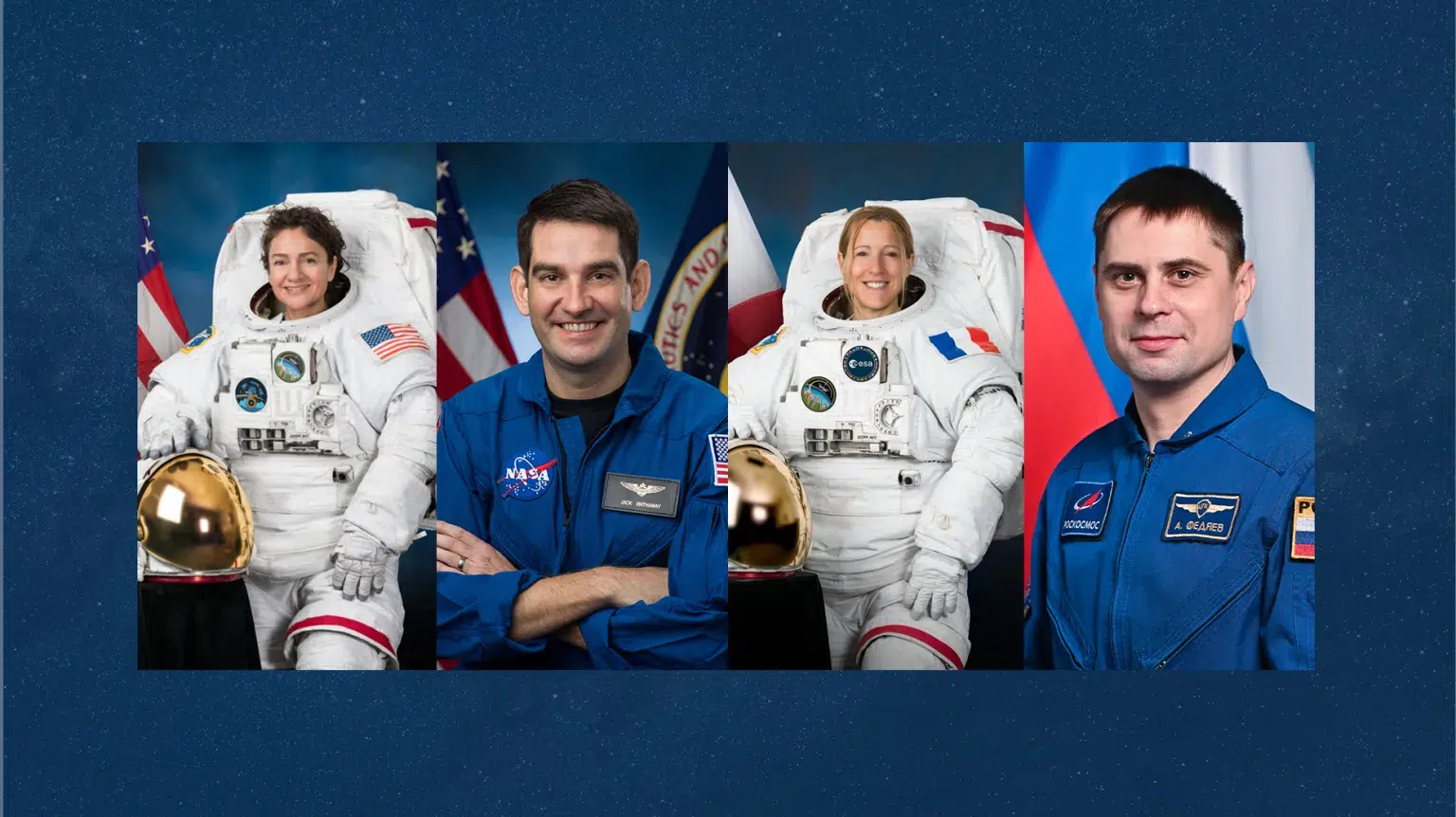 From left to right, NASA astronauts Jessica Meir and Jack Hathaway, ESA (European Space Agency) astronaut Sophie Adenot, and Roscosmos cosmonaut Andrey Fedyaev.
Credit: NASA
The Purpose of the Mission: Advancing Human Exploration
While the Crew-12 mission will certainly add to the ongoing work aboard the ISS, its ultimate goal is to push the boundaries of human exploration. As part of NASA’s Commercial Crew Program, the mission will help prepare astronauts for future long-duration spaceflight, such as missions to the Moon under NASA’s Artemis program and to Mars in the following decades. This alignment with the Artemis program is crucial, as the Crew-12 astronauts will not only support ongoing experiments and operations on the ISS but also help test technologies and procedures that will be necessary for deep space missions.
The scientific investigations and technology demonstrations conducted during Crew-12’s stay will help address the challenges of long-duration spaceflight. These efforts will inform how astronauts can stay healthy and effective on missions lasting months or even years—critical preparation for destinations far beyond the ISS, including the Moon and Mars.