
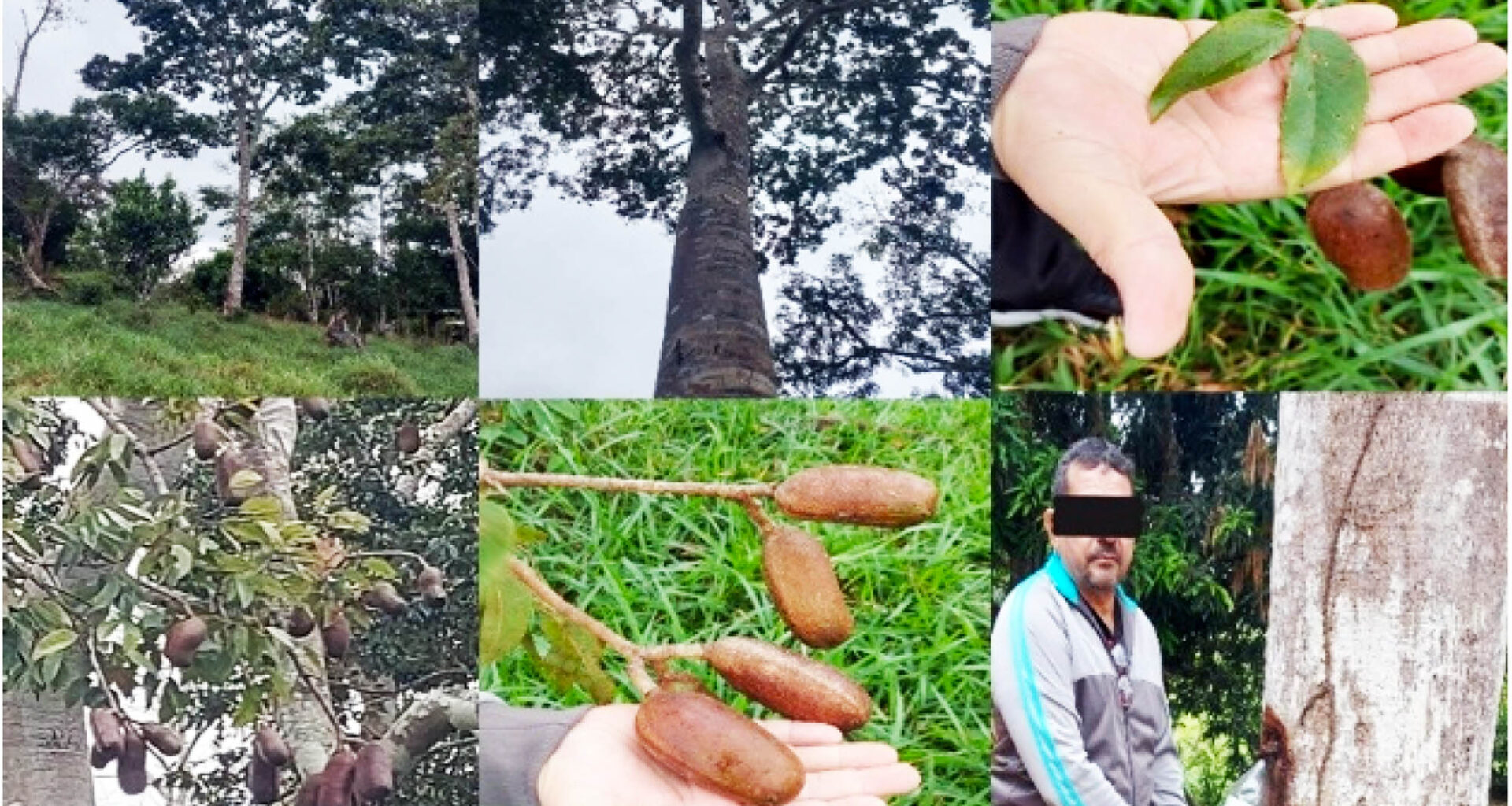
Across tropical Latin America, a tall tree known as jatobá plant has long been trusted to ease pain, chest complaints, and stomach trouble.
Now a Brazilian-led systematic review of Hymenaea species pulls together results from 17 studies, revealing potent anti-inflammatory chemistry hidden in its bark, leaves, seeds, and resin.

The work was led by Joy Braga Cavalcante, a researcher in the Department of Biotechnology at the Federal Institute of Education, Science and Technology of Acre (IFAC) in Brazil.
Her research includes studying how medicinal plants, traditional species used as home remedies, might translate into safe therapies backed by laboratory data.
Jatobá plants belong to the genus Hymenaea, a small group of Neotropical trees whose hard wood, sticky resins, and nutrient rich fruits support communities from Mexico to Brazil.
In Brazil, Indigenous and rural healers prepare its bark, leaves, and resin as syrups, teas, and poultices to relieve fatigue, joint swelling, coughs, and persistent gut pain.
Ethnobotanical records, systematic notes on how communities use plants, describe jatobá as medicine, food, timber, and spiritual symbol throughout Brazilian savanna and rainforest regions.
A single mature tree can yield dozens of heavy pods each year, providing floury seed pulp that remains an important calorie source where other options are scarce.
Studying the jatobá plant
The authors conducted a systematic review, a structured way to gather and judge all available studies, focused on Hymenaea remedies with anti-inflammatory effects.
Across the studies they pulled together, extracts from bark, leaves, seeds, and resin repeatedly showed chemical activity that dampens molecules driving inflammation in cells and tissues.
One laboratory screening, a test of plants chosen for long standing use, found that Hymenaea courbaril resin inhibited 5 lipoxygenase, an enzyme linked to bronchospasm and inflammation.
That enzyme drives production of leukotrienes, signaling molecules that tighten airways and summon inflammatory cells, so blocking it has potential consequences for asthma like disease.
Other experiments highlighted polysaccharides, long chains of sugar molecules from seeds, that activated macrophages and triggered release of immune messengers such as nitric oxide and key cytokines.
Together, these findings sketch an immune profile where jatobá plant extracts can both spark front line defenses and restrain inflammatory cascades before they spiral into chronic damage.
From petri dishes to tiny animals
More recently, a team working with Caenorhabditis elegans, a microscopic worm used to model stress responses, tested stem bark extracts of Hymenaea courbaril.
At concentrations that kept survival above eighty percent over three days, those extracts protected the worms from oxidative damage triggered by hydrogen peroxide exposure.
“H. courbaril extract exhibited a low toxicity profile at the concentrations tested,” noted Larissa Lobo, a researcher at the Federal University of Rio Grande do Sul (UFRGS).
That combination of protection and tolerable toxicity in a whole organism model hints that jatobá plant chemistry is not limited to test tubes.
Another study of jatobá bark, seed, and pulp extracts reported that phenolic rich mixtures stopped Staphylococcus aureus from forming the sticky biofilms that protect bacterial colonies.
The same team saw signs that those mixtures weakened established biofilms, a property that could someday help conventional antibiotics reach stubborn infections more effectively.
Nothing wasted from jatobá plants
Jatobá plant fruits are often eaten fresh or milled into flour, while the pod husks usually end up discarded.
Recent analyses show that those husks hold concentrated phenolic compounds, plant chemicals that neutralize damaging oxygen molecules and may add value to food byproducts.
“Our results not only confirm the economic and bioactive potentials of the whole H. courbaril tree,” wrote Gabriela Lucca Del Angelo, a plant scientist based in Brazil.
Her team focused on pod husk extracts, reinforcing the idea that every part of this species may carry pharmacologically interesting chemistry worth closer study.
To keep track of such complex chemistry, researchers are turning to metabolomics, large scale studies that map many small molecules in extracts.
Those profiles can help future teams standardize jatobá preparations, compare trees from different regions, and decide which combinations of compounds deserve safety testing in people.
 Jatobá plant used by indigenous peoples for centuries surprises modern science. Credit: Joy Braga Cavalcante. Click image to enlarge.Modern lessons from ancient plant
For all the excitement around jatobá, most of the evidence the Brazilian review summarized still comes from cell cultures or short term experiments in animals.
Very few trials have looked at chronic inflammatory diseases, measured long term safety, or tested standardized extracts in humans, so clinical questions remain almost entirely open.
Researchers also wrestle with basic practical issues, because different communities use different plant parts, preparation methods, and doses, which makes study results hard to compare.
A cup of home brewed bark tea, for example, may contain a very different mix of compounds than the concentrated extracts tested under controlled laboratory conditions.
The review argues that progress will likely depend on carefully designed animal and human studies that track inflammatory markers, capture possible side effects, and respect traditional preparation methods.
If those trials confirm what the early laboratory work suggests, communities that have long cared for these trees could see their knowledge recognized within formal health systems.
The study is published in Plants.
—–
Like what you read? Subscribe to our newsletter for engaging articles, exclusive content, and the latest updates.
Check us out on EarthSnap, a free app brought to you by Eric Ralls and Earth.com.
—–