
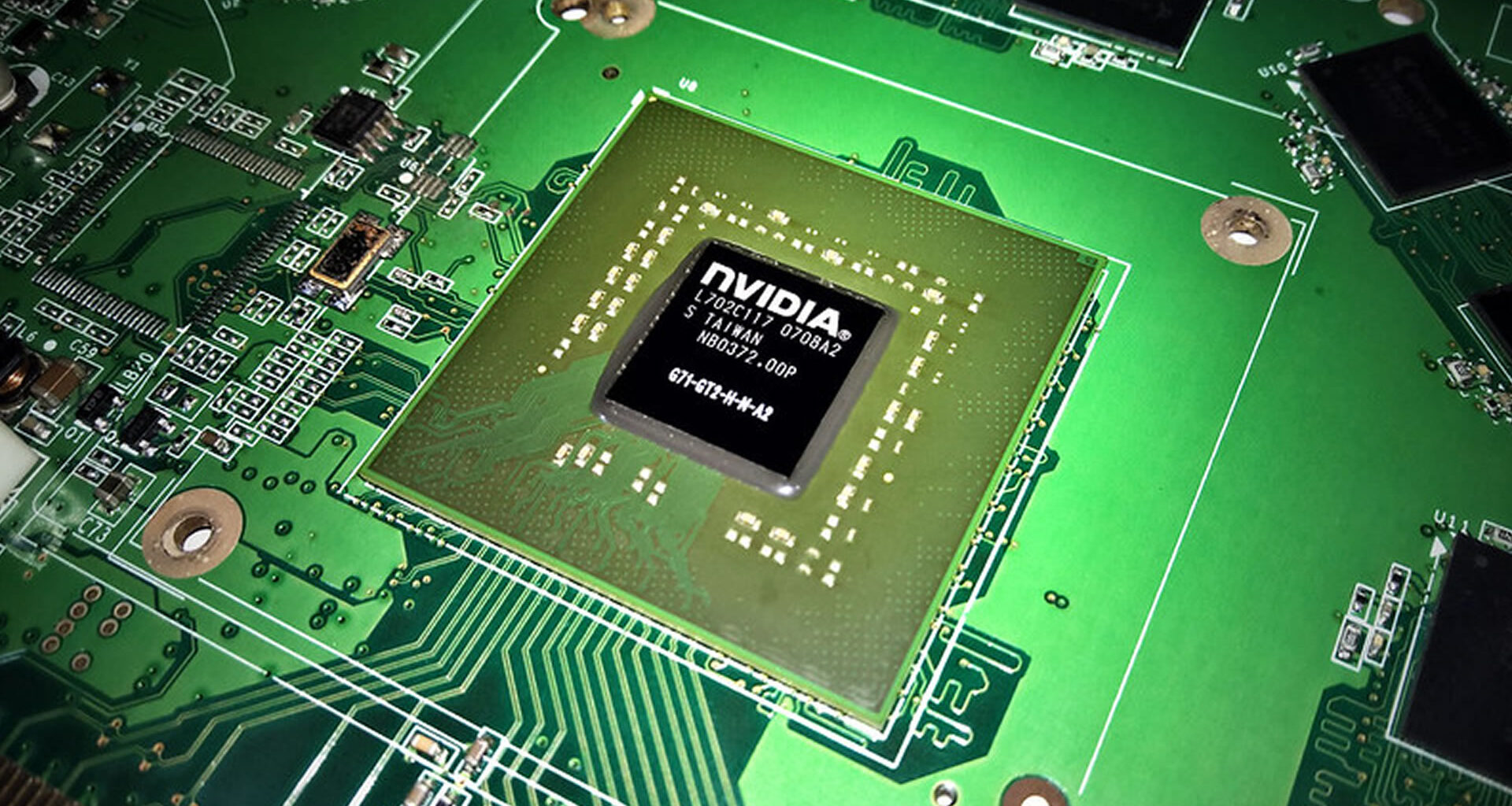
Chinese scientists have allegedly developed a series of new photonic (light-based) microchips that could outperform NVIDIA’s leading artificial intelligence (AI) graphics processing units (GPUs) by over 100x in terms of speed and efficiency.
According to claims, these new chips could easily beat out NVIDIA’s leading tech in some specific generative tasks, such as video production and image synthesis. This sounds impressive, but it is important to understand that they are not a direct replacement for NVIDIA-style GPUs for general-purpose usage.
Rather, if claims are true, of course, they represent a new computing architecture for narrowly defined AI workloads. Especially for tasks like vision and generative image creation.
NVIDIA’s GPUs (like its popular NVIDIA A100) use electrons that flow through transistors to work. This enables them to execute instructions step-by-step and has proven to be very flexible (i.e., they can run many programs at once).
However, such chips are very power-hungry and can become very hot, very quickly. They also require cutting-edge manufacturing to create.
Photons instead of electrons
These new Chinese photonic chips (like the ACCEL and LightGen) use photons instead of electrons to function. They can run calculations via optical interference, which makes the incredible fast and ultra-efficient.
However, unlike NVIDIA’s GPUs, they are relatively limited in flexibility. They can, however, be made relatively easily using older fabrication processes.
To help understand the difference, you can think of NVIDIA’s GPUs like programmable calculators. These new photonic chips, on the other hand, are more like purpose-built analog machines.
ACCEL, developed by Tsinghua University, is a hybrid chip consistingof photonic components and analog electronic chip parts. These chips can be built using older Semiconductor Manufacturing International Corporation (SMIC) tech and have been shown to provide 4.6 PetaFLOPS while consuming tiny amounts of power to run.
For reference, a PFLOPS represents one quadrillion (10^15) floating-point operations per second (1,000 trillion). That sounds incredible, but it is important to note that these chips are not running code and aren’t performing memory-heavy operations like NVIDIA chips often are tasked with.
They only perform preset analog math operations, which is perfectly fine for tasks like image recognition, low-light vision, etc. Such chips would never be able to do things like running programs, training models, or replace GPUs (or even CPUs) in electronic devices.
NVIDIA won’t lose any sleep
The other, LightGen, was developed by a joint team from Shanghai Jiao Tong University and Tsinghua University. Unlike ACCEL, this chip is fully optical with over 2 million photonic “neurons.”
This chip can allegedly perform image generation, style transfer operations, denoising, and 3D image manipulation tasks. When compared to more conventional chips, like NVIDIA’s, LightGen can perform these tasks over 100x faster while only using a fraction of the power needed.
To this end, the research team explains, LightGen is the strongest proof so far that photonics can do real generative AI, but only in tightly constrained domains.
ACCEL and LightGen show that light-based AI hardware can outperform GPUs by orders of magnitude for narrow AI tasks. However, they are specialized analog machines, not general-purpose replacements, and that distinction is everything.
You can view the study for yourself in the journal Science.