
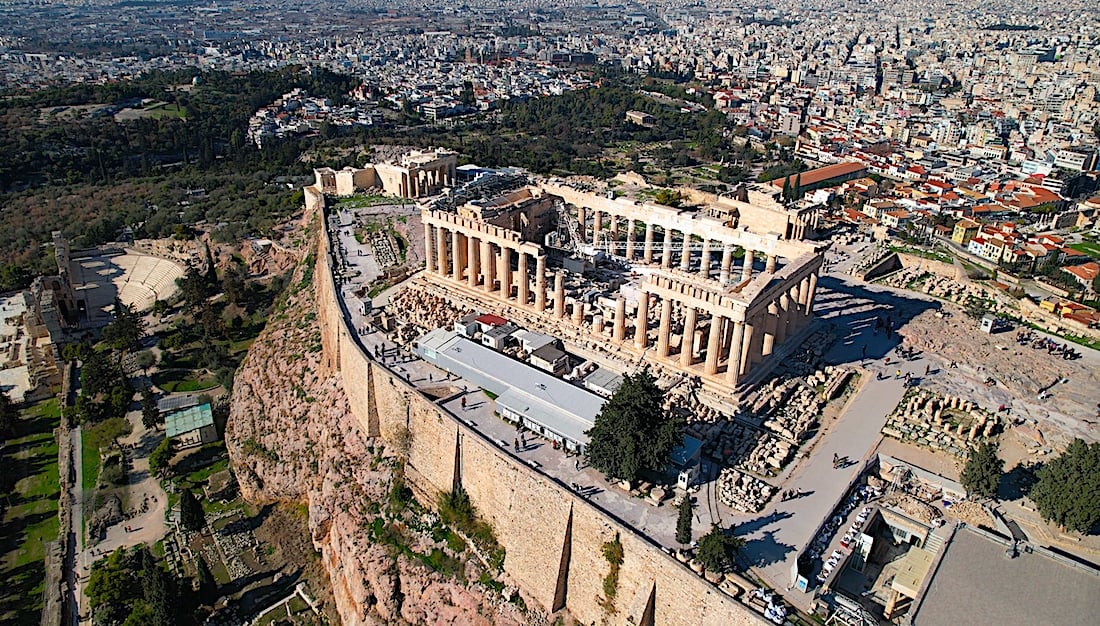
New flight routes and higher travel spending accelerate Greece’s tourism growth across major destinations. Credit: Greek Reporter
Greece is preparing for another year of exceptional tourism growth in 2025. The country is building on record achievements and strong economic indicators. Data from the first nine months of the year show continued momentum. Travel receipts exceeded twenty billion euros ($23 billion), marking a 9 percent increase over the same period in 2024, which set a national record.
Arrivals from January through September grew by roughly 4 percent when compared to the previous year. These trends suggest that demand for Greek destinations remains resilient despite global economic uncertainty.
Higher passenger volumes drive Greece’s tourism growth outlook
Passenger traffic at Greek airports in October and November surpassed last year’s levels. This expansion is proof that tourism activity is extending beyond traditional peak months. Industry analysts expect stronger year-round operations and improved revenue diversification.
The Ministry of Tourism views these developments as confirmation that coordinated efforts to expand source markets and improve connectivity are producing results. Early projections for 2026 support expectations of continued growth.
Expanded air links and new source markets
Airlines plan to launch several new routes in the coming year, strengthening access to regional hubs and long-haul markets. Announced direct flights include Dallas–Athens and New Delhi–Athens, demonstrating growing international interest in Greece.
Tour operators are developing new vacation packages for mainland destinations, with offerings expanding to Thessaloniki and the North Aegean. This expansion signals a broader geographic distribution of arrivals and economic benefits.
The national tourism strategy focuses on targeted initiatives aimed at increasing inbound travel from the United States, India, East Asia (including South Korea and Japan), and the Middle East. The first direct flights from India are expected in early 2026, supporting growth from that market.
Regulatory and spatial planning measures advance
Greece’s Ministry of Tourism and its partners continue legislative and spatial planning initiatives to strengthen sustainable development. Officials completed the consultation phase on a Joint Ministerial Decision for the Special Spatial Framework for Tourism and incorporated feedback into updated provisions.
The next phase involves a consultation on the environmental impact study for Natura 2000 protected areas. After closing the consultation period, the Ministers of Tourism and Environment and Energy plan to sign the Joint Ministerial Decision.
These measures aim to balance growth with environmental protection and community well-being. The government seeks to ensure that tourism expansion supports local economies while preserving natural assets over the long term.