
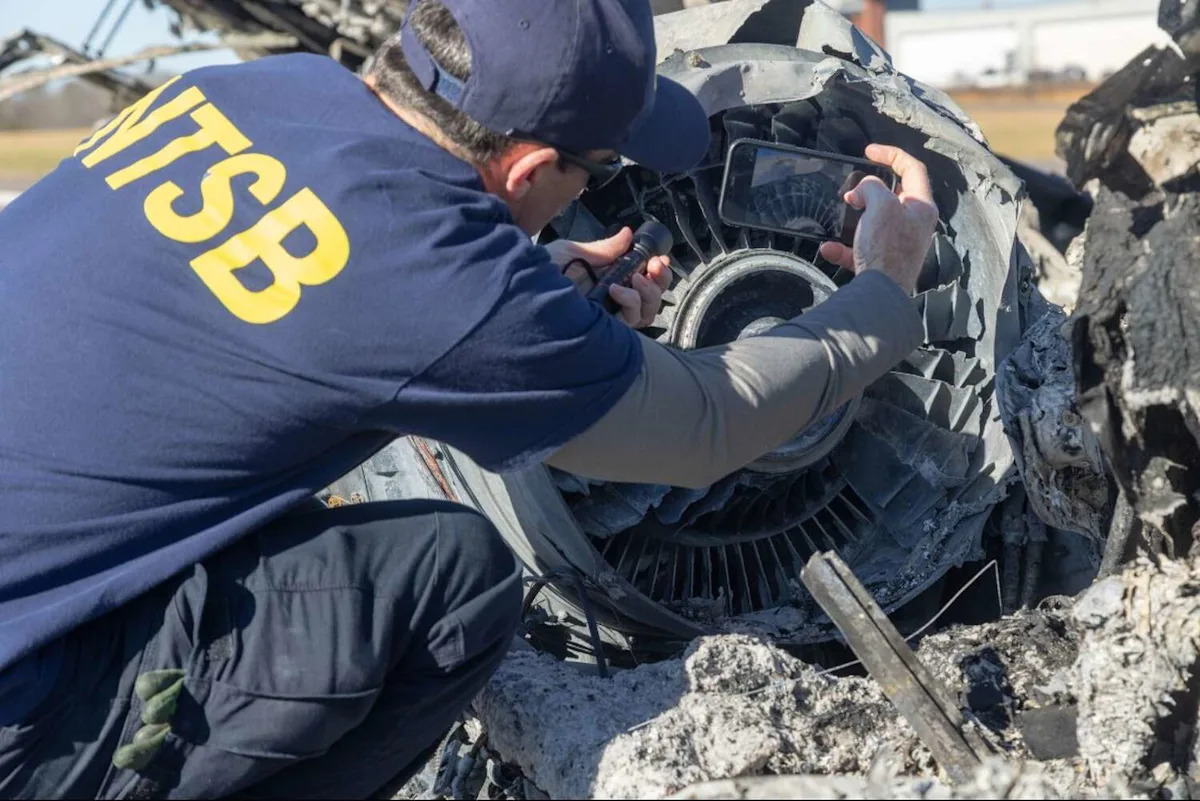
The plane that crashed last week in North Carolina, killing retired NASCAR driver Greg Biffle and the six other people on board, had engines made by Connecticut-headquartered Pratt & Whitney, according to federal investigators.
The Cessna 550 that crashed upon landing last Thursday at the regional airport in Statesville, North Carolina, had Pratt engines that were manufactured in Canada, a spokesperson for the National Transportation Safety Board said this week. Technical advisers from the company are assisting the agency’s investigation of the crash, the spokesperson added.
“NTSB investigators are on scene documenting the wreckage, collecting evidence and interviewing witnesses,” states an update on the crash investigation posted on NTSB’s website. “All aspects of this accident remain under investigation.”
A preliminary report is expected within 30 days of the crash. The preliminary report will “contain factual information gathered during the initial phase of the investigation. A probable cause of the crash and any contributing factors will come in the final report, which is expected in 12 to 24 months,” the update added.
Pratt & Whitney officials declined to comment on the crash and the investigation.
While Pratt & Whitney is headquartered in East Hartford, it has a significant presence north of the border, including the Pratt & Whitney Canada head office and main manufacturing facility in Longueuil, Quebec.
Investigators are trying to figure out why the Cessna 550 tried to return right after takeoff to the Statesville airport, which is about 45 miles north of Charlotte. The plane erupted into a large fire when it hit the ground, about a third of a mile from the airport’s runway.
In addition to the 55-year-old Biffle, his wife, five-year-old son, 14-year-old daughter, and three other people were killed in the crash, the North Carolina State Highway Patrol said.
Investigators have not yet determined the lead pilot. Biffle was one of three people on board with a pilot’s license.
A cockpit voice recorder has been recovered, a remnant of the plane that could provide important information. Investigators are not aware of any emergency calls from the jet, NTSB member Michael Graham said at a news conference last Friday.
While it remains to be seen whether the Cessna 550’s engines had any role in the crash, there have been several non-fatal aviation incidents involving issues with Pratt engines in the past few years. Among them, in February 2021, a Boeing 777-200 operated by United Airlines that was bound for Hawaii returned safely to Denver International Airport, after experiencing “right-engine failure shortly after takeoff,” according to Federal Aviation Administration officials.
Pratt’s engines have also faced scrutiny related to the discovery in 2023 of a rare condition in powder metal used in certain parts, affecting the company’s Geared Turbofan fleet. For 2023, Pratt incurred a pre-tax charge of $2.9 billion, which reflected its anticipation of increased aircraft groundings, its expectation of compensation to customers for the disruption, as well as maintenance costs resulting from increased inspections and shop visits.
This article contains reporting from The Associated Press.
This article originally published at Plane crash that killed NASCAR’s Biffle, six others had engines made by CT-headquartered Pratt & Whitney.