
Good Samaritan saves cubRob Gibson – Dec 23, 2025 / 4:00 am | Story: 590773
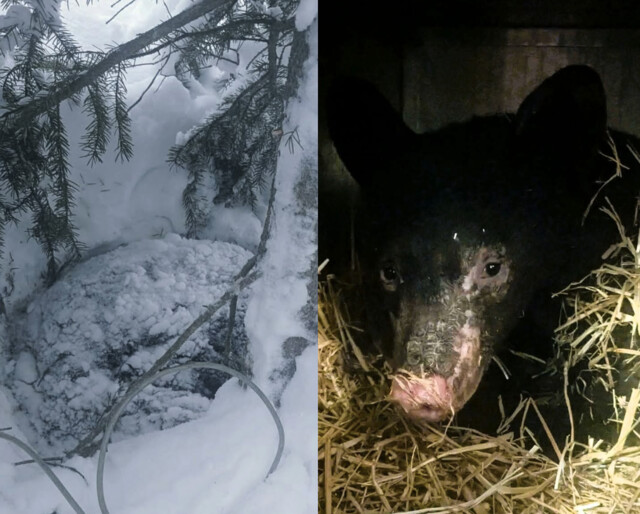
Photo: Facebook
Bear cub found freezing curled into a ball at the base of a tree.
A small bear cub got a Christmas miracle after being spotted wandering on a road in Dawson Creek, B.C.
Angelika Langen with Northern Lights Wildlife Society out of Smithers, B.C., tells Castanet a bear cub was spotted by a Dawson Creek man who shooed it off the road so it wouldn’t get hit by a vehicle.
“A gentleman named Sean Jackson kind of herded it off the road and underneath a tree where it curled up. And then he called us, and then we started the process, called the government, got permission, and then sent our volunteers out to get it, and Sean helped get it into the crate and bring the crate out of the deep snow to safety,” Langen says.
The cub was saved from -34°C and taken to get warmed up. It is now on the way to the Northern Lights facility in Smithers, where it will likely arrive Tuesday.
“The cub is underweight and has frostbite on its ears, nose and paws. It will be assessed and treated, with careful rehabilitation to avoid shock,” Langen says.
The unusually warm weather we’ve been having could be the reason the little cub wasn’t hibernating.
“They need to have a certain body weight for hibernation to trigger, otherwise they keep looking for food. So it might have been orphaned a while back and just not able to sustain itself. I will know more once it gets here, and then we do an assessment to see what the weight is and the overall body condition, because it has quite a bit of frostbite on the ears, nose and paws,” Langen says.
For now, the cub will join some of the other rescued animals, including bear cubs, staying at the facility. Langen says assuming the bear is in good enough shape and makes a full recovery, they will release it back into the wild near its original home next summer.
“Absolutely, that’s the goal. That would be next year, in June. That’s when they normally would leave their mother, and that’s when we would return them back into their region, but into a suitable area away from people,” Langen says.