
SAN DIEGO — The race for top AI talent shows no sign of relenting as tech giants, AI challengers, startups and established firms in sectors such as banking and telecom jostle to recruit superstar researchers and engineers.
The hiring frenzy was on full display at NeurIPS, the Conference on Neural Information Processing Systems, in San Diego earlier this month. Firms and investors hosted parties for top prospects at Michelin-star restaurants, on decommissioned aircraft carriers and in ballrooms overlooking the San Diego Padres’ home field.
Talking Points
Competition between tech giants and leading labs has resulted in star researchers being offered huge compensation packages as the race to develop more powerful AI systems heats up
Amid the talent contest, startups and firms in established sectors like banking and telecom are recruiting AI talent by offering the chance to work on practical problems rather than racing to develop superintelligence
Tech giants and quantitative trading firms had the largest booths at the conference, the AI industry’s largest academic gathering. They put on technical talks and handed out tons of free tote bags, flasks and stickers. Recruiters chatted up students looking for internships or first jobs, while attendees already employed elsewhere tried not to be seen taking competitors’ swag.
Silicon Valley’s largest companies are spending big to hire and acquire AI researchers and engineers as they chase superintelligence. Staff with experience building so-called foundation models—the multi-purpose systems that power tools like ChatGPT or Gemini—are particularly in demand. “It’s clearly a very competitive dynamic for talent at the moment,” said Jeff Dean, chief scientist at Google DeepMind, which has recruited from and lost staff to rivals Meta, Microsoft, OpenAI and others.
Related Articles

By
Catherine McIntyre and Leah Golob
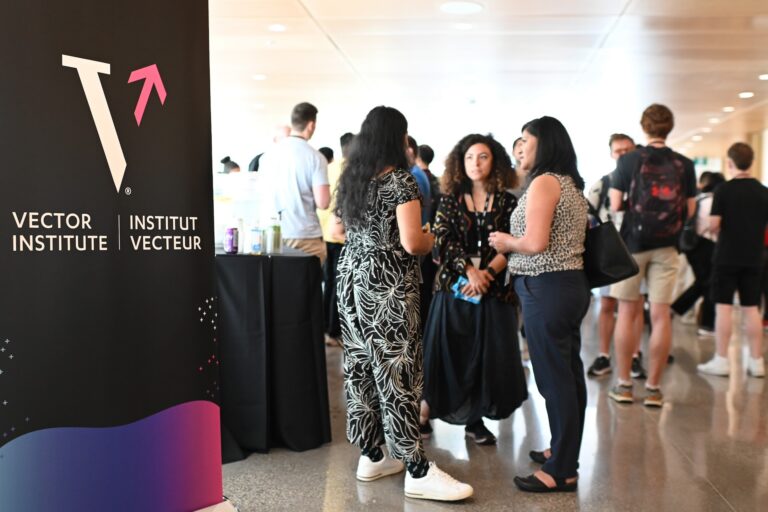
The in-house AI units of Canada’s two largest financial institutions were also in San Diego to hire. Perks help with the recruitment pitch, but executives say a big focus of their pitch to top researchers is the chance to solve gnarly, real-world problems. TD Bank’s Layer 6 and RBC’s Borealis both employ AI researchers, publish journal papers and present their work at academic conferences like NeurIPS.
“We’re here to show all these people what we do,” said Greg Mori, vice-president at Borealis. While most of the tech giants are focusing on general-purpose models, RBC’s AI teams have applied the technology to practical applications such as stock trading and loan adjudication tools.
TD has similarly had success hiring staff away from tech firms by giving them the chance to shape how AI is deployed in financial services. “A lot of the use cases that we do are the first of its kind at the bank,” said Maksims Volkovs, chief AI scientist and co-founder of Layer 6. “You can really transform the business.” He cited new AI tools the unit has built that help call centre workers give the right answers or write risk memos for borrowers. The firm also has plans to develop generative AI assistants that account holders can consult with for financial questions.
Telus Digital sells data collection and validation services to AI developers, and sometimes competes with those clients for talent. A spinout of the Canadian telecom giant, it attracts people looking for “a stable, well-funded company that has a clearly defined mission,” said Steve Nemzer, director of AI growth and innovation. “It can be chaotic to work at a foundational model builder.” Meta, for example, has committed hundreds of millions to recruit top researchers but laid off 600 AI staff, including some recent hires, as it chases superintelligence.
Some of those leaving the race to create smarter-than-human AI at the tech giants are heading to AI upstarts. “What researchers care about is, ‘Am I at the cutting edge of what’s possible? And am I working with other people who are incredibly talented?’” said Sara Hooker, co-founder of Adaption, a San Francisco-based startup working on a new way to build and improve AI models.
A former Google scientist, Hooker was most recently an executive at Toronto-based Cohere, where she led the firm’s non-profit research arm. “Most of my career has been doing my tour of duty at frontier labs,” she said, where the focus is to “build a single model to rule them all.” Most of those firms are trying to improve their AI systems by scaling up the data and processing power used to train them.
Adaption, by contrast, is trying to build models that evolve in real time to fit the task they’re assigned. It plans to unveil its technology next year. The startup is working to recruit researchers from large tech firms who are similarly skeptical of the scaling approach, Hooker said. “In some ways, the talent selects itself.”
Many of the executives at NeurIPS in San Diego said the AI talent wars have driven up salaries in an already hot market. Researchers who’ve worked on commercially successful AI models and engineers with machine learning operations experience are in particularly high demand, Nemzer said. “They’re writing their own tickets right now.”
The tussle for star researchers, and the multimillion-dollar salaries on offer, have grabbed headlines, but this is unlikely to be the last round of AI job-swapping. Hooker predicted firms offering researchers a compelling challenge will have an easier time than those just flashing cash. “What happens after a year when all those initial paycheques kick in?”