
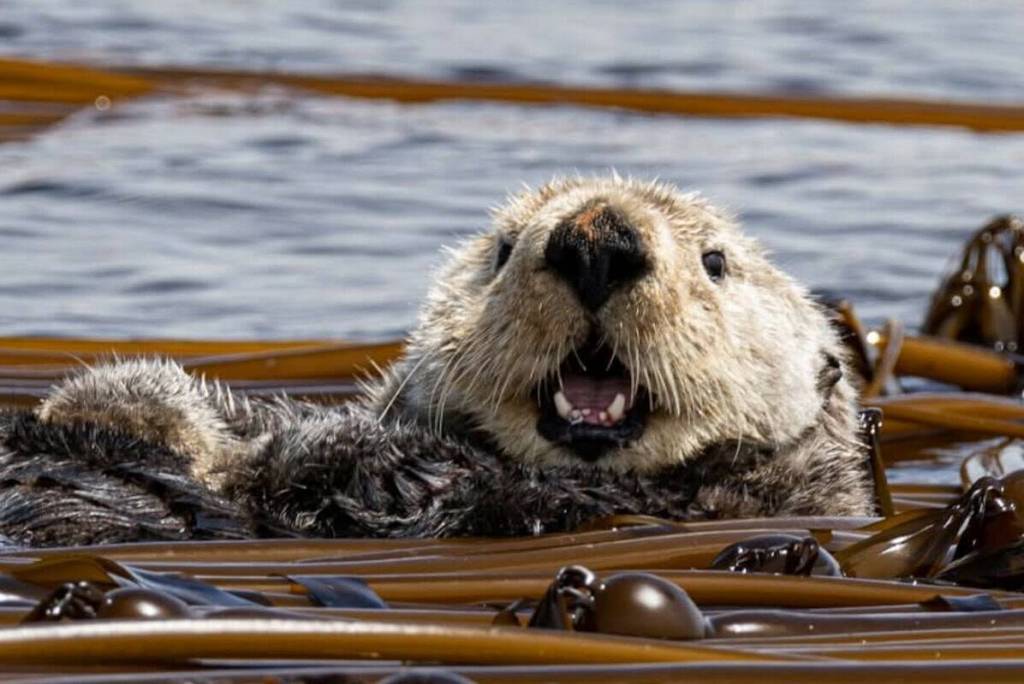
Greater Victoria’s wild neighbours and domesticated furry friends captured the hearts and minds of readers throughout 2025.
From a so-called “serial killer” lurking in the Salish Sea to an unexpected apex predator showdown, and even a winged ‘Freddy Krueger’ terrorizing Victoria’s skies, the year delivered no shortage of jaw-dropping moments.
Balancing out the chaos were plenty of heartwarming scenes, including a fat cat reigning as top dog in Metchosin, a motorcyclist and his sidecar canine co-pilot turning heads downtown, and numerous breathtaking killer whale encounters in Victoria’s Inner Harbour.
As a wild and wonderful year comes to an end, here’s a selection of some of the most memorable animal stories from 2025.
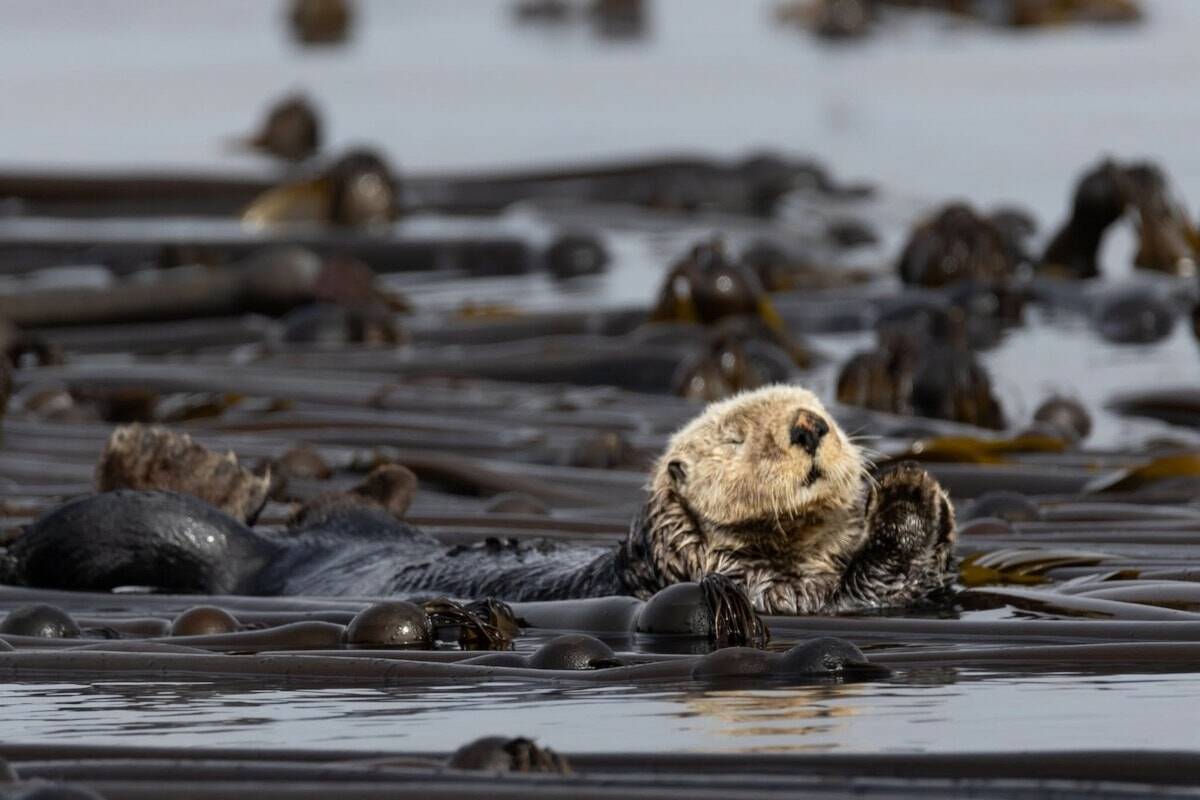
Ollie the sea otter can most often be found at Race Rocks ecological reserve. (Courtesy of Mollie Cameron)
1. Death on the Strait: Sooke sea otter exposed as ‘Salish Sea serial killer’ – Jan. 22
He might look cute, but don’t be fooled by his round, plush face and those curious eyes – this Vancouver Island sea otter has a dark secret – many dark secrets.
Known to the whale-watching community and his fans as ‘Ollie’, the infamous 13-year-old sea otter has been living out his life among the kelp at Race Rocks ecological reserve for over a decade.
Initially nicknamed the ‘lonely sea otter’ because of his solitary lifestyle, in more recent years, he has had a rather more sinister title bestowed upon him: the ‘Salish Sea Serial Killer.’
Thought to be responsible for the deaths of at least 20 river otters, Ollie has earned himself quite the bloodthirsty reputation.
“Usually when river otters are seen in the area, they’re not seen again,” said Mollie Cameron from Wild Wise.
And Ollie doesn’t stop at “ottercide,” his river otter victims also show visible signs of sexual trauma.
“He’s been seen doing nefarious things with them for days on end after they’ve died,” said Cameron.
His behaviour could be attributed to his ‘lonely’ lifestyle, explains Cameron, as he is one of only a handful of sea otters recorded this far east in the Strait of Juan de Fuca.
“The theory is that there’s no females around,” she says. “And so he’s just taking his sexual frustration out on the river otters, as that’s kind of his only outlet, supposedly.”
But the behaviour is not unique to Ollie. A lack of females in the vicinity was blamed for a series of attacks on juvenile harbour seals in the early ‘00s in California. While in Sooke, another sea otter was seen taking his frustrations out on other wildlife, slaying ducks in the process.
Nicknamed ‘Whiffin’, Ollie’s neighbour also hit the headlines in 2025 when he was photographed attempting to ride tandem with a surfer at Whiffin Spit.
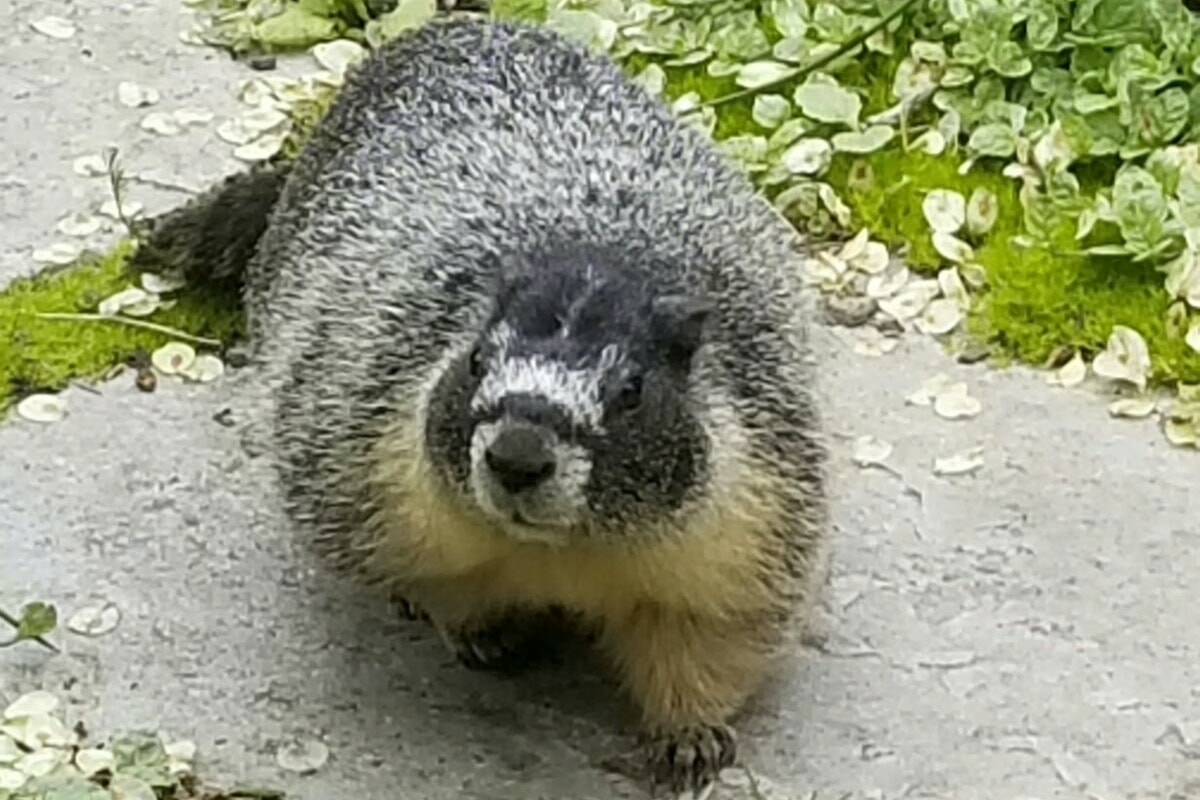
Fairmont Empress Hotel gardener Alex Buck says resident yellow-bellied marmot Roger is the unofficial boss of his team. (Courtesy of Alex Buck)
2. Empress and the beast: Victoria hotel’s turf war with marmot Roger – June 5
From one reign of terror to another, this time back on dry land, where another famous Victoria critter has earned himself quite the reputation.
For 17 years, the Fairmont Empress Hotel grounds team and their plants have been at the mercy of a yellow-bellied marmot called Roger.
“He’s definitely the boss,” says Alex Buck, who has worked at the hotel for 34 years, 12 years as part of the grounds team. “He’s named after one of the old bosses of the Fairmont – so it suits him.”
Not native to the Island, local legend says Roger hitched a ride from Alberta on board an RV. The rock chuck was first spotted in the grounds of the Inner Harbour hotel in 2008, making his home among the Centennial Garden’s rockery.
It’s here he feasts on a buffet of the finest flora in the city, often uprooting the hard work of Buck and his colleagues.
But the Empress gardeners don’t get mad, they get “gentle.”
To combat the marmot’s ferocious appetite, Buck says the gardeners try to work in harmony with Roger, creating a garden satisfying for all appetites – both a taste and visual sensation.
Now in his twilight years at the grand old age of 17 (at least) – yellow-bellied marmots can live up to 15 years in the wild – Buck hopes Roger will still be around to celebrate his 20th anniversary at the hotel in 2028.
“We see him a little less every year,” says Buck. “But he’s an old bachelor on his own, doing his own thing. I think it’s just easy for him, he knows the routine now, and he’s got a little lazier.
“But he’s had the perfect life.”
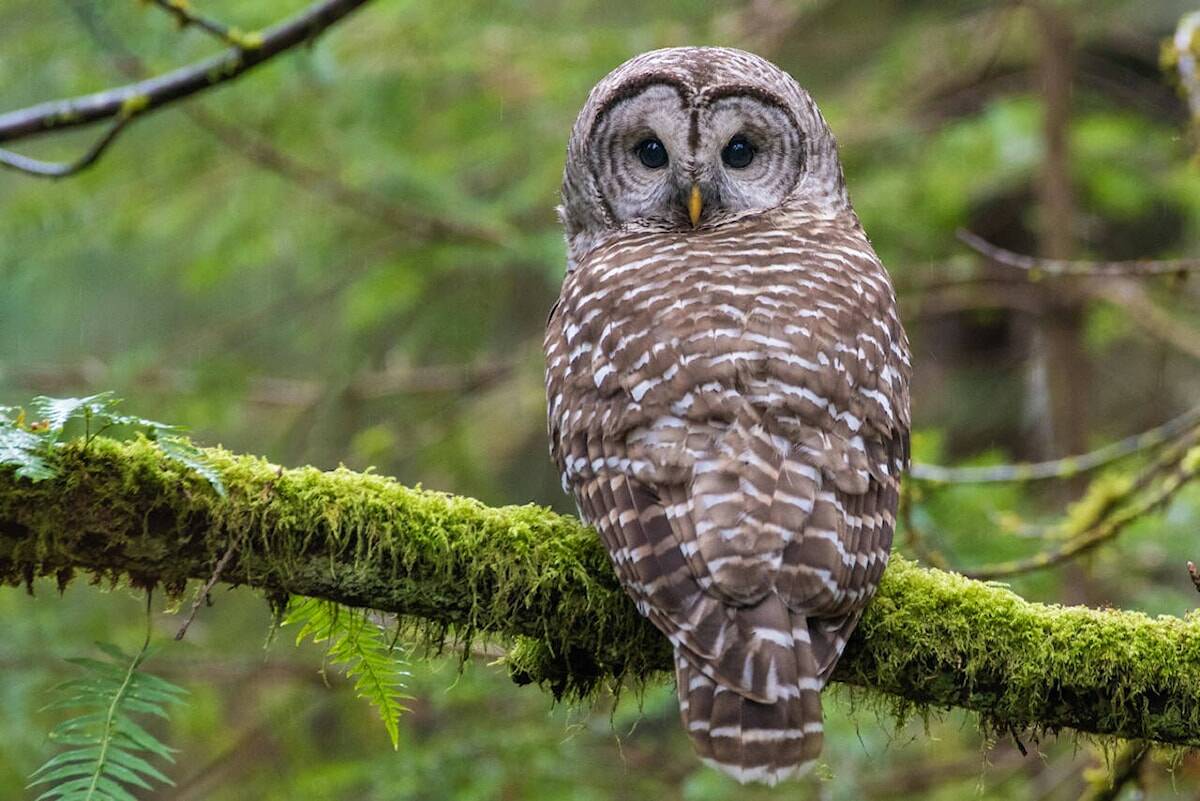
The barred owl, named after the “bars” running across their gray and white chest, is one of the most common owls on Vancouver Island. (James MacKenzie)
3. ‘Imagine Freddy Krueger attacking you’: Victoria owl attack draws warning – Jan. 9
While hotel gardeners battled with critters living underground, one Victoria resident was more concerned with those in the sky.
When walking through Redfern Park one winter evening, Susie Henderson was surprised when an owl swooped out of the darkness and latched onto her hair. “I thought maybe a raccoon had just jumped onto me,” she said.
The attack was over in a flash. The owl hadn’t broken her skin. Still, she had felt the bird’s sharp talons.
“Imagine Freddy Krueger attacking you from behind,” she said.
Based on Henderson’s description of the owl, a representative of the Surrey-based Northern Spotted Owl Breeding Program said the bird was most likely a barred owl.
“This is typical barred owl behaviour,” she said. “They’ll swoop any time of year, but as we are getting close to the breeding season, they’ll be more aggressive than usual.”
Rocky Point Bird Observatory volunteer Ann Nightingale added that territorial behaviour stems from the bird’s instinct to protect its young. Other times, however, owls attack people in the hopes of snagging a quick meal.
“Sometimes … they mistake the movement of a ponytail or pompom as a prey item,” she said. “They primarily hunt by sound, so the swishing of hair on a jacket can sound like a small animal moving.”

Johnny Novak brings his A-game to RPBO’s Scream Like A Gull contest on May 10. (Harry Corro/Victoria News)
4. Feather in his cap: Victoria man’s seagull screech soars above the rest – May 12
Better known for dive-bombing unsuspecting folks in pursuit of a quick snack than for leaving scars like their raptor cousins, seagulls are not everyone’s favourite bird.
So it came as a surprise to many when Rocky Point Bird Observatory (RPBO) kicked off Victoria Bird Week with a novel and engaging event to celebrate the often villainized bird: the first-ever Scream Like A Gull Contest.
A cacophony of squawks, mews and cow-cows filled Victoria’s Beacon Hill Park, as the contest drew a crowd of close to 100 bird enthusiasts, all eager to witness participants unleash their inner seabird.
James Bay resident and Virgin Radio morning show host Johnny Novak emerged victorious in the gull-screaming showdown. Dressed in white and sporting a gull hat, Novak impressed the judges with his authentic and powerful rendition of a glaucous-winged gull call.
Novak credited his win to extensive research, noting that he has lived alongside a flock of glaucous-winged gulls nesting on his roof for the past three years.
Beyond the fun and frivolity, the contest served as a platform to raise awareness about the challenges facing bird populations.
RPBO education director Simone Littledale emphasized that many bird species, including several gull species, are in decline.
“We want to get a conservation message out and hopefully get people to appreciate gulls and realize their abilities to survive and be resourceful and not just see them as trash birds,” she said.
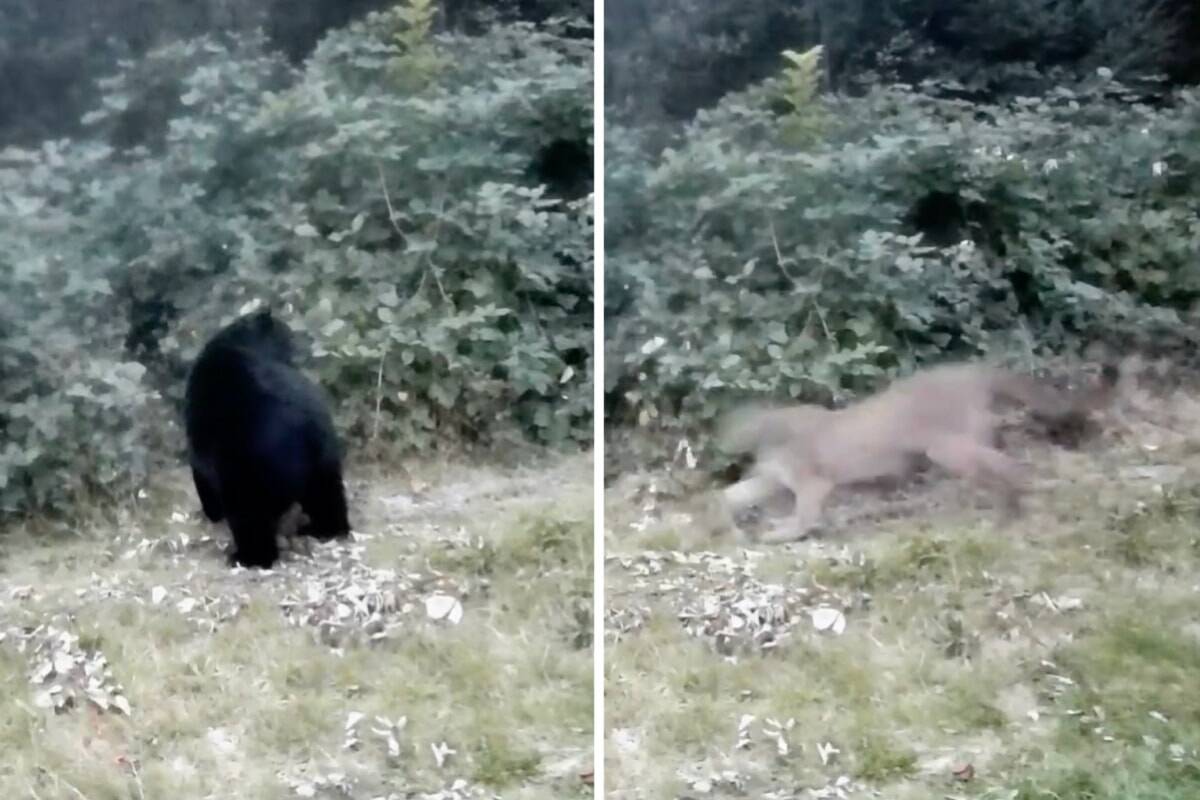
A cougar was caught on camera chasing down a black bear in a unnamed location on Vancouver Island. (Courtesy of Karen Grundlingh)
5. Cougar vs bear: Langford locals catch apex predator showdown on film – June 3
For folks, the rules are simple: if you see a cougar, don’t approach it, maintain a safe distance and back away slowly – never run.
Black bears, however, play by a different set of rules. And for one Vancouver Island bear caught on camera, there was no messing about, they ran – and fast.
The wild showdown was discovered by Langford resident Karen Grundlingh when she reviewed trail camera footage set up on her four-acre plot of land in a remote area of the South Island.
In the video, a bear can be seen minding its business in front of a blackberry bush, when all of a sudden it makes a run for it, darting down a game trail through the bush.
Seconds later, a cougar appears, chasing at pace.
The apex predator confrontation left Sooke-based wildlife group Wild Wise “speechless,” having never seen anything like it before.
“Sometimes, nature shows us moments we never expect,” said the group in a social media post.
According to a Wild Wise volunteer passionate about animal behaviour, despite appearances, the cougar was not in attack mode.
As the big cat can be seen coming to a stop in the bush and not pressing the chase, the volunteer believes the showdown was more of a “territorial protest” rather than a hunt. Instead, they said the encounter is a classic example of ‘fight or flight’ behaviour – in both animals.
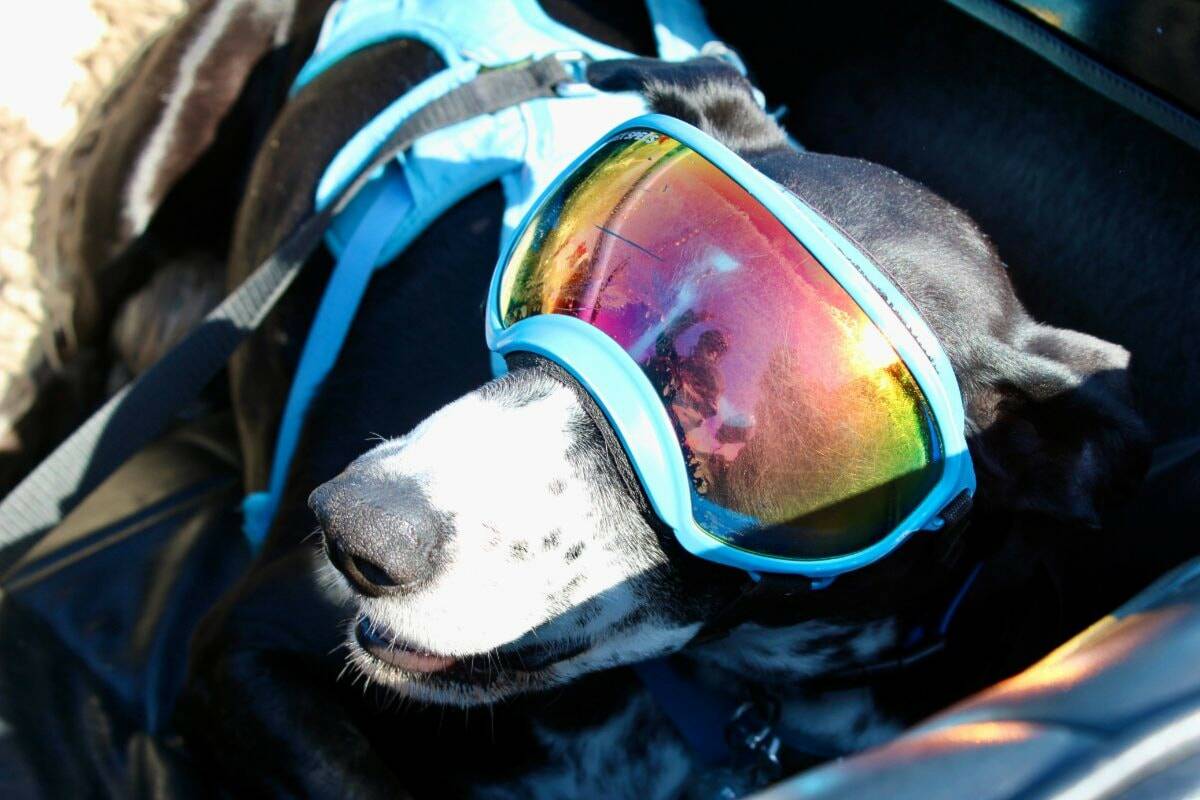
Longtime Victoria resident Jamie Lone and his dog, Flyin’ Joe, have become a staple on Victoria’s streets with their sidecar appearances around the city. (Tony Trozzo/Victoria News)
6. Sidecar-loving canine a familiar sight on Victoria streets – May 1
For Jamie Lone, it started with a motorcycle, a dog, and a quiet need to heal. Six years and nearly 20,000 kilometres later, it’s grown into something that brings joy to an entire community.
Lone, a 37-year resident of Victoria, never set out to become known as the man on the motorcycle with the dog in the sidecar. In fact, the story of Flyin’ Joe began in a moment of hardship.
After a 32-year career in the navy, a motorcycle crash in 2014 left him with a traumatic brain injury, a new hip, and more than a year of outpatient rehab.
While in recovery, Joe – a Doberman, border collie, and blue heeler mix – came into his life.
At first, the pair simply coexisted. But Lone, still missing the road, wanted to ride again – this time with Joe. He found a motorcycle with a sidecar in Port Alberni, drove up with Joe, and brought the rig home.
That night, while Lone was cleaning it, Joe climbed into the sidecar and promptly fell asleep.
“The next morning we did two laps around the cul-de-sac,” Lone said. “Now we’ve got about 20,000 kilometres.”
These days, Lone and Joe can be found cruising around Victoria, from Clover Point to the Empress Hotel, a popular sight for tourists and locals.
“He knows when he’s in the sidecar, he keeps his goggles on, and when we stop, they come off,” Lone said. “He’s not harmed in any way. He’s pampered, well-groomed, well-loved by all.”
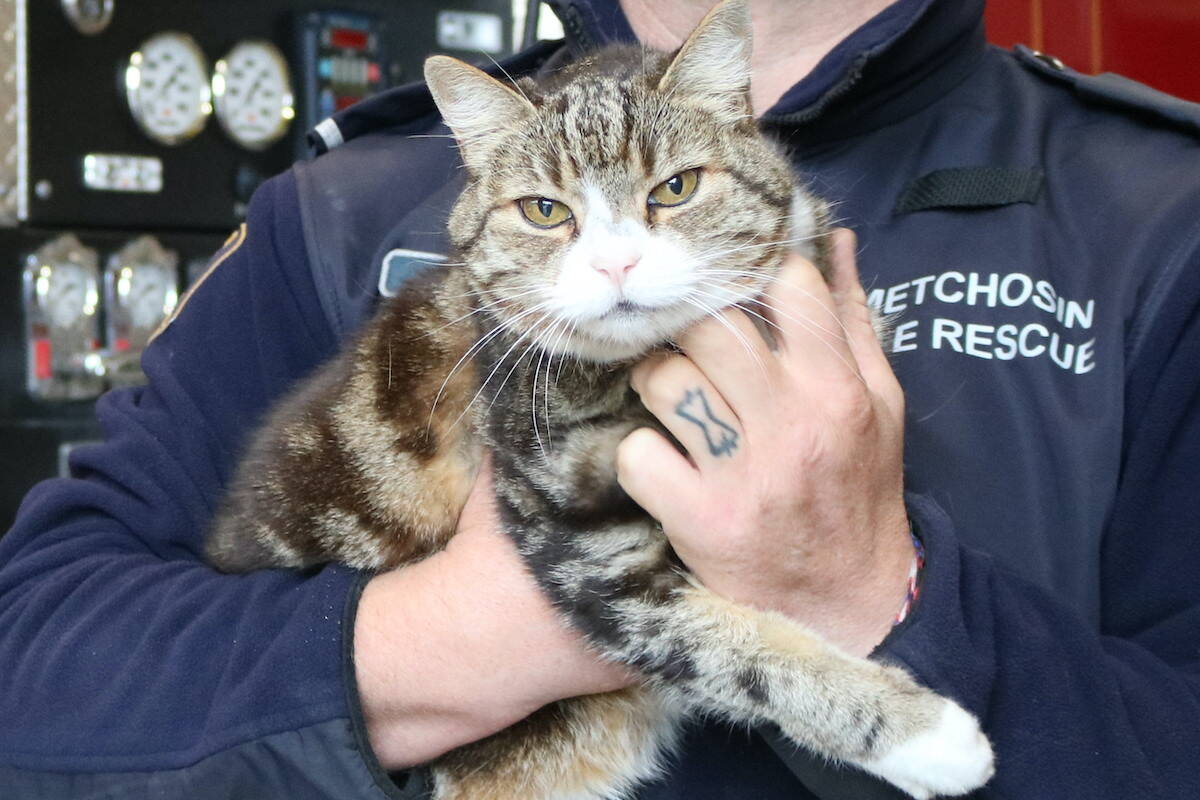
For around 15 years, Sparky/Cat has ruled the roost at Metchosin’s Fire Hall. (Ben Fenlon/Goldstream Gazette)
7. Purr-fectly in charge: Meet the fire hall cat who’s top dog in Metchosin – Nov. 7
Sparky? Fire Cat? Miss Mew? Or simply Cat? Folks in Metchosin can’t seem to agree on a name for the feline that has prowled the municipal grounds for roughly 14 years.
But one thing’s certain – whatever his name, and no matter who you ask, he’s a local legend.
Rescued when he was a kitten by Fire Chief Stephanie Dunlop, Cat – as he is known at the Fire Hall – quickly made himself at home.
“He basically took over the town from there,” said Lt. Jacob Lamb, a 10-year member of Metchosin Fire. “He’s top dog for sure.”
Over at the Municipal Hall, Sparky – as he is known there – has made himself equally at home.
“Sparky is the Fire Hall cat, and he is welcome to come and go as he pleases,” reads a poster on the hall’s front door, complete with a picture of the animal slouched on the floor. “He is very friendly.”
At the Municipal Hall, Sparky patrols the office like he owns the place, checking on staff, dropping by the planner’s office and visiting the mayor. He’s even known to stray as far as the community newspaper office and the local coffee shop.
Some suspect, using his feline charm, he’s managing to rack up four or five meals a day.
“As you can see by his chunkiness, he gets his full share of snacks,” says deputy finance officer Laura Whitmore-Guzauskas.
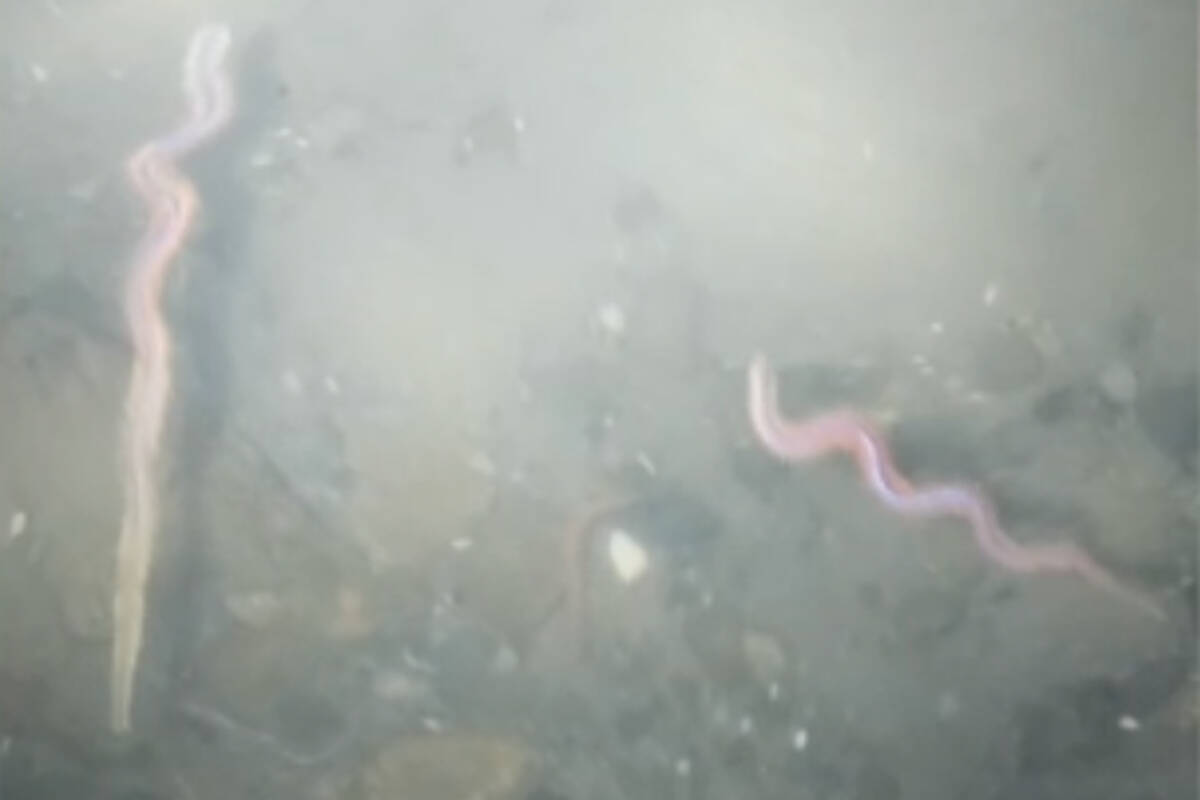
Greg Gilks captured on video a strange phenomenon at Macaulay Point on Feb. 1. (Courtesy of Greg Gilks)
8. Aliens of the deep: ‘Evil-looking’ sea creatures swarm Esquimalt waters – Feb. 10
An evening stroll in Esquimalt’s Macaulay Point Park took a horrifying turn for one man and his dog when they spotted “evil-looking worms” in the water.
“In every direction there were just hundreds of them,” said Greg Gilks. “It was crazy … they looked like some sort of giant sea centipede.”
Alone, under the cover of darkness and with a chill wind blowing, Gilks said it felt like he had stepped into the scene of a horror movie.
“It had a ‘The Thing’ vibe to it,” he said, referencing the science-fiction horror film where a group of researchers in Antarctica are hunted by a parasitic alien creature.
Was life imitating art? Were Gilks and his dog in danger of assimilation by shape-shifting extraterrestrial sea creatures?
No, of course not. But while their encounter was not paranormal in nature, it was a phenomenon, said Benjamin Neal, assistant teaching professor in biology at the University of Victoria.
The mysterious creatures are polychaetes, most commonly known as giant pile worms, or giant clam worms, explained Neal, who thinks the species Gilks saw could be either Nereis brandti or Nereis vexillosa.
Buried in the sand at the bottom of the sea, the giant pile worm leads a life out of sight from humans. But once a year, triggered by the tides, lunar cycle and pheromones in the water, the worms swarm en masse, rising to the surface to reproduce.
It was this phenomenon Gilks “most likely” witnessed in the waters of Macaulay Point in February.
“You’re lucky to witness this interesting, beautiful thing for sure,” Neal said.
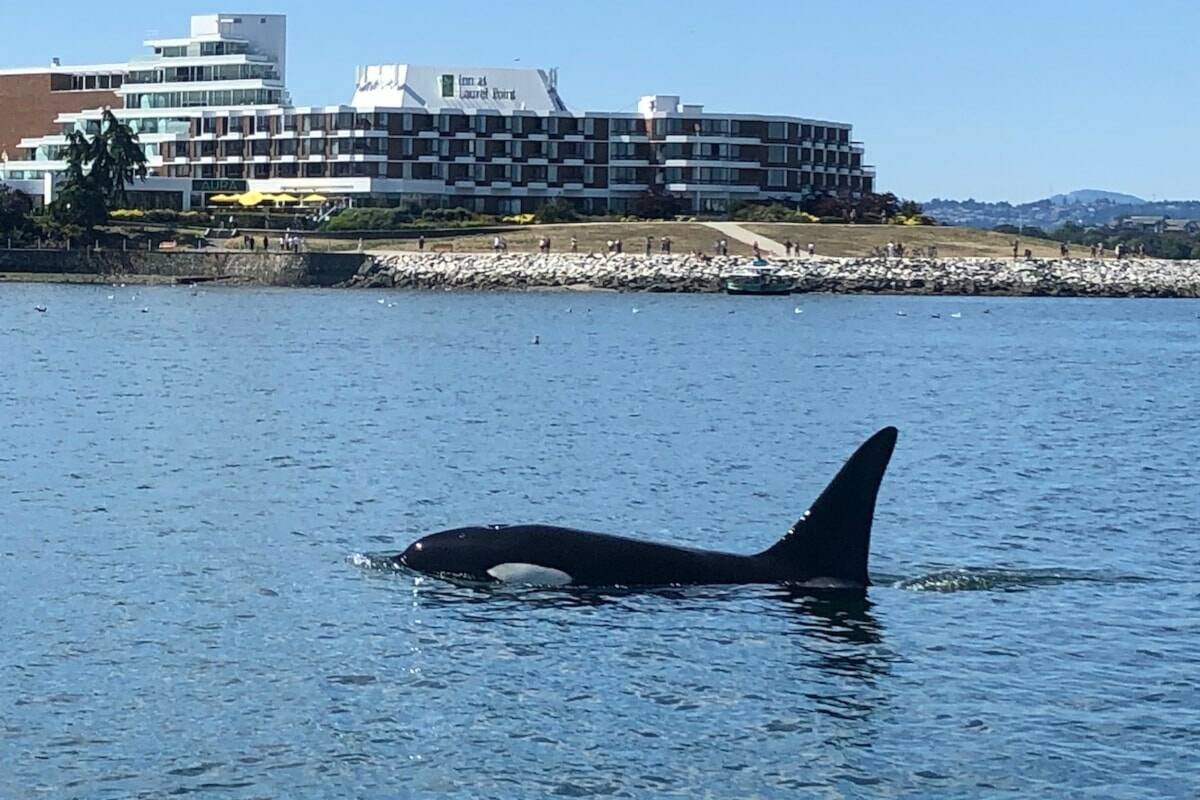
Four orcas caused a stir Aug. 23 in Victoria’s Inner Harbour when they paid a visit. (Courtesy of Jeff Mills)
9. Orcas treat Victoria Inner Harbour visitors to whale of a time – Aug. 27
Visits from Bigg’s killer whales to Victoria’s Inner Harbour and shoreline became a familiar sight throughout 2025.
Experts told Victoria News in March that the increase in sightings is likely tied to an abundance of “easy-picking” harbour seals, which draw the predatory whales into the busy downtown waters.
One visit in August brought harbour traffic to a standstill and sent onlookers scrambling for their cameras.
Four male Bigg’s killer whales cruised leisurely through the Inner Harbour as hundreds lined the shoreline, eager for a glimpse of the majestic visitors.
People on the water weren’t left out either, as kayakers, paddleboarders and small boat passengers found themselves drifting alongside the whales, sharing the same extraordinary view.
A pod of 4 Bigg’s killer whales delighted visitors at Victoria’s Inner Harbour Saturday, Aug. 23. pic.twitter.com/T8CHWNRG2T
— Victoria News (@VictoriaNews) August 26, 2025
Water taxi passengers realized they had unexpectedly purchased the city’s best whale-watching ticket, and with outbound planes delayed because of orcas on the runway, Harbour Air staff and passengers also enjoyed a front-row seat to the spectacle.
While folks on land and sea watched in awe, the apex predators moved purposefully through the harbour, scanning for their next meal.
With harbour seal pupping season still in full swing, it’s likely the pod was hoping for an easy meal. But after poking around the Inner Harbour for around 20 minutes, the whales found the seal pup buffet was closed for the day.
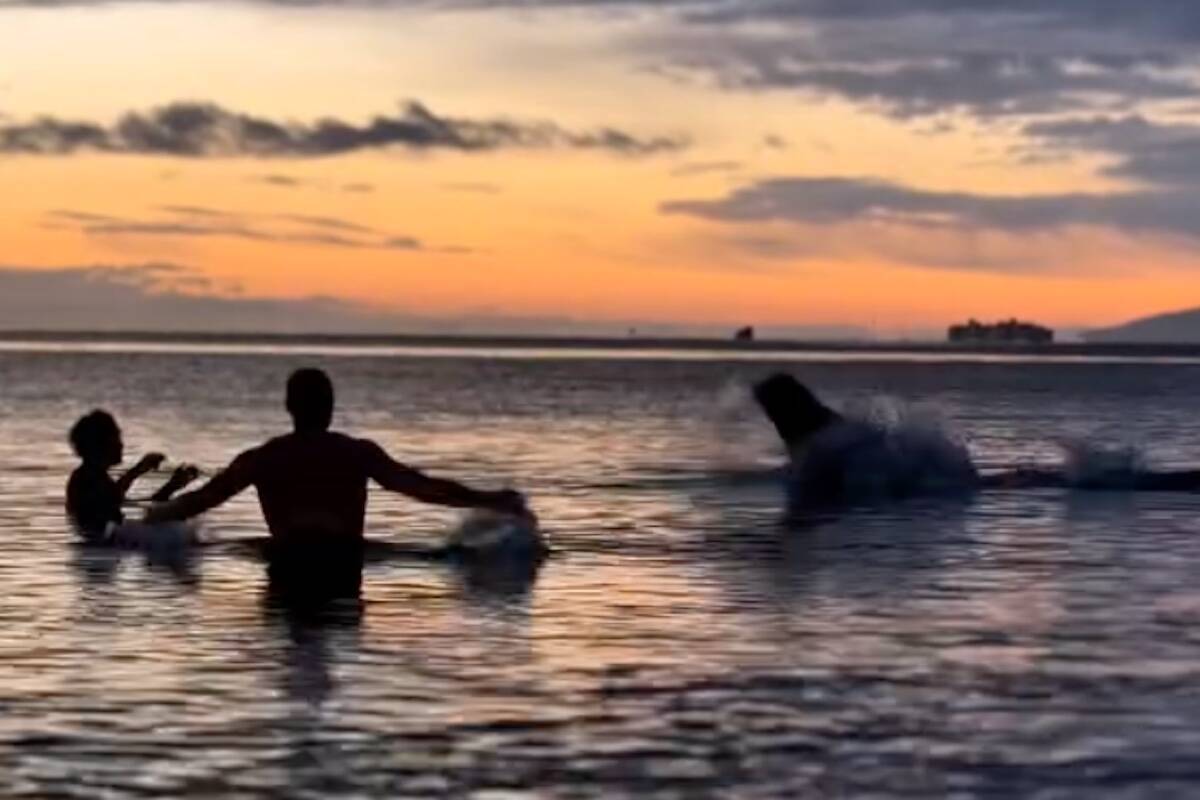
Ennio Titarenko and Andrew Wierzbicki are startled by a lunging bull sea lion during an early morning cold dip at Esquimalt Lagoon Nov. 24. (Courtesy of Ennio Titarenko)
10. Lunging sea lion startles sunrise swimmers at Colwood beach – Nov. 24
Cold plunging in the waters of Esquimalt Lagoon is supposed to take your breath away. But for two sunrise swimmers, a routine dip got the blood pumping in more ways than one.
Langford locals Ennio Titarenko and Andrew Wierzbicki had barely been in the water five minutes when a bull sea lion surfaced roughly 15 feet away from them.
Titarenko, a former commercial diver, wasn’t bothered by its sudden appearance, but for his pal Wierzbicki, it was a different story.
“I am very afraid of the ocean,” he said. “I’ll go in, but it scares me, just because it’s so huge – it’s the most powerful force on earth, in my opinion.”
As the beast loitered nearby, a nervous Wierzbicki began slowly backing out of the water – Titarenko, meanwhile, stayed calm.
But the mood shifted fast when the large male sea lion edged closer, suddenly lunging out of the water towards the pair. This time, both men made a hasty retreat to shore.
“It was game over for me at that point – there was no way I was dealing with that guy,” said Wierzbicki. “He’ll win every day on his own turf for sure.”
Just as quickly as it charged, the bull disappeared again, leaving the pair convinced the encounter was a territorial warning.
“He was definitely asserting his dominance,” said Wierzbicki.