
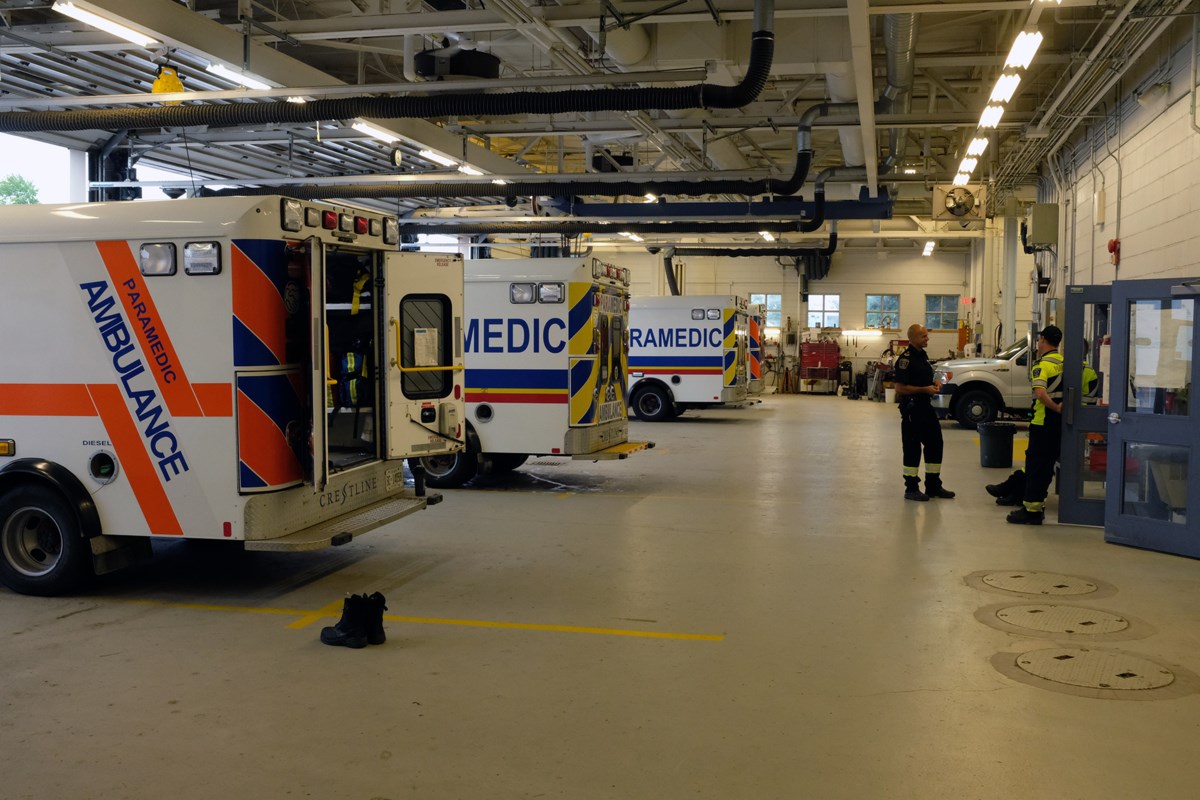
After implementing several key recommendations from an external review, Sault Area Hospital has achieved its best-ever performance in transferring patients from ambulances into emergency care
After years of challenges, a joint initiative between Sault Area Hospital and local paramedic services has led to a sharp decline in ambulance offload delays, a problem that had been keeping paramedics occupied watching patients instead of taking calls.
“There were times when there were no ambulances on the road from Wawa to the Sault. This is really, really important,” said Mike Nadeau, CEO of the District of Sault Ste. Marie Social Services Administration Board (DSSAB), of the offload delay problem during a meeting earlier this month.
An offload delay is recorded when a paramedic crew arrives at the emergency department and is not, for one reason or another, able to transfer care of a patient to hospital staff. In some instances, paramedics must wait with patients for hours before they can be admitted — hours when those paramedics are not available for other emergency calls.
Nadeau said improving the offload delay problem is one of the most significant risk-reduction strategies the DSSAB has embarked on.
For years, the DSSAB and Sault Area Hospital have been trying different strategies to combat the problem, which at times resulted in paramedics spending hundreds of hours per month in the emergency department instead of being available to respond to calls for service.
One of those strategies was the offload nurse program initiated in 2023, which tapped provincial funding for dedicated offload nurses to accept patients in the Emergency Department to allow paramedics to get back on the road.
Earlier this year, Paramedic Chief Katie Kirkham told the board she was expecting a report with recommendations from Optimus SBR, a consultancy firm, to be delivered in September.
That report provided an in-depth analysis of the emergency department and paramedic practices, patient flow and systemic challenges within the broader health-care system.
The Optimus SBR recommendations to the District of Sault Ste. Marie Social Services Administration Board and Sault Area Hospital included a formal offload escalation plan and further alignment of processes and data, while working together to ensure emergency care is available when the community needs it most.
After a few months of initiating those recommendations, offload delay issues have continued to affect paramedic wait times in a positive direction.
“Reducing ambulance offload delays means paramedics can get back on the road faster and be there when residents need them most,” said Stephanie Pagnucco, DSSAB board chair, in a news release.
She added: “While there is more work ahead, this progress shows the value of collaboration, data-driven decision-making and continued investment in our local emergency system.”
In Nov. 2025, a total of nine patients experienced an offload delay longer than 30 minutes, compared to 228 patients in Nov. 2024.
“Average offload time dropped from 36 minutes to just over 10 minutes, and the 90th-percentile offload time improved to 14 minutes, well below the provincial target,” said the DSSAB in the release.
“Through innovative approaches, including our virtual home waiting room pilot, dedicated patient flow roles and a horizontal waiting room, we are ensuring patients receive timely care while enabling paramedics to return to the community faster. While we are seeing meaningful improvements, we continue to focus on further enhancing emergency department flow to reduce wait times for all patients,” said Mindy Lindstedt, SAH vice-president of clinical operations and chief nursing executive.
“SAH and DSSAB will continue implementing remaining Optimus SBR recommendations, including a formal offload escalation plan and further alignment of processes and data, while working together to ensure emergency care is available when the community needs it most,” said the DSSAB in the release.