
No racing season retrospective would be complete without pausing to contemplate the doings and undoings of our overlords at the Union Cyclists Internationale. From their lofty perch in Switzerland they have issued edicts ranging from the ingenious to the hilarious.
Ruling over races big and small, from the Tour de France to your local crit, they have made decisions that explored the boundaries of ethics, logic and even physics. It’s time to cast an eye over a few highlights of the UCI’s year.
MISS: Wider bars to slow us down

(Image credit: Getty Images)
On the assumption that one of the things making road racing progressively more dangerous is speed, the UCI has decided it’s time to make everyone a bit less quick. From January 2027, bars will need to be at least 40cm wide, with limits on the amount of flare between the tops and the drops and for the turn-in of the brake hoods.
You may like
The idea is that if they make everyone less aerodynamic with a wider arm position, they’ll be slower – which is not in itself a daft idea. In recent years, many pros have moved to narrower bars, typically 36-38cm. Shifting to 40cm, a pretty wide bar by modern standards, is a little difficult, especially if you’re a smaller female rider.
It’s also going to slow down small riders more than big riders (think about the body proportions), although maybe anything we can do to keep a lid on Tadej Pogačar and Remco Evenepoel is welcome. The other problem with it is that it’s not going to slow things down very much.
MISS: GPS trackers for rider safety

(Image credit: Getty Images)
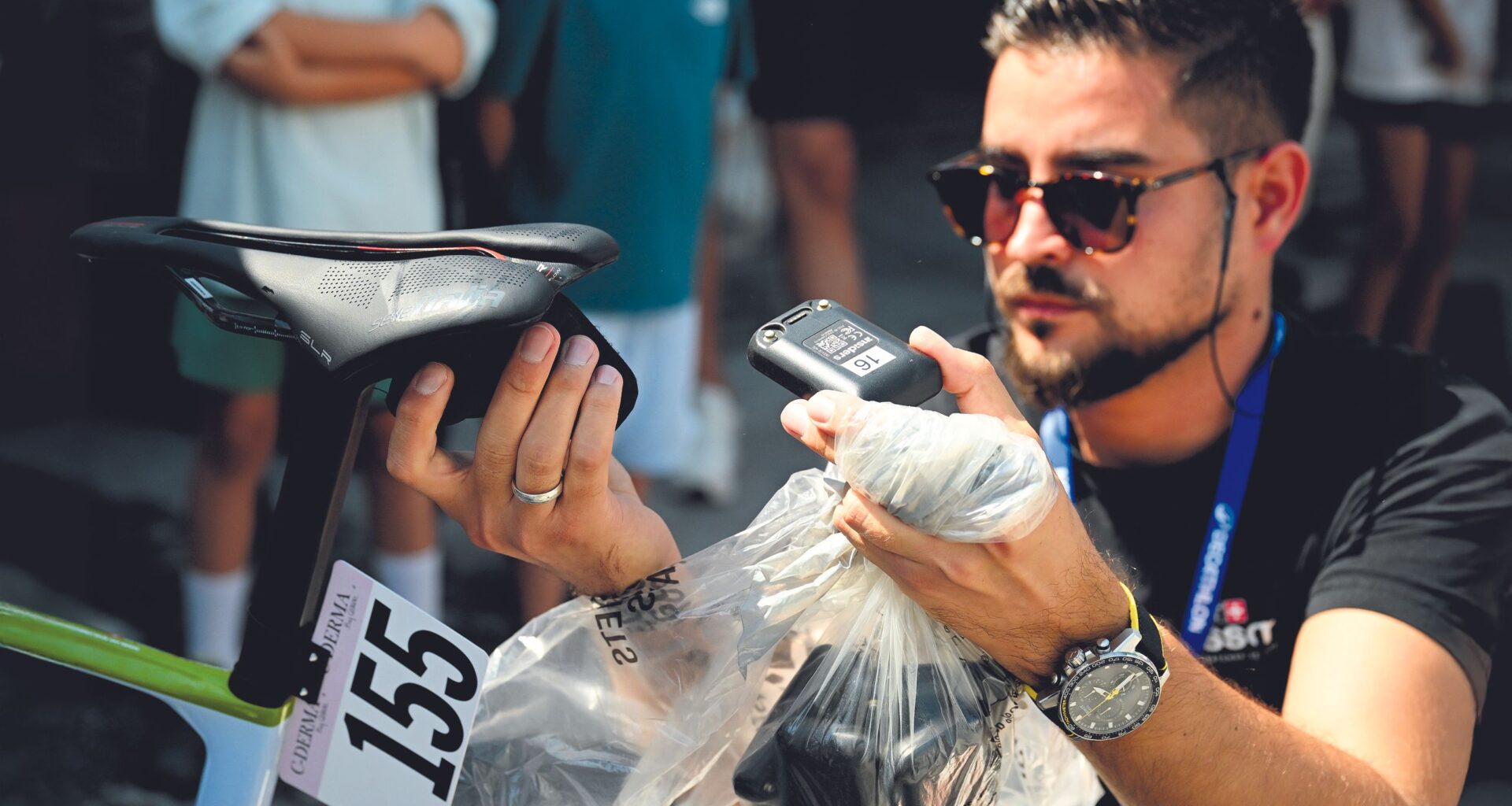
Another safety initiative is the introduction of GPS trackers on bikes so that officials are better able to keep track of where riders are, and above all, ensure there’s never a repeat of the fatal incident at the 2024 Worlds where Swiss rider Muriel Furrer crashed unnoticed and wasn’t found for more than 45 minutes.
Unfortunately an attempt to trial the technology at the Tour de Romandie Féminin turned to farce. Five of the teams said they hadn’t been consulted about the trackers, and pointed out that despite trackers being fitted by the UCI, any incidents or injuries they might cause would be deemed the fault of the team, and refused to nominate a rider for the trial.
The UCI retaliated by rather sulkily saying the teams were only reacting like that because they had commercial interests in a different GPS tracking solution.
The upshot? A standoff culminated in the five teams being thrown off the race, a solution that pleased no one. (Except weirdly obsessed UCI-watchers, obviously.)
MISS: Losing track of time in Spain
At the Spanish time trial championships, the timing went seriously awry. Forty minutes after the race finished, riders were still standing around at the line trying to find out the results. Eventually the commissaires issued some times, then changed some of them, then declared Caja Rural-Seguros’s Abel Balderstone the winner with a time that may, or may not, have been firmly rooted in reality.
You may like
On the upside, at least it gave Spain’s least Spanish-sounding pro rider the biggest win of his career to date.
MISS: Miscounted Madison points

(Image credit: Getty Images)
If you’ve ever watched a Madison race and wondered how on Earth the commissaires keep track of the chaos, well, they don’t always. At the World Championships in October, the German pair of Roger Kluge and Moritz Augenstein let the Danish team escape to take 10 points at the final sprint, on the basis that, as the Germans could clearly see on the stadium scoreboard, they were comfortably ahead of the Danes for the bronze medal.
Except that the Danes had taken a lap mid race, collecting 20 points that somehow the commissaires didn’t get round to adding to the scoreboard until after the finish, putting the Danes on the podium and the Germans in a state of high dudgeon.
MISS: Gear restrictions to slow us down
Another safety initiative dreamed up in 2025 was a maximum gear size for road races. The idea being that if the biggest gear a rider could use was limited to 54×11, it would prevent some of the higher speeds seen in sprints and on descents.
There were a number of problems with this idea. The first was the possibility that the sneaky, sneaky bike riders would circumvent the restriction by pedalling a little faster. The second was the already very limited amount of time riders spend using their highest gear. The third was that the laws of physics mean that even if you ignore all of that, the reduction in speed is still very small.
The fourth problem was a predictable restraint-of-trade lawsuit from SRAM, whose top-tier groupset has been effectively outlawed by the proposed regulation. This saw the rule overturned by a Belgian court before we even got the chance to see it in action and say, “We told you so.”
MISS: Managing protests

(Image credit: Getty Images)
The situation in Gaza produced numerous protests around bike races all season, mainly focussed on the presence of the Israel-Premier Tech team. The protests were most prominent at the Vuelta a España in August and September.
With officials unwilling or unable to change the race route or provide increased security, and equally unwilling to eject Israel-Premier Tech from the event as demanded by both the protesters and Spanish politicians, the result was a badly compromised race of abandoned stages, neutralised racing, and risks to riders of all teams from protesters on the course.
The race did at least culminate with a strangely wonderful podium ceremony. After the official finish of the final stage was abandoned, Tom Pidcock’s mum suggested building a podium in a hotel carpark using some team drinks-coolers and a hastily strung-up backdrop. It was probably the most memorable prize presentation in the race’s history.
MISS: Ambiguity over ketones
Ketone esters are made by the human liver when the body is starved of glycogen, and is used as an alternative fuel source. For some time now there’s been a debate about whether taking ketones in a drink would make you faster. The anecdotal reports from bike riders who’ve tried it range from “No difference at all” to “Even better than doping”. Scientific studies have tended very much towards the former.
The UCI took its time to weigh in. After several seasons of deliberation, it finally announced that it wasn’t planning to propose a ban on ketones on the basis that firstly they’re not dangerous, and secondly there’s no evidence they work anyway.
Strangely it then went on to say, “The UCI does not recommend the inclusion of such supplements in riders’ nutritional plans.” You might like to think of ketones as the first item on the “slightly looked down upon” list. You can use them if you want, but the UCI will judge you for it.
MISS: The DQ of Jan-Willem van Schip

(Image credit: Getty Images)
The UCI has a history of taking innovations badly, and doubly so with matters of riding positions. When serial UCI penalty-magnet Jan-Willem van Schip of the Park Hotel Valkenberg team clipped off the front of the bunch on stage one of the Tour of Holland, his radical bike attracted a lot of attention. With a very long, upward sloping stem and minimum width bars, he was able to drop into almost a time-trial position with his head tucked behind his hands.
Van Schip had been using the bike and position for some time, and the commissaires at the race didn’t even blink. But word came from UCI officials in Switzerland who’d been watching the coverage, and they didn’t like it. Van Schip was disqualified from the race.
Strangely, it took nearly 24 hours for anyone to clearly explain why. When they did, it had nothing to do with the riding position, which was unconventional but it turned out didn’t actually break any rules. (We’re guessing they looked very, very closely.) It was because his bike’s seat post hadn’t been correctly registered with the UCI technical committee. Which, from the UCI’s point of view, was possibly a bit lucky.
MISS: Tardy bike-checking
Commissaires carry out dimension checks on time trial bikes immediately before every race. At the Vuelta Femenina, when Movistar arrived a few minutes late at the pre-start check for the team time trial, the whole system descended into chaos.
As the sole official on duty tried to get seven Movistar bike through the check before their start time, other teams started to queue up. Movistar just about beat the start clock to get down the ramp on time, with a couple of riders starting late and chasing on.
All of Uno-X Mobility started seven seconds late after waiting to get their bikes returned. Visma-Lease a Bike only just made it to the start with five riders, with two late starters including Imogen Wolff, who joined the course from the barriers before time trialling through the race vehicles as she attempted (and failed) to catch her teammates.
The UCI acknowledged that “mistakes had been made”, fined Movistar €1,600, and declined to offer any respite to the affected teams and riders. Wolff lost over a minute, but maybe the commissaires felt she wasn’t going to win the Vuelta anyway.
Hits of the year
Sadly there isn’t space to cover the UCI’s (no doubt numerous) hits of the year, nor the various race motos that caused crashes, nor the non-race vehicles that blundered onto the course, nor the unpredictable delights of the new yellow-card system, nor time trial helmets in road races, nor indeed the stage of Itzula Basque where Romain Gregoire was awarded second place, then first, then second again.
But rest assured there’ll be plenty more of the same sort of thing in 2026. It’s perhaps the only thing about the coming season that we can be sure of.
This feature originally appeared in Cycling Weekly magazine on 18 December 2025. Subscribe now and never miss an issue.