
When you think of cycling, you probably don’t imagine dogs being a part of that hobby or mode of transport, but, more of us than ever have a dog at home.
In fact, according to the 2024 Dogs Trust National Dog Survey, about 40% of households in the UK own a dog. So, statistically speaking, there’s going to be a crossover between people who own dogs and those who cycle, and incorporating them into our sport is a natural step for high-energy breeds.
Now if you’re on social media you’ve probably already seen the likes of Demi Vollering and Alexey Vermeulen taking their dogs for rides in their backpacks, and maybe you’ve even seen the feline Sigrid being chauffeured around London in her basket.
You may like
But have you ever thought about taking your own dog on a ride with you? While it might sound like a lot of hassle, there are several ways you can get your dog involved in your cycling, whether it’s to kill two birds with one stone and exercise both you and your pet, or as a method of transport to avoid using the car – there are plenty of options.
And luckily for you, we’ve got some resident ‘experts’ here at Cyclingnews that have experience in almost all ways of getting your hound to enjoy cycling.
Bikejoring
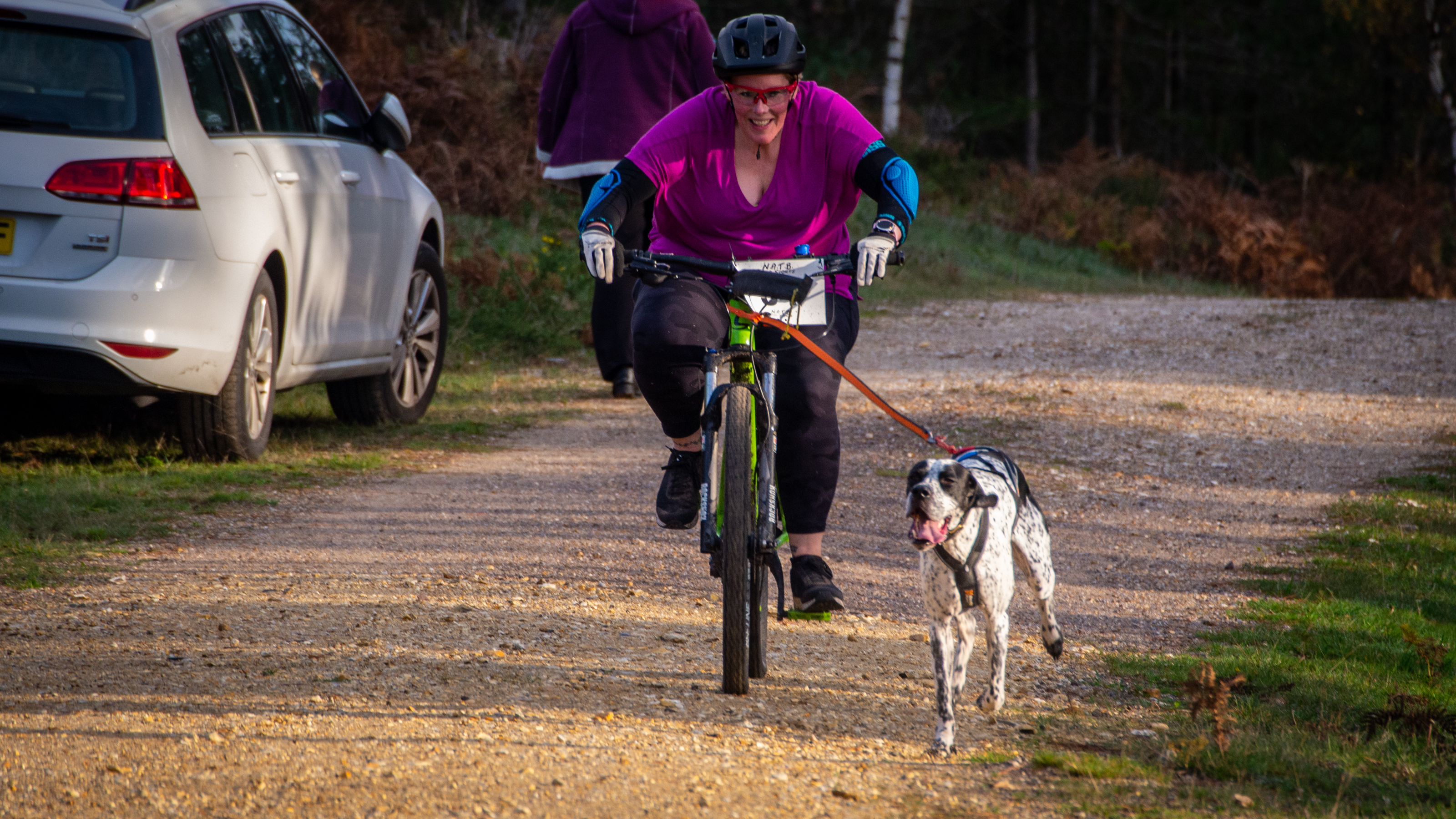
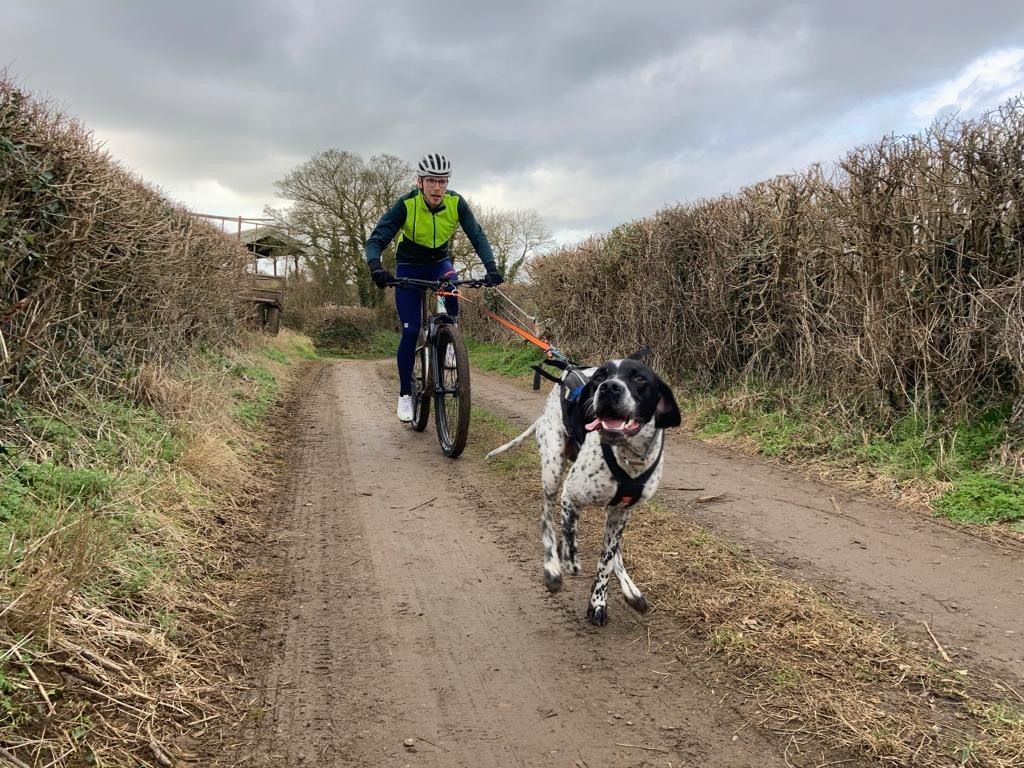
Bigger, leaner, more energetic breeds such as pointers are a good match for bikejoring (Image credit: Josh Croxton)
If you’ve not heard of bikejoring, you’re in for a treat. Bikejoring is a dog sport originally from Norway, but it has grown massively in popularity in recent years and now, there are even competitions in the UK.
The premise is simple. You get your dog, attach them to your off-road bike via a lead and let them run in front, pulling you along. You’ll need a bit of specific kit to do this one – particularly if you plan on doing any competitions. Firstly, you’ll need a pulling harness, which is one that doesn’t obstruct your dog’s movement or breathing when they pull. Then, a bungee lead, and ideally an antenna which mounts to your bars or head tube and extends the lead over the front wheel so if the dog is running with the lead slack, it doesn’t go into the wheel and cause issues.
Bikejoring is an excellent way to get your dog’s brain working as well as their body, as they’ll need to learn certain commands and directions to keep you both upright as well as trundling along safely.
The added bonus is that it tires your dog out, too. So you can both enjoy a well deserved nap after your ride. Bikejoring is ideally done on fire roads and less technical tracks, unlike if your dog is a proper little MTB trail dog where they can run in front or behind you as you ride and take their own lines down a track.
A cargo bike
(Image credit: Raleigh)
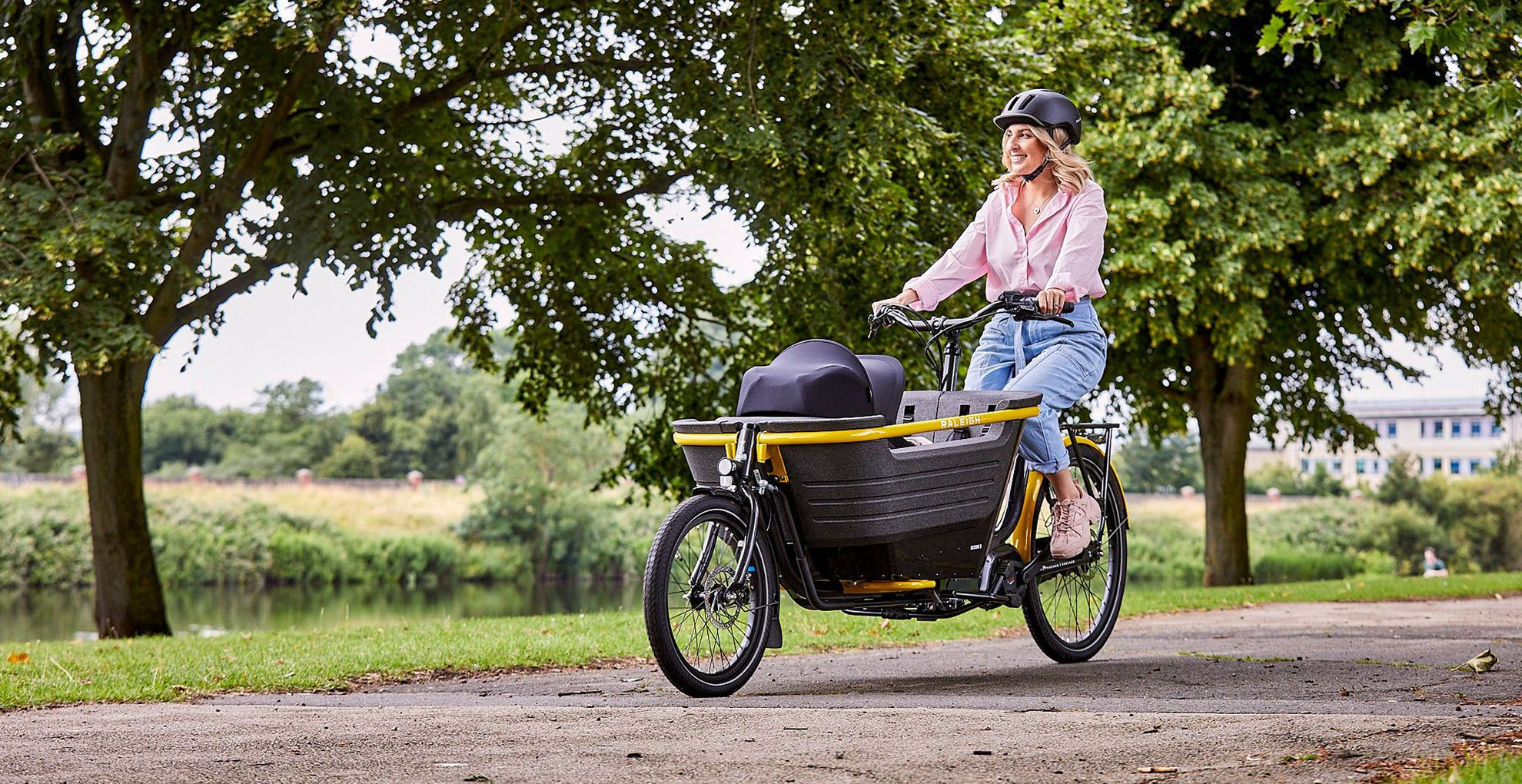
The most expensive idea on the list, unless you’ve already invested in one, is a cargo bike. Specifically, a front-loader with a bucket out the front. I’m sure you could probably find a way to seat a dog or two on a rear loading cargo bike, but for peace of mind, it’s probably best to have them within your sight.
You may like
This isn’t a new idea, either. Babboe made a dog-specific e-cargo bike before they suffered setbacks with their build quality.
A backpack
(Image credit: Mildred Locke)
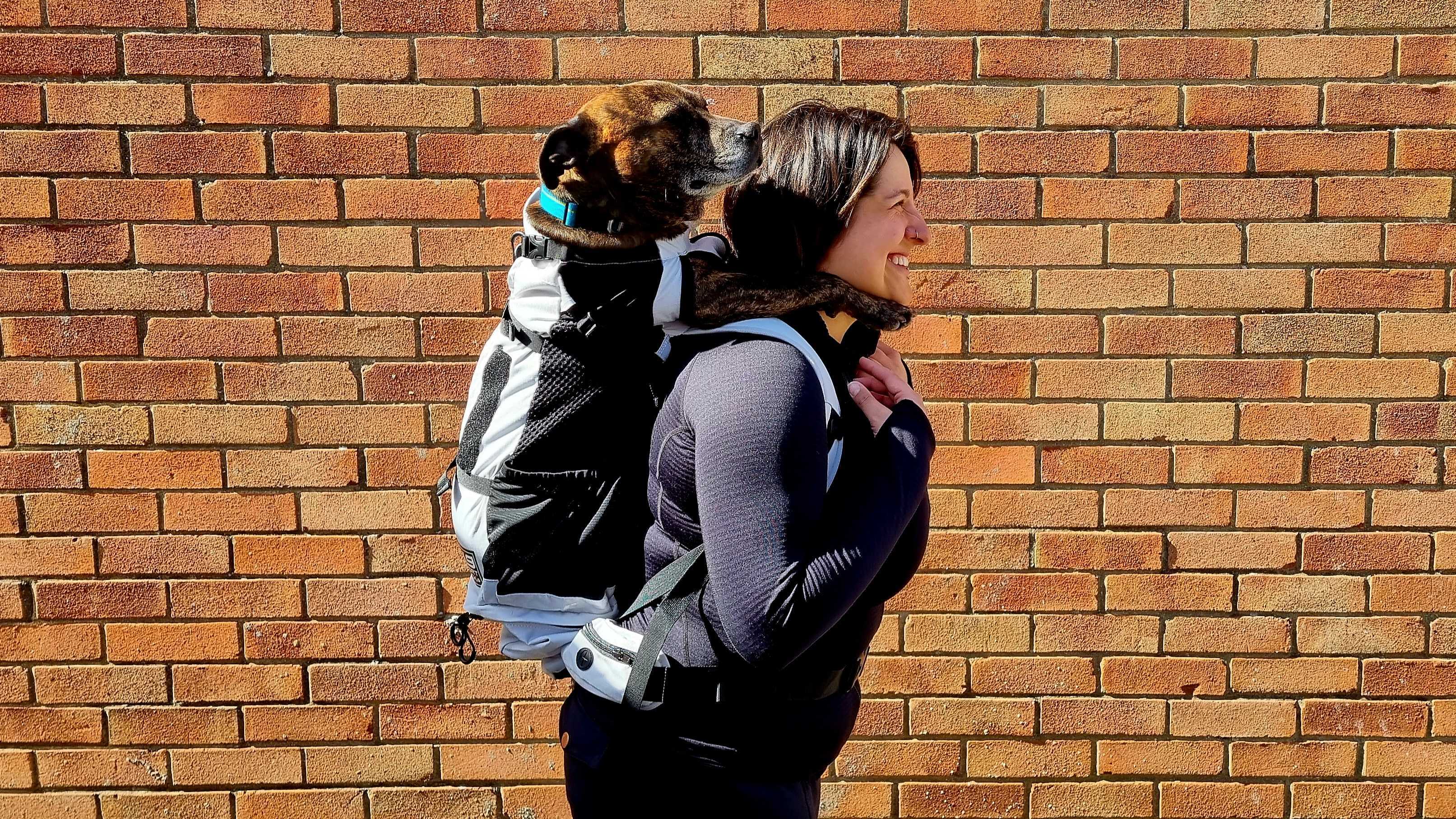
This might sound ridiculous to some – a dog, in a backpack? I can practically hear my disapproving dad sighing at the thought. But, as someone who has used a few dog-specific ones and just enticed the puppies into regular backpacks, I have to say they are an excellent invention.
And, if you start training them early enough, one of the quickest to use. If you’re looking at acquiring a dog backpack, you’ll need to make sure that it’s rated for the weight of your dog, and of course, that they will fit and be comfortable during their time in the bag.
I generally don’t do long stretches on the bike with my cocker spaniel pup in the bag. We tend to stop every half an hour and let him run around a bit and have a wee before I restrict his freedom again.
The bags themselves come in a few formats, but my favourite designs come with a built-in harness and/or arm holes (well, leg holes I suppose) for the pooch. Your dog will be basically sitting upright in this bag, so it’s good for them to have somewhere to put their front legs to take some of the pressure off their backsides.
Getting your dog into one might seem impossible but you’d be surprised how quickly they associate the bag with exciting adventures – if, of course, your dog actually enjoys having the wind in its ears and tucking into your neck during faster sections.
A trailer
(Image credit: Josh Ross)
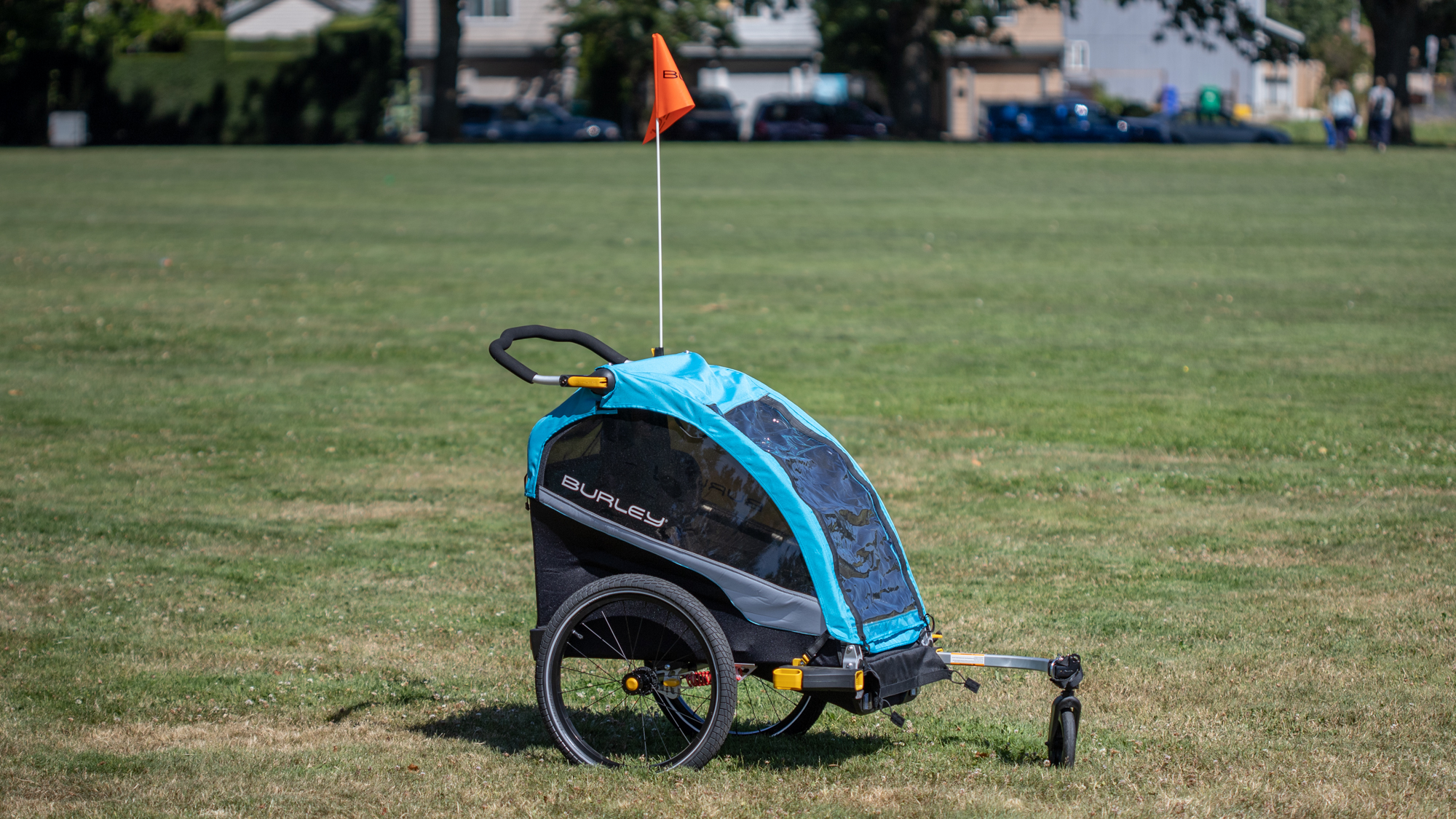
Second in expense to buying an entire bike dedicated to canine pursuits is buying a trailer. Now there are a few brands that make dog-specific trailers, namely Burley and Thule, but you don’t necessarily have to have something with the word ‘dog’ in the title, lest you want to pay the ‘dog tax’.
Some dogs will want to be fully enclosed, while others will prefer to keep their heads out in the wind, and more importantly, keeping an eye on your pedalling technique. Dogs can be great motivation, encouraging you to go faster with their barking and/or threatening to jump out into traffic. So, like everything else on this list, we’d recommend getting them used to the trailer before embarking on a ride.
One of my dogs loves the bike trailer because he can sit with his head poking out, ears flapping in the wind. But one of my other dogs absolutely hates it and will try and claw her way out of it. My point is, not every dog will enjoy it, even if they like other forms of bike-aided transport.
You can spend hundreds of pounds on these, so we’d recommend trying one out first, and if that’s not possible, look for secondhand options just in case you find it’s impractical for your bike, your house, or for your dog.
It’s also worth considering what bike you’ll be using with the trailer, as thru-axles and quick-release skewers will require different fitments to attach the trailer hitch to the bike. Additionally, a trailer will make a massive impact to your bike’s overall handling and turning circle, so bear that in mind as well.
A basket
(Image credit: Future)
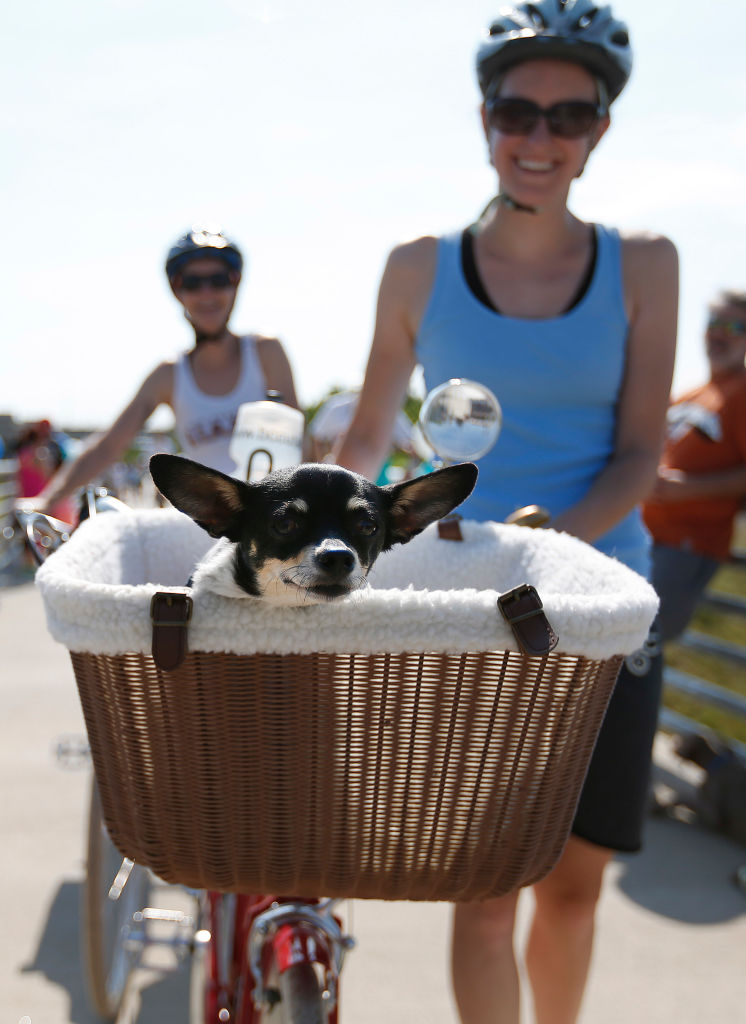
Perhaps the most traditional method of transporting your furry friend is the humble basket. The benefit of using a basket is that many bikes are compatible with them, or you can buy handlebar attachments and aftermarket kits to get them to fit. They’re also pretty easy to use. Simply plop your pooch into the basket, maybe tether them in and/or provide a breathable cover for safety, and off you go.
The downside is that most of these baskets come with a weight limit, so if your dog is generally over 10kg then a basket probably isn’t the way to go. Even then, 9 or 10kg is quite a weight to have over your front or rear wheel and it’ll take a bit of getting used to so you don’t tip over when you set off.
A basket can be a relatively inexpensive method to try, though, so if you have a puppy or a smaller dog it might be worth considering before investing in any other suggestions.
Some things to consider
Your dog might not like bike riding. Just like many a parent is disappointed when their child grows up to be a Newcastle United fan, you can’t choose your dog’s personality or their interests. Some dogs won’t find travelling in a trailer comfortable at all – one of my collies absolutely hates it, so instead of pushing the idea, we use a backpack. And yes, it is good strength training lugging a 15kg dog around on your back.
It might also take a bit of time to get them used to the idea that riding with you is fun. Don’t try and force things on them too quickly, especially if you’re trying to get them into a bag. Lots of praise, treats, and taking things at their pace is key to building good experiences with your dogs.
Weather should also be considered. Too hot or too cold is a thing for dogs, just like it is for us humans. Stick to recommended guidelines around taking your dog outside. You know your dog best and what they’re comfortable with. You want riding with your dog to be a good experience for them, so don’t push it.
Consider your route. Is it dog friendly? Are there going to be lots of things your dog gets nervous about? For instance, if I wanted to wind up my dogs I’d ride straight past the local football pitch. Instead, I choose to avoid that particular route because I value my life, my eardrums, and I’m never going to be as fast as a border collie with a stolen football in their mouth.
Safety. Another thing to consider is safety – if you’re heading off-road or somewhere where there might be a lot of overhanging branches and your dog could be in the firing line, it might be worth looking at getting some dog goggles, or doggles, as I call them. And depending on the method of transportation, are your dogs secure and comfortable?
But the biggest thing to consider is will this make our lives easier, or more fulfilling? If yes, then you’re doing it right.