
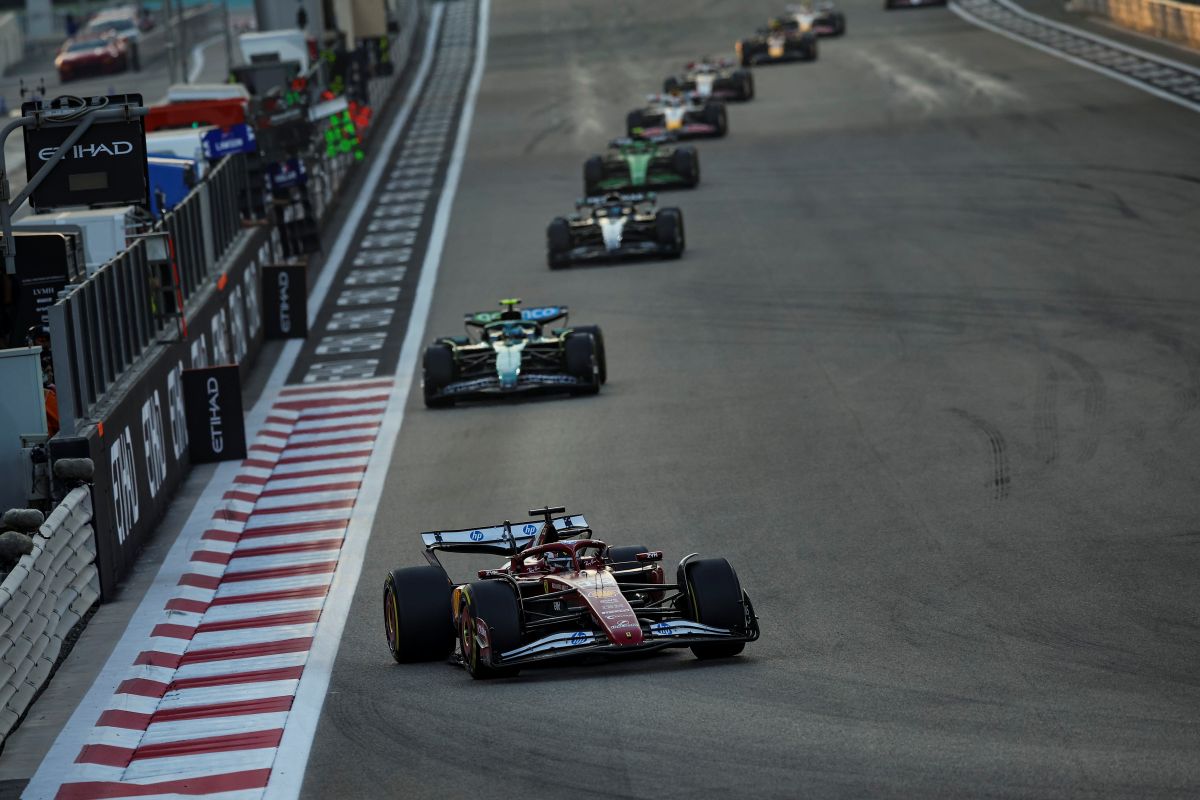
The 2025 season of Formula 1 This marked the end of the era of ground-effect F1 cars. From 2022 to 2025, these single-seaters put the drivers to the test, and they are now parting ways with them without much regret.
Introduced in the hope of reducing the impact of dirty air and allowing cars to follow each other more closely for more on-track action, these rules ultimately failed to deliver on their promises. And the drivers aren’t hiding it. If we’re talking about the expectations of these regulations—closer tracking, better on-track actions—it wasn’t really a success., asserted Fernando Alonso at a press conference in Las Vegas. Maybe a little during the first year, but not after. I don’t think we’ll really miss these cars. »
For its part, Max Verstappen He slightly qualified this observation. At first, it was good for a while, but not anymore. We can still keep track of each other better, with a bit more control anyway. he tempered. With older cars, there was extreme oversteer or understeer in certain spots, which isn’t the case anymore. Now, there’s simply less downforce, and the problem is that the slipstream from these cars isn’t as effective. On some tracks, it’s simply not enough to overtake. »
The worst generation of F1
Nothing strengthens a friendship more than a common enemy. Faced with ground-effect Formula 1 cars, Lewis Hamilton Max Verstappen and Max Verstappen agree. There isn’t a single thing I’m going to miss about these cars., the seven-time world champion emphasized after the 2025 Abu Dhabi Grand Prix, the last outing for these famous single-seaters. This generation was probably the worst. I pray that the next one won’t be worse than this one. »
Besides failing to achieve their ultimate goal, these F1 cars were difficult and uncomfortable to drive, explain those most directly involved. It wasn’t the most enjoyable generation to drive.George Russell, for his part, confided. They were super rigid, very low F1 cars.”These sentiments were echoed by his colleague Max Verstappen.” I didn’t find them very pleasant to drive. It wasn’t comfortable at all, all these years: my back is ruined and my feet always hurt. he lamented. I prefer what we had in 2015-2016. »
Oliver Bearman also suffered significant physical strain during his first full Formula 1 season, notably due to porpoising and intense twists and turns. I have trouble feeling comfortable, especially when it comes to sleeping. It’s difficult the day after a race, and sometimes even two days later. When it’s a tough circuit – Mexico is a good example – where you have to ride over the kerbs, it’s simply painful. analyzed the pilot Haas at the end of the season. You really count down the last 15 laps, you really want it to be over, because it hurts so much. Normally, it’s the corners that put you under the most stress. Usually, you have the straights to catch your breath and regain your focus. But here, you’re also being tossed around up and down on the straights. There’s really no respite during the race. That’s the hard part, and that’s what’s awful. I hope it will disappear [in 2026]. »
Steering 2026
This turbulent chapter is now closed, and a new page will be written with the arrival of the highly anticipated new single-seaters in 2026. We’re all waiting for a change, a fresh start with 2026, and that’s always exciting. The direction is right: smaller, lighter cars.George Russell explained. Perhaps not enough, but in the right direction. »
But the grass is always greener on the other side… Next year, we’ll probably go slower, and then we might miss them. Fernando Alonso acknowledged this. We always want to be as fast as possible. »
While the theory behind the new regulations seems sound, it remains to be seen how they will perform in practice. See you in 2026!
ALSO READ > Which drivers achieved their first victory in the ground-effect F1 era?