
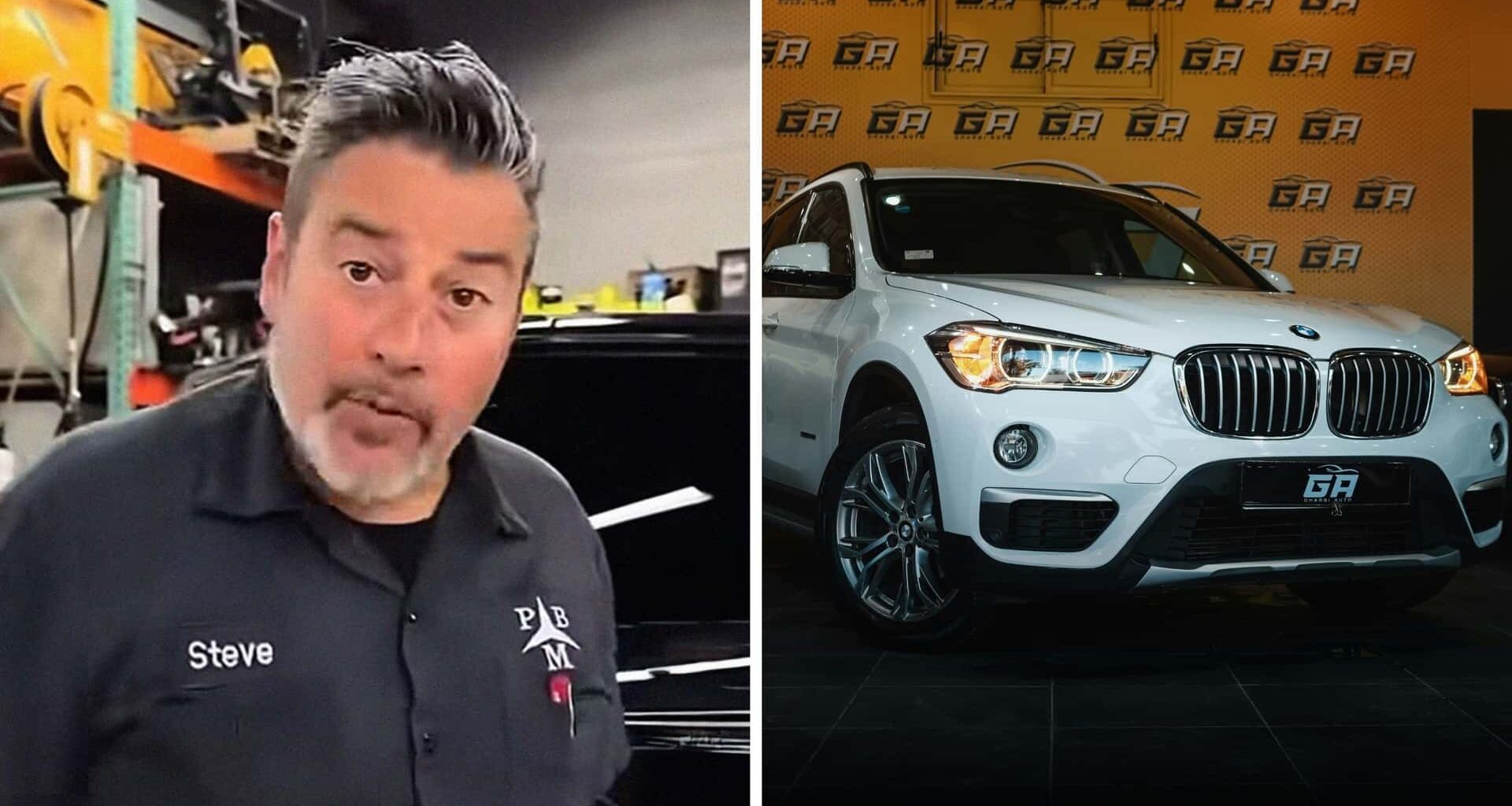
People may joke that BMW stands for “Break My Wallet,” but according to one mechanic, the real problem isn’t the cars: it’s the owners who bought them on a Honda budget and act shocked when the bill shows up.
In a viral Facebook Reel, Chicago mechanic Rob Wa (@toyotarobb) has reached the end of his patience with drivers who want the reputation and prestige that comes with owning a high-end automobile, but who pull back at the maintenance costs of high-end parts and labor.
“You buy these fancy-[expletive] cars, you want all the [expletive] done to them. When you find out what it costs, it costs too much money,” he said in the clip that’s been viewed more than 11,000 times. “Stop buying ’em. Buy a Toyota.”
In the clip, Wa zeroes in on what he says is one of the most common luxury-car customer conversations he encounters. A BMW X1 rolls in with a tire puncture or brakes “just starting” to make noise, and the owner acts surprised when the estimate lands higher than expected.
“Hey, my brakes just started making noise,” Wa says sarcastically in the video, accusing the owner of playing dumb as to the real problem.
Mechanics Unite Over Problem Customers
The moment resonated with mechanics and technicians across the comment section, many of whom chimed in with their own versions of the same story. Several noted that customers often buy used German luxury cars at 80,000 to 100,000 miles, precisely when expensive maintenance items like suspension components, brakes, wheel bearings, and electronics tend to come due.
Others pointed out that even so-called “entry-level” models like the BMW X1 or Mercedes-Benz C-Class still come with premium parts pricing and labor requirements, regardless of how accessible their used prices might seem.
The Reel’s comments quickly turned into a kind of informal group therapy session for technicians and shop owners. One apprentice recalled being told early on, “Everyone wants a Mercedes, but no one has Mercedes repair money.” Another mechanic summed it up more bluntly: just because you can afford the payments doesn’t mean you can afford the car.
That idea isn’t just anecdotal. According to data from RepairPal, BMW consistently ranks below average in long-term reliability compared to brands like Toyota and Honda, with higher-than-average annual repair costs. Consumer Reports has similarly noted that European luxury brands often trail Japanese automakers in reliability rankings, especially as vehicles age and accumulate mileage.
Several commenters also pushed back against the idea that shops are inflating prices arbitrarily. Many pointed out that modern luxury vehicles require specialized tools, proprietary software, and paid manufacturer subscriptions simply to diagnose and program components—costs that didn’t exist a decade or two ago.
Why Luxury Cars Cost More to Fix
Part of the disconnect, mechanics say, comes from how modern vehicles are engineered. Luxury cars often pack more technology into tighter spaces, making even routine repairs more time-consuming. Multi-link suspensions, adaptive braking systems, and integrated electronics all add labor hours that don’t show up in a simple parts comparison.
There’s also the issue of software. Many manufacturers now require shops to pay for short-term access licenses to reprogram modules or perform certain repairs. Programs like AutoAuth were designed to improve cybersecurity, but technicians argue they’ve added another layer of cost that ultimately gets passed on to customers. According to industry reporting from Automotive News, these subscription-based systems have become a growing expense for independent repair shops nationwide.
That’s before factoring in OEM parts pricing. Even when platforms are shared across models or brands, as some commenters noted with BMW and MINI, parts are still priced and distributed under luxury-brand economics.
Are Shops Ripping People Off?
Not everyone in the comments agreed with Wa’s take. Some accused mechanics and dealerships of overcharging for relatively straightforward jobs, pointing to DIY brake repairs or online parts deals as proof that costs don’t need to be so high.
But industry experts routinely caution that DIY comparisons miss key differences. Shops assume liability for repairs, provide warranties on parts and labor, and invest heavily in training and equipment. According to AAA, labor rates have risen steadily over the past decade, driven by technician shortages, training costs, and increasing vehicle complexity.
The core issue Wa keeps circling back to is buyer expectations. Used luxury cars often depreciate faster than mainstream sedans, creating the illusion of affordability. A high-mileage Audi or BMW can sometimes be cheaper to buy than a similarly aged Honda Accord or Toyota Camry.
But ownership costs don’t depreciate the same way. According to Edmunds and Kelley Blue Book, maintenance and repair expenses for luxury vehicles remain consistently higher over time, regardless of resale value. That gap is often what catches buyers off guard.
“It’s absolutely hilarious that people think Euro equals expensive or cheap depending on the badge,” one commenter wrote. “Know what you’re buying. Know what you’re getting into.”
Wa’s advice in the video is blunt but simple: if the repair estimates feel shocking, the problem may not be the shop.
It’s a reminder that prestige comes with ongoing costs. Whether it’s a BMW, Mercedes, diesel truck, or high-tech EV, the rule remains the same: buying the car is only the beginning. Maintaining it is where ownership really starts.
Motor1 reached out to Wa via direct message and comment on the clip. We’ll update this if he responds.
We want your opinion!
What would you like to see on Motor1.com?
– The Motor1.com Team