
Philip Soper, CEO of Royal LePage, joins BNN Bloomberg to discuss the Canadian housing market for the new year and to recap what the trends have been during the year we are leaving behind.
After a year of economic uncertainty, shifting immigration levels and new federal leadership, Canada’s housing market enters 2026 in a more balanced but uneven state, according to Royal LePage’s CEO
Philip Soper said trade uncertainty, particularly around tariffs, emerged as the single biggest factor holding back housing activity in 2025, even as other traditional barriers eased.
“Interest rates moved from being a barrier to entry to being either neutral or even supportive,” Soper told BNN Bloomberg in an interview.
Employment conditions, he added, were stronger than expected and most economic fundamentals pointed toward a more active housing market.
“Yet (when) you go to consumers, (and) you ask them, ‘How are you feeling and what is bothering you,’ if you’re not making major decisions like automobiles or housing, it was trade,” Soper explained.
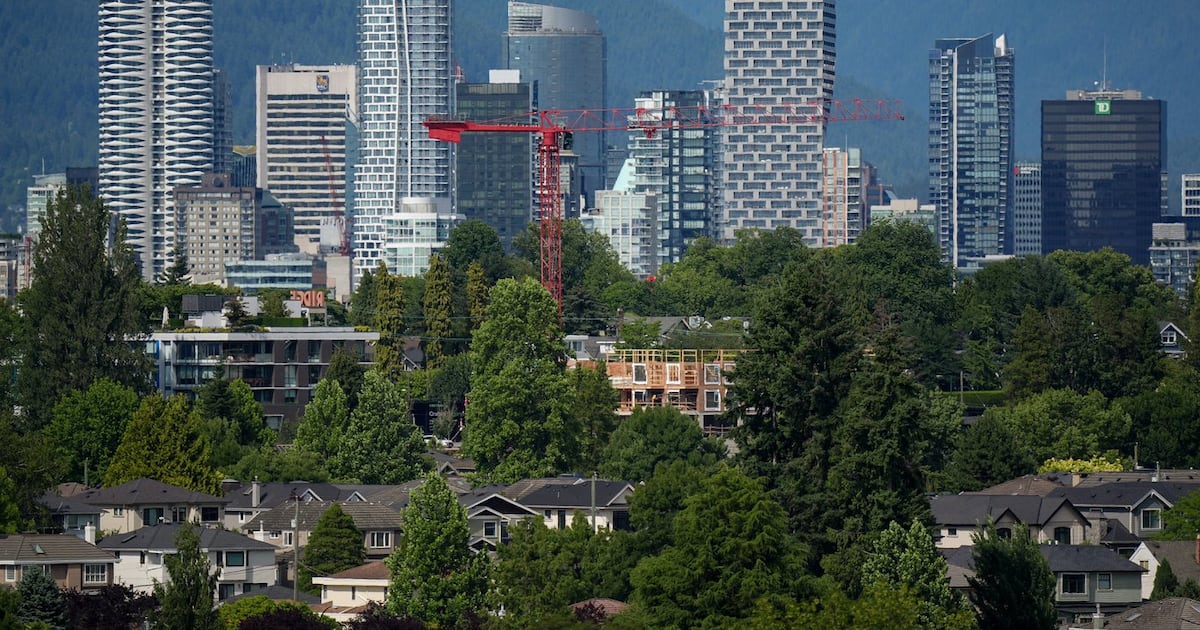
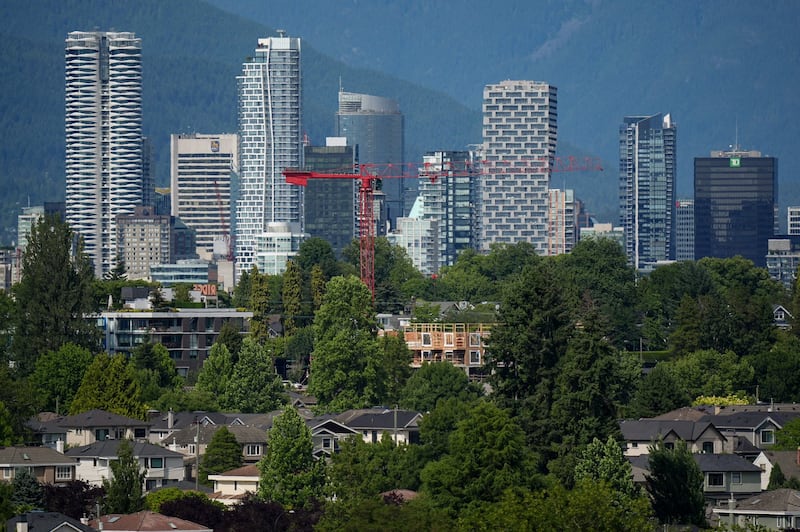 A crane is seen above a wood-frame condo project under construction as condo and office towers line the downtown skyline, in Vancouver, on Friday, July 4, 2025. While optimism is building in some parts of Canada for a second-half rebound in the real … A crane is seen above a wood-frame condo project under construction as condo and office towers line the downtown skyline, in Vancouver, on Friday, July 4, 2025. While optimism is building in some parts of Canada for a second-half rebound in the real estate market, condominium dwellers aiming to move up to a larger space face tough choices amid little sign of improvement for that segment. THE CANADIAN PRESS/Darryl Dyck
While difficult to quantify, Soper said the drag from trade concerns likely impacted home prices between two and four per cent. Even so, he said prices proved resilient in much of the country.
According to the Royal LePage 2026 Market Survey Forecast, released Tuesday, national aggregate home price will increase one per cent year-over-year to around $823,00 in the fourth quarter of 2026.
“Home prices hung in there remarkably well, even in our most expensive cities like Toronto and Vancouver,” he said, noting that activity levels, rather than pries, bore the burnt of the slowdown.
Soper said in those two major markets, low demand paired with healthier supply led to modest price spillage – a contrast to other regions where prices remained stable or had small gains.
As for 2026, aggregate home price in the greater regions of Toronto and Vancouver is expected to decrease 4.5 per cent and 3.5 per cent year over year, the forecast showed.
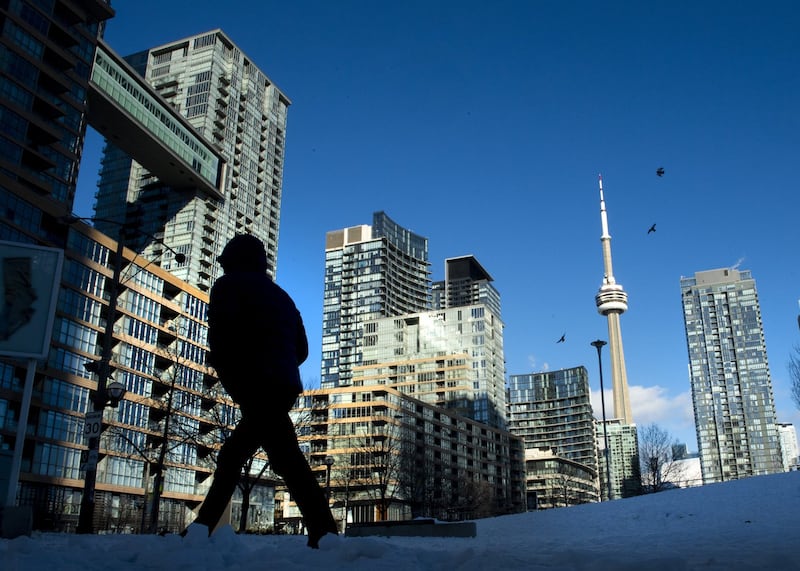 Condo towers dot the Toronto skyline as a pedestrian makes his way through the COVID-19 restricted winter landscape on Thursday January 28, 2021. CMHC says that rental vacancies are up in Canada’s largest cities with rents rising too. THE CANADIAN PR… Condo towers dot the Toronto skyline as a pedestrian makes his way through the COVID-19 restricted winter landscape on Thursday January 28, 2021. THE CANADIAN PRESS/Frank Gunn (Frank Gunn)
Population changes also played an important role in shaping the market, especially in the condo sector, Soper pointed out.
Soper said Canada saw a decline in immigration levels, including fewer temporary foreign workers and international students which he said hit urban condo markets the hardest.
“The individual investor supplies a lot of our rental stock in big cities, when interest rates peaked, or mortgage rates peaked during the inflation spike post-pandemic, it made the math for small investors in rental stock condominiums, just not work,” he said
While lower rates in 2024 and 2025 were expected to bring them back, the rebound never fully materialized, Soper explained.
“A big part of that was their clients, their tenants, disappeared with the much smaller quotas,” Soper said.
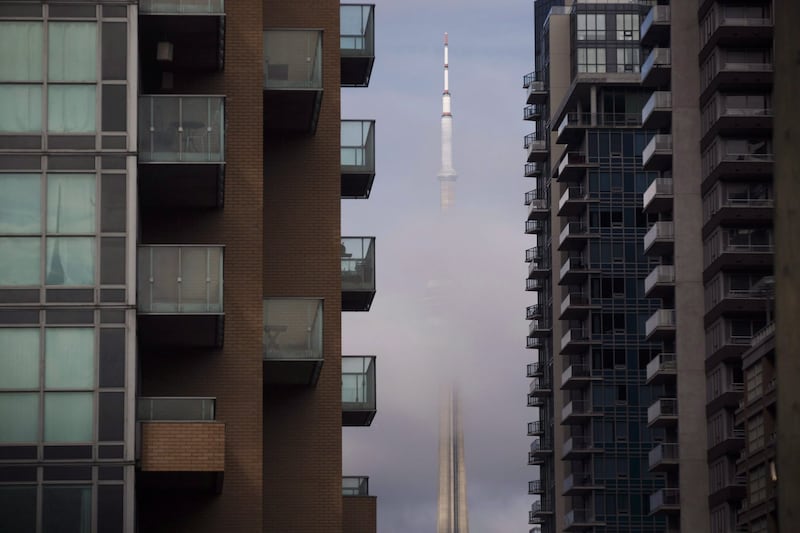
The CN Tower can be seen behind condos in Toronto’s Liberty Village community in Toronto on Tuesday, April 25, 2017. THE CANADIAN PRESS/Cole Burston
The CN Tower can be seen behind condos in Toronto’s Liberty Village community in Toronto on Tuesday, April 25, 2017. THE CANADIAN PRESS/Cole Burston What 2026 may bring
Looking ahead to 2026, Royal LePage forecasts condominiums will decrease 2.5 per cent to $563,918 year-over-year in the fourth quarter of 2026.
Soper gave Toronto and Vancouver as an example of where the softness in condo prices will likely persist, driven largely by oversupply and weaker investor demand. Meanwhile, the rest of the country is expected to see modest gains.
Soper said this trend reflects a longer-term “compression” that began after the pandemic housing boom, with more affordable cities steadily rising while Canada’s most expensive markets cooled.
“That huge gap that has opened up over the last decade starting to normalize somewhat,” he said.
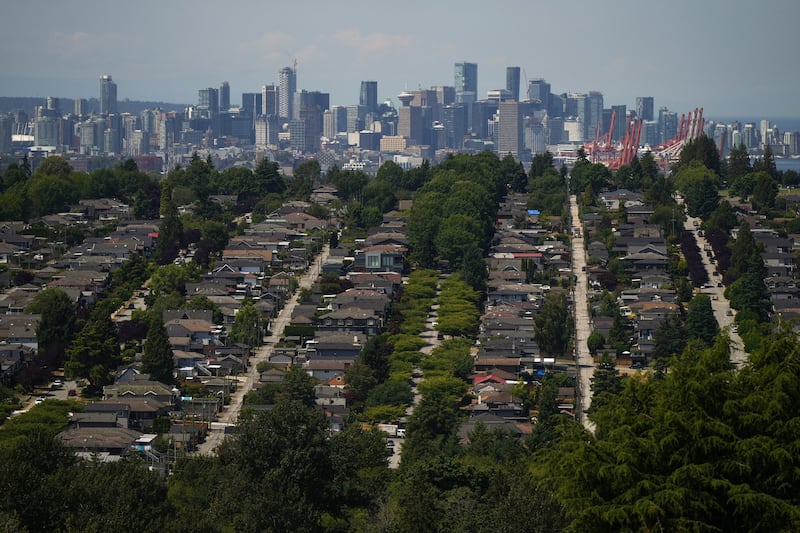 The downtown Vancouver skyline is seen in the distance beyond houses in Burnaby, B.C., on Wednesday, July 12, 2023. THE CANADIAN PRESS/Darryl Dyck The downtown Vancouver skyline is seen in the distance beyond houses in Burnaby, B.C., on Wednesday, July 12, 2023. THE CANADIAN PRESS/Darryl Dyck (DARRYL DYCK)
Soper said price changes remain below the long-term annual average of five per cent and sales-to-listing ratios suggest neither buyers nor sellers have a decisive advantage.
According to Soper, this proves a “more supportive” environment for younger families who are first-time buyers.
“They can add conditions into a deal, and home prices are softer, both in suburban and urban areas of our our most costly cities,” he said.
Government involvement will also be a key factor in shaping what comes next. Soper said progress will depend on coordination across municipal, provincial and federal levels with policies translating into real construction and increased supply.
“All levels of government in most regions of the country are saying the right things,” he said. “The proof will be in execution.”