
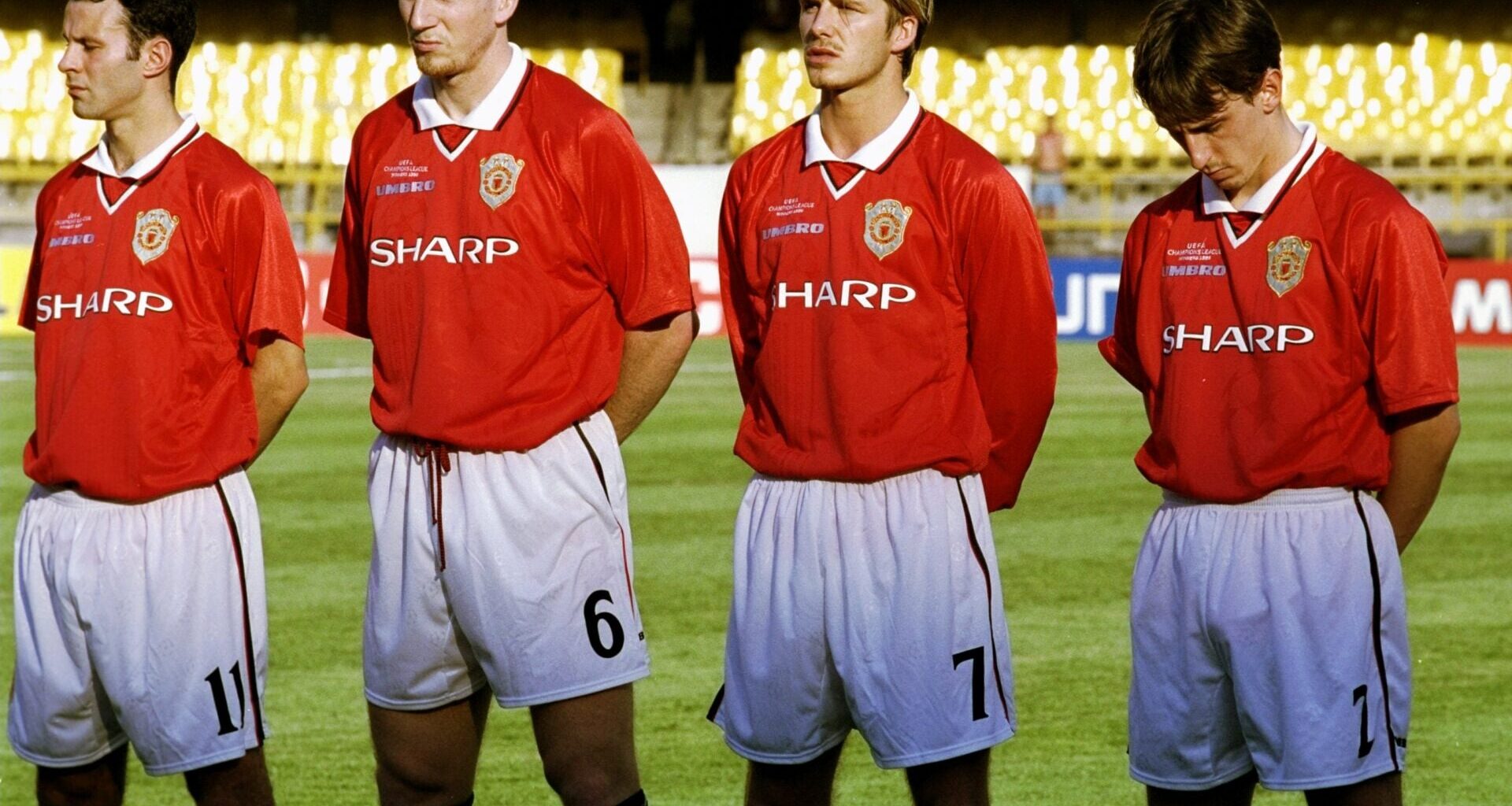
25 years ago Manchester United kicked off the new millennium with high hopes.
It is a quarter-of-a-century since Manchester United played the first game of the year 2000, and it had a chance to be a memorable one.
Instead the game was notorious for all the wrong reasons, as Manchester United kicked off the Club World Cup tournament in Brazil.
United had jetted off to play at the tournament amid a political tug-of-war.
After winning the Champions League in 1999, United qualified for the tournament, a revamped version of the Intercontinental Cup.
United were one of eight teams involved, along with Corinthians, Raja Casablanca, Al-Nassr, Necaxa, South Melbourne, Vasco da Gama, and Real Madrid – who qualified as previous Intercontinental Cup winners.
This was the first tournament to take place in the new eight-team format, and presented United with a real dilemma.
To compete, United had to drop out of the FA Cup, with the English authorities unwilling to re-arrange fixtures until the team’s return.
And there was pressure on United to compete in Brazil, to represent the country amid an ongoing bid to host the World Cup.
What can you remember about Man Utd’s ill-fated Club World Cup campaign in 2000?
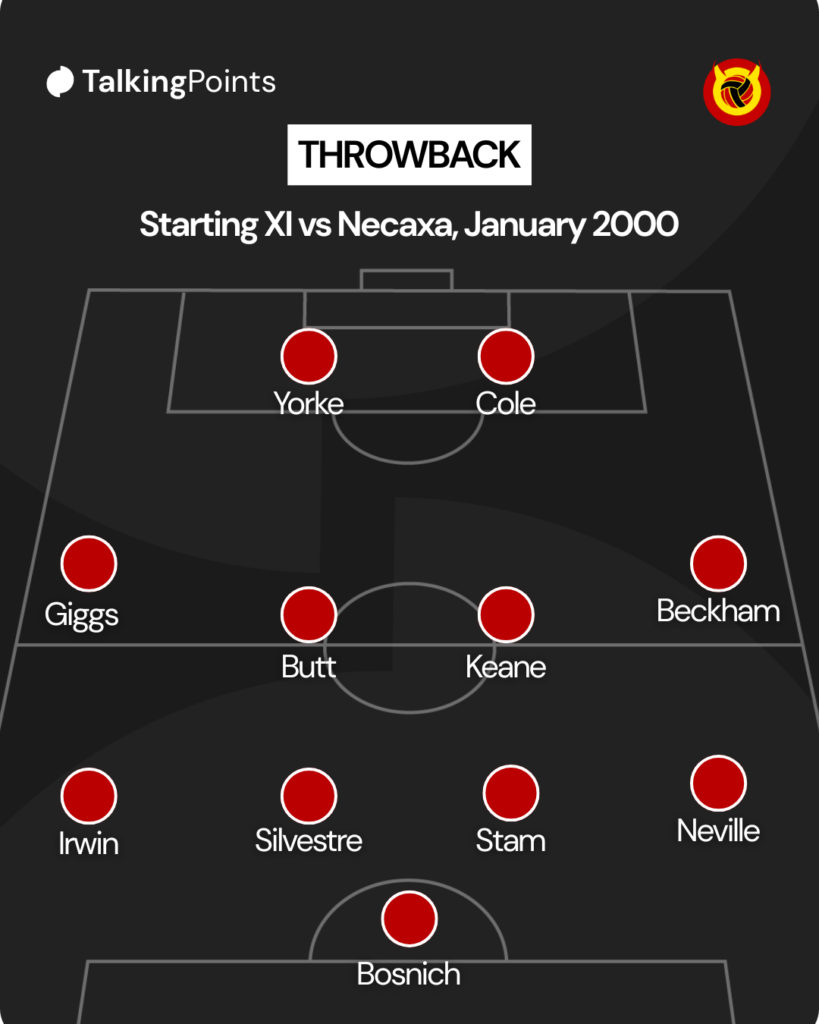
This was the first XI Man Utd picked at the start of the new millennium
👇 Join the debate; share your insight. Use the comment button on the bottom left to have your say
Man Utd kicked off with draw vs Necaxa
Manchester United kicked off the tournament against Mexican side Necaxa, playing the opener on January 6, 2000.
And a look back at United’s starting line-up for the fixture shows that Sir Alex Ferguson took the game deadly seriously.
He picked his near best available team, with Dwight Yorke and Andy Cole up front. His midfield of David Beckham, Ryan Giggs, Nicky Butt, Roy Keane could only have been improved by the addition of Paul Scholes.
United’s back four boasted Denis Irwin, Gary Neville, Jaap Stam and Mikael Silvestre.
Silvestre was the only arguable weak spot in the defence, a solid squad player but not a world class option at the back.
The real weak point was in goal, with Mark Bosnich proving to be a below-par replacement for Peter Schmeichel.
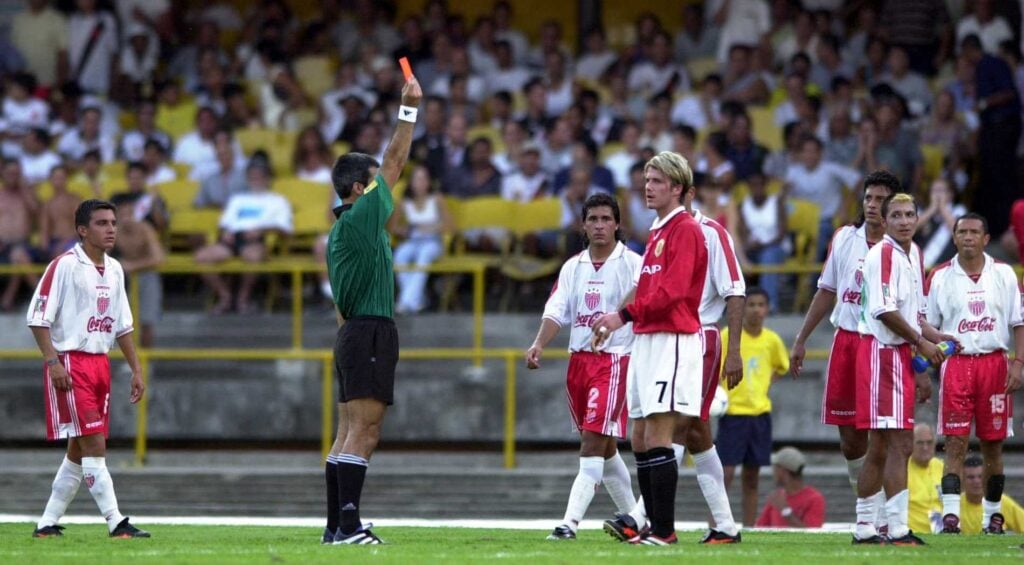 6 Jan 2000: David Beckham of Manchesteris sent off during the Manchester United V Necaxa match in the FIFA Club World Championships Brazil 2000 in the Maracana Stadiun in Rio de Janeiro. Mandatory Credit: Shaun Botterill/ALLSPORTDavid Beckham red card and Dwight Yorke equaliser
While we can pick apart the XI that Sir Alex Ferguson selected, it was still a far better team than anything Manchester United can deliver today. And it should have been enough to win the game.
Unfortunately, Sir Alex Ferguson’s best-laid plans fell apart when David Beckham was handed a red card in the first half.
United were already 1-0 down after conceding an early free-kick, before Beckham was shown a straight-red for a studs-up tackle.
The 10-men Red Devils’ tough game continued when Dwight Yorke missed a penalty in the second half.
Yorke made amends by scoring an equaliser after substitute Ole Gunnar Solskjaer created space inside the box.
The 1-1 draw was disappointing, and unfortunately there was worse to come.
Who is the most underrated Manchester United player ever?
👇 Join the debate; share your insight. Use the comment button on the bottom left to have your say
What happened next
United crashed out of the tournament with a 3-1 defeat to Brazilian side Vasco da Gama in the following group game.
Edmundo and Romario were too good for United’s defence, with Gary Neville and Mikael Silvestre both enduring a torrid time.
Nicky Butt pulled a goal back for United in the second half, but at 3-0 down the damage was already done.
Ferguson rang the changes in the final game against South Melbourne, with Raimond van der Gouw starting in goal.
Quinton Fortune scored both goals in a 2-0 victory for the Red Devils, in a game that amounted to a dead-rubber.
Corinthians went on to win the tournament by defeating Vasco on penalties in an all-Brazilian final. Real Madrid were defeated by Necaxa in a shootout in the third-place playoff.
United had to console themselves by going on to win the 1999/2000 Premier League, amassing 91 points, with an 18-point advantage over second place.
It was not a bad consolation – but along with a Champions League exit to Madrid, there was a sense that this great United side had failed to live up to their ability on the big stage.
Join Our Newsletter
Receive a digest of our best United content each week direct to your mailbox