
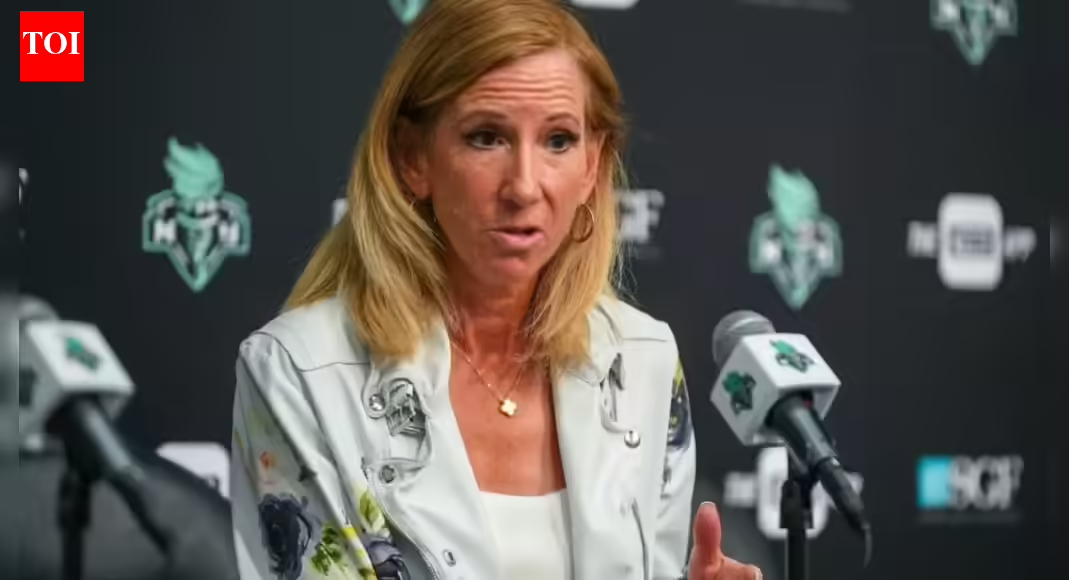
 Cathy Engelbert, Commissioner of the WNBA (Image via Getty) WNBA’s growth from a niche league to a cultural powerhouse unfolded right in front of the world and the current Collective Bargaining Agreement (CBA) negotiations feel like a high-stakes championship game. The recent bombshell proposal from the WNBA Players Association (WNBPA), reportedly featuring a staggering $12.5 million salary cap demand, is the ultimate power move.It’s not just about money, it’s a demand for respect and a reflection of the Caitlin Clark effect that has fundamentally changed the league’s economics. Clark, who dominated the WNBA headline even before stepping into the league, was offered a $338k contract while Victor Wembanyama signed a staggering $55 million. The disparity in pay has pushed the players to stand up against the system and demand fairness.
WNBPA demands $12.5 million vision
ESPN’s Alexa Philippou via X reported, “As negotiations between the WNBA and the WNBPA over a new CBA near a Jan. 9 deadline, the sides remain apart on several issues: what a revenue sharing system should look like, what should be considered revenue and how to account for expenses.” With the WNBPA’s proposal for a $12.5 million salary cap for 2026, over eight times the 2025 cap of $1.5 million, the players are asking for a system where their earnings directly mirror the league’s booming revenue.Under this model, the average player would see their salary jump to roughly $1 million, while top-tier superstars could command max contracts of $2.5 million. Compare that to the 2025 supermax of just under $250,000, and the leap is massive. But for the fans, who know what these amazing players like A’ja Wilson or Breanna Stewart bring to the table, the seven-figure salaries feels like justice. Though there’s a bifurcation of opinions as some feel that the players are over-playing their hand, the players are sticking to “Pay us what you owe us.”
League aims growth while WNBA players wants sustainability
While the players are eyeing a 30% share of gross revenue, including expansion fees from new teams in Portland and Toronto, the league is sounding the alarm. WNBA leadership claims such a proposal could lead to $700 million in losses over the life of the agreement. The players argue that with a new $2.2 billion media deal on the horizon, the old fixed rate increases (3% per year) are old news. They want the same revenue-sharing model seen in the NBA. This isn’t just about a paycheck, it’s about ensuring that, as the league thrives, the labor that creates the magic on the court isn’t left behind. The clock is ticking, and the result of this standoff will determine the future of the W for the next decade.Also read: Caitlin Clark names her favorite NFL player on new heights as Super Bowl buzz builds