
(Credits: Jim Summaria)
Sun 4 January 2026 19:37, UK
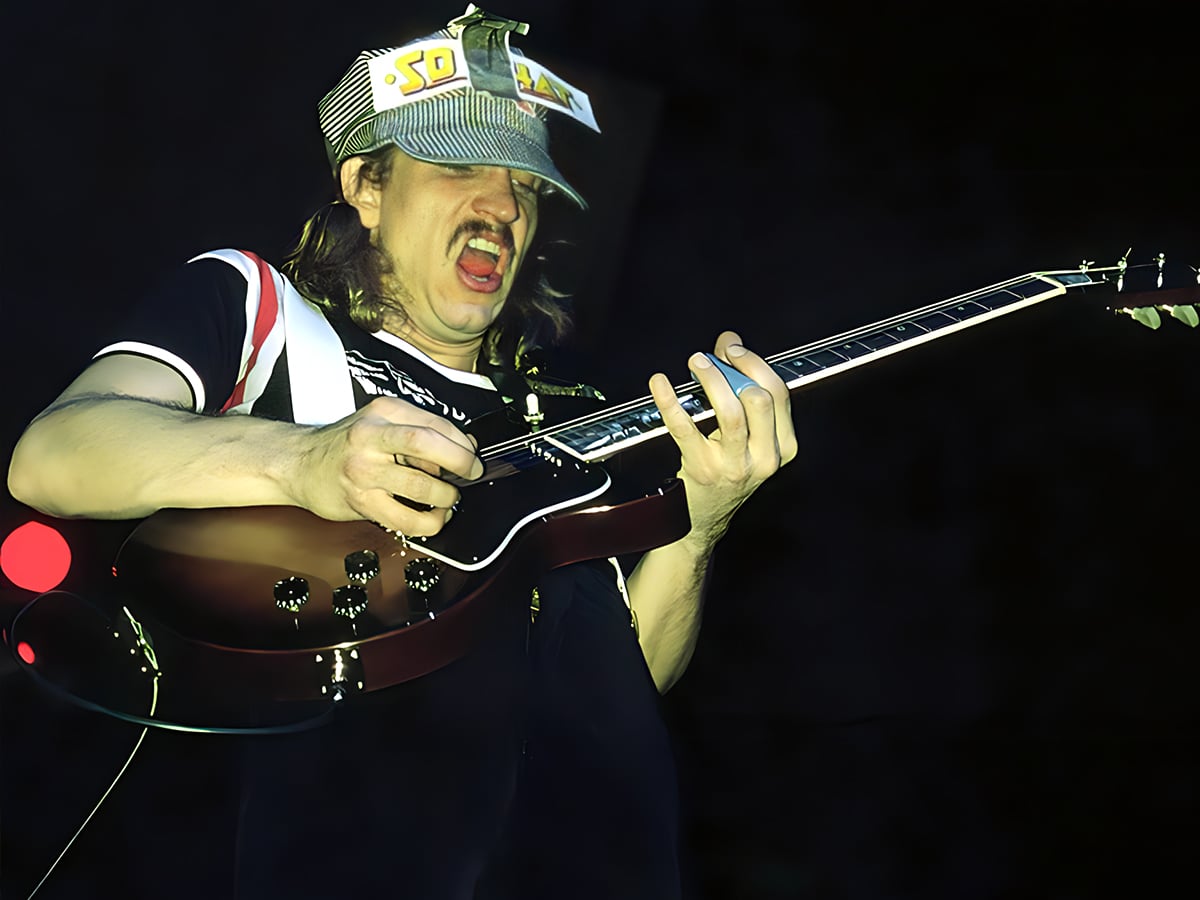
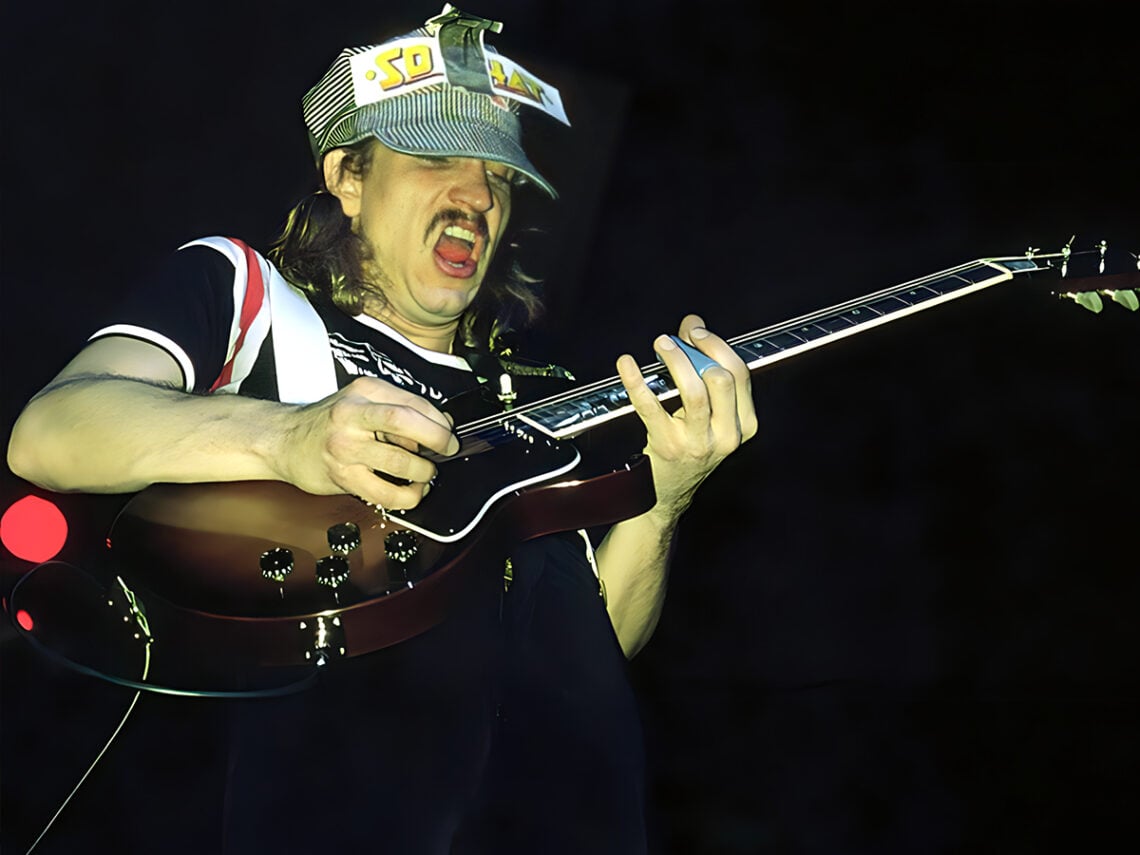
For Joe Walsh, being cool doesn’t just mean adopting an ignorant persona and leaning into the devil-may-care, rock ‘n’ roll lifestyle. No, for the former Eagles member, being cool seems to be associated with doing whatever your heart desires and shunning the things that no longer serve you. Being cool means being direct, and for the Eagles to thrive, this was incredibly important.
The dynamics within the band haven’t always been smooth sailing, but for the most part, that’s been an absolute necessity. “We’ve always been strong personalities, and we’re all solo artists,” Walsh recently told Louder, adding, “Some of the tension between us has been really good creatively.” Despite growing out of their fighting chapters, they still often agree to disagree, which translates artistically into a greater strive for excellence.
It’s no secret among the members and the guitarist himself that Walsh is one of the most important components of the entire operation. Although he replaced founding member Bernie Leadon in 1975, Walsh had accrued quite the credentials up until then, having worked with James Gang a few years prior and forming Barnstorm in 1972.
However, in the build-up to the Eagles’ formation, Walsh crossed paths with Glenn Frey, Don Henley, and Randy Meisner for Barnstorm’s final record, So What, and was managed at the time by Irving Azoff, who also went on to look after the Eagles. Joining the band felt like the perfect move for Walsh, who felt fatigued by being a musical leader and wanted to focus on his own contribution, similar to Henley, who equally wanted to hone his craft while utilising the rest of the band to improve their overall sound.
While certain projects would yield various frictions, the overarching ‘coolness’ of the band always manifested in their distinctive passions and respective capabilities. For this reason, it might not be easy for the members to reveal their favourite members, but when Salt Lake City Weekly asked whether Walsh viewed himself as cool, Walsh admitted there was one member he found more endearing than the rest.
 The Eagles in their pomp. (Credits: Far Out / Showtime / The Eagles)
“I don’t think I’m very cool,” he said. “I tell you what: Don Henley is my favourite Eagle. If we had a cool contest, I think it would be a tie. Nobody’s exceptionally cool, we’re just kind of average cool.”
If the question was directed towards Henley, it’s likely he would give his musical partner the same amount of praise. When Walsh first joined the band, there was a level of scepticism from outsiders about whether he would be able to match the group’s rootsy, soft-rock sound, but in Henley’s view, his differences were healthy for the band, not restrictive.
“He’s capable of playing the stuff we do, and we’re capable of playing his music,” he explained.
Henley was so enamoured with his contributions and his work alongside Don Felder that he once likened them to two of the most legendary figures in music, and if that’s not telling of his appreciation for his fellow members, then it’s unclear what is.
“[Walsh] introduced some harder guitar playing even though he didn’t put it on this album in the way of songwriting, but I think he and Felder played some killer guitar for us all,” he said. “To me, it’s like Duane Allman and Eric Clapton together.”
That mutual respect is ultimately what sustained the Eagles through their most turbulent moments. Cool, in Walsh’s definition, was never about dominance or ego, but about knowing when to assert yourself and when to let others shine. The band worked because its members understood their individual strengths and trusted one another to raise the collective standard, even when personalities clashed.
Walsh’s presence embodied that balance perfectly. He did not reshape the Eagles by force, but by complementing what was already there, adding edge without sacrificing cohesion. In a group defined by compromise and craftsmanship, that quiet confidence proved just as vital as any hit single, reinforcing why the Eagles remain one of rock’s most enduring partnerships.
Related Topics