
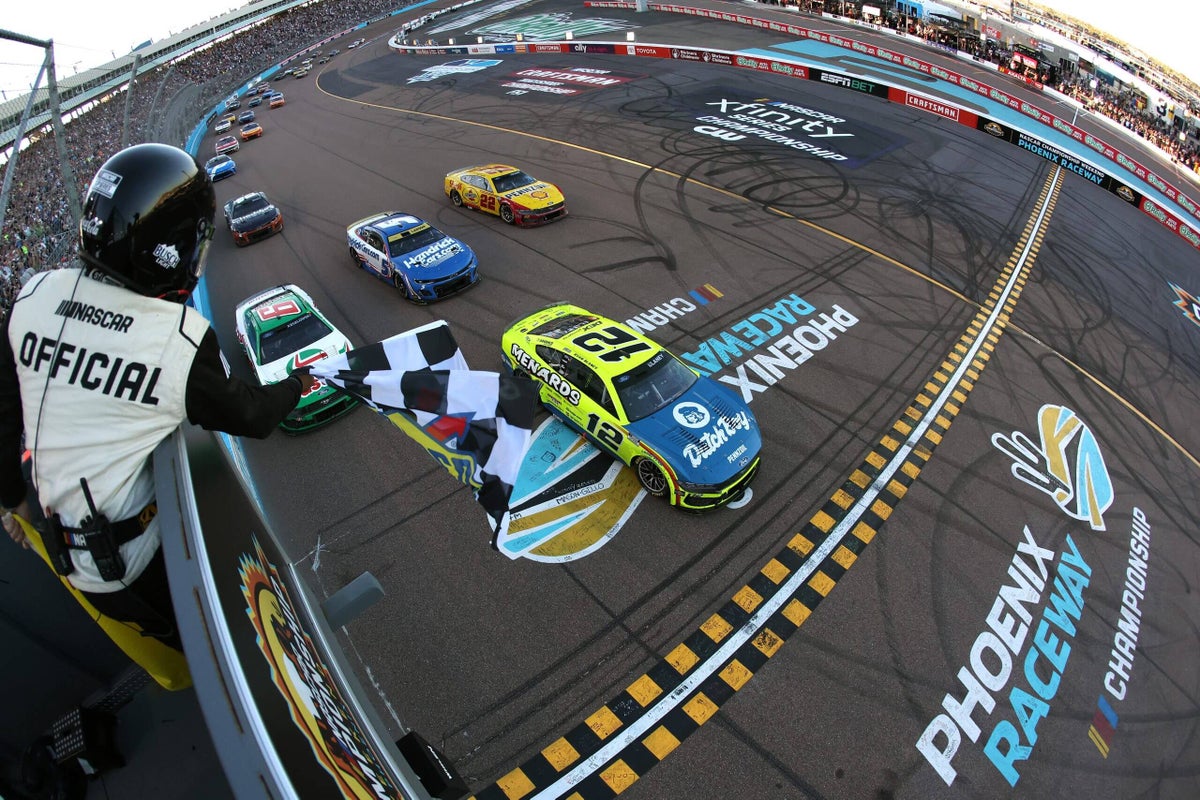
On the surface, 2026 appears to hold plenty of clean racetrack for NASCAR, without nearly as many obstacles in the way as it experienced in 2025.
The antitrust lawsuit and charter negotiations, which dominated the off-track conversation for the past two years, are now resolved, with no fear of tension for the foreseeable future. The hand-wringing around the future of NASCAR’s championship format, which divided the fan base and sparked endless debates, will be answered this month when a new system is announced. Consequently, NASCAR also appears in a better place to avoid the sort of uncomfortable finish to the season it had in November, when the Cup Series championship was altered by a blown tire with three laps to go and took away what would have been a stirring storyline with Denny Hamlin’s first title.
Additionally, many other ongoing topics — the previously unanswered call for more horsepower, pleas for softer tires to improve short tracks and the angst from some corners of the garage over traveling to Mexico City for a race last June — have either taken a step in the right direction or been resolved.
We’re not naive enough to think everything will suddenly go smoothly and NASCAR will turn into a blissful utopia. But it sure seems like 2026 has a great chance to be better than 2025.
Here are five predictions for the upcoming year.
Playoff peace (ish)
Whatever the new championship format turns out to be, it will inject a huge breath of fresh air into the season. There are myriad reasons why the elimination-style playoff with a one-race championship did not work, and a change will be more than welcome.
Of course, the selected format won’t end all the debates. If it’s not a 36-race, yearlong total to determine the winner, some of the full-season points people will be ready to burn it all down on social media. Similarly, if it is 36 races, then the quieter pro-playoffs contingent will suddenly mourn the loss of what they found to be an exciting system.
A compromise is the most likely option, which will leave some satisfied enough and others unhappy that their preferred format didn’t win out. But at least if it’s the 10-race Chase, there’s enough overlap between both the full-season points crowd and the playoffs supporters that NASCAR Nation should be relatively happy again about how the championship is decided.
And again, “relatively” is the key word there — because it’s a given NASCAR will never make everyone fully satisfied, particularly around this topic. But at a minimum, the championship format debate should subside in 2026 compared to last year, because it’s clear that whatever format is chosen will stick around for at least a few years while NASCAR gives it a fighting chance.
Silly Season gets the headlines
To fill the void of the lawsuit headlines and playoff debates, what else will NASCAR fans discuss in terms of off-track topics? Driver movement.
Incredibly, there are only two drivers in new rides for the upcoming season: Top prospect Connor Zilisch is replacing Daniel Suárez at Trackhouse Racing, and Suárez moved to Spire Motorsports to replace Justin Haley.
That’s it. The other 34 full-time teams are bringing back their same drivers for 2026.
But the odds of the field keeping that much continuity for 2027 are about as high as Mark Martin suddenly announcing he actually liked the one-race playoff after all. There’s going to be plenty of driver movement, and The Athletic’s Jordan Bianchi is certainly going to be busy with Silly Season.
If that’s the case, won’t it be refreshing to discuss who should replace whom, and what team should hire what driver, instead of the latest lawsuit motions and championship format talk for the 1,547th time? Sounds nice to me.
Racing won’t look much different
We know NASCAR is increasing the horsepower at short tracks from 670 to 750 this year. We know the short track package will be used at more tracks. We know Goodyear has continued to make the tires softer. And we know Chevrolet has a new car.
But is the racing going to suddenly be dramatically changed from 2025? That seems hard to believe. The same teams are still going to be good (although we have questions about Joe Gibbs Racing now that Chris Gabehart is shockingly out) and the same cast of characters should be winning a lot of the races.
In fact, our friend Grant Peters at Auto Racing Analytics said his first run of the 2026 model (which is still being tweaked, he noted) had Ryan Blaney, Hamlin and Kyle Larson winning all but one non-drafting oval race — with Shane van Gisbergen winning every road course race.
It won’t actually happen that way, since NASCAR is always unpredictable. But it shows you the balance of power isn’t expected to change, and we shouldn’t expect the racing itself to be much different, either. Intermediates will still be the best overall type of circuit for the Cup Series, and the other tracks should be incrementally better with the tires and horsepower boost.
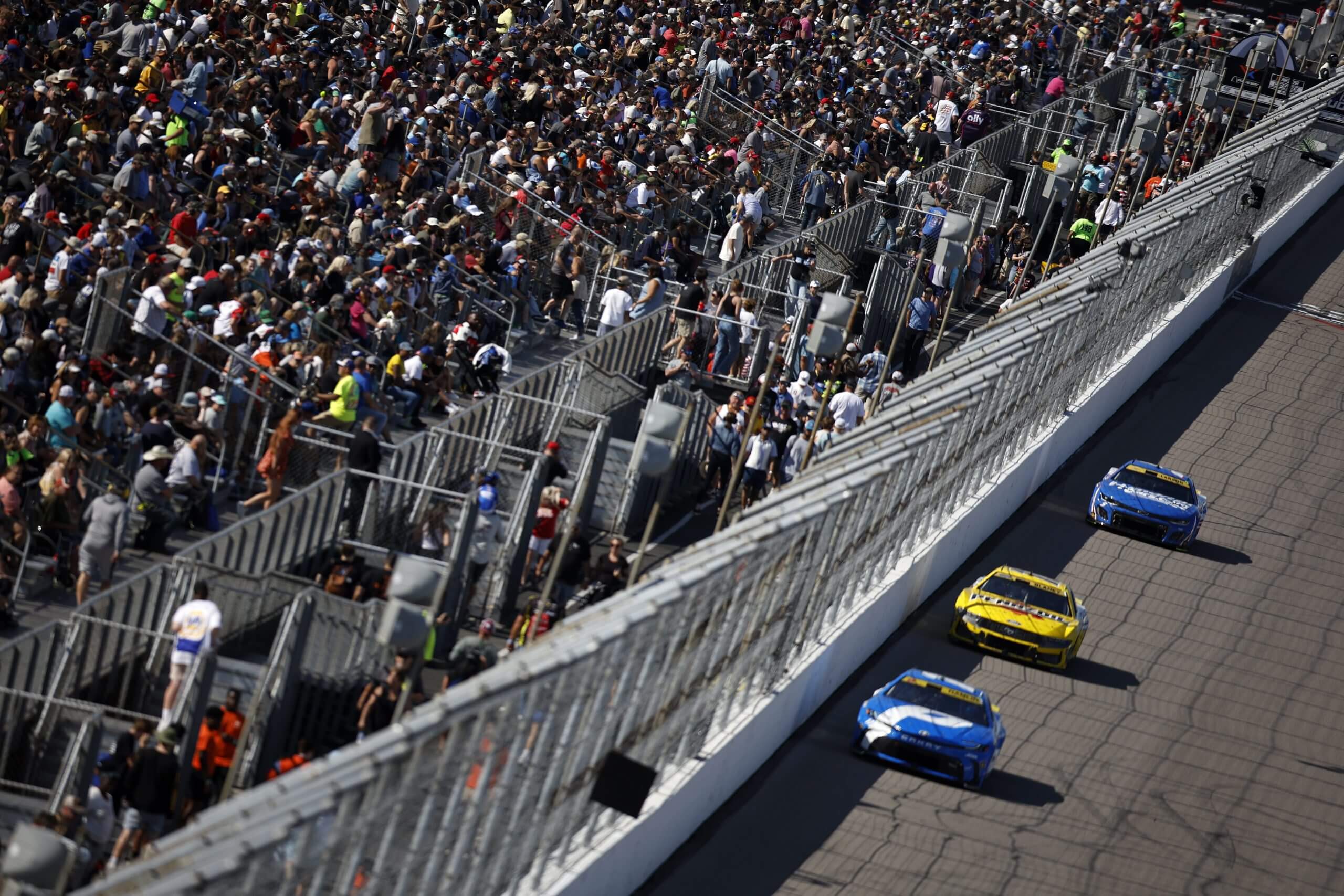
After a year of lawsuit and playoff-debate drama in NASCAR, the fans’ outlook will be an ongoing topic in 2026. (Sean Gardner / Getty Images)
Fan temperature
Just because NASCAR has taken steps toward addressing some of the issues fans care about doesn’t mean the fan base will suddenly be soothed.
As 2025 ends, there’s still a lot of anger about what was revealed in the lawsuit, and some fans may very well carry that unhappiness with them until there are leadership changes at the executive level. We’ve already called for Jim France to transition out of the CEO role, while others want to see NASCAR commissioner Steve Phelps and/or NASCAR president Steve O’Donnell ousted as a result of the text messages and emails that came to light during the trial.
Then there’s the inevitable outrage from some corners over whatever the playoff format decision turns out to be, on top of the usual displeasure about officiating and the quality of racing that has happened in every NASCAR season since before social media existed.
It could result in a further hit to NASCAR’s popularity if the negative fan sentiment lingers. On the other hand, maybe there will be enough positive momentum coming off the lawsuit settlement, the championship format decision and a back-to-basics mindset that NASCAR will get its “nature is healing” moment.
Either way, expect the pulse of the fan base to be an ongoing conversation for much of 2026.
Less F1 envy
Everything seems to be going F1’s way these days, with its exploding popularity in the United States apparent in TV viewership, mega-brand deals, and an ever-growing presence in the mainstream consciousness.
In 2021, we warned of F1’s rise when compared to once-dominant NASCAR: “When the general sports fan (which includes potential sponsors) thinks of racing in the United States, NASCAR comes to mind first. F1 seems poised to challenge that, should its current growth continue.”
That seems obvious now, but it wasn’t so apparent at the time. As NASCAR’s once-sizable advantage in American motorsports market share began to evaporate, F1’s TV viewership was like a car with fresh tires chasing down the leader at Darlington from 15 seconds back.
ESPN helped take F1 from 538,000 average viewers in 2017, the series’ final year on NBC, to a record 1.3 million average viewers in 2025 (up 142 percent in less than a decade). Meanwhile, NASCAR averaged a record-low 2.45 million viewers this season as it was split between four TV partners — including the debut of Prime Video, which helped account for a 14 percent dip.
But suddenly, those head-to-head viewership comparisons will disappear in 2026. F1 is moving to Apple TV, which means a couple of things for NASCAR: First, it will be absent from ESPN and have far less awareness for general sports fans. NASCAR itself has seen what happens when a sports property departs from ESPN; F1 may soon learn the same lesson. Second, F1’s viewership in the U.S. will have peaked because it will get nowhere near the 1.3 million average on a streaming service like Apple vs. being on ESPN.
F1 will still be popular, trendy and attractive to the sort of younger, wealthier demographics NASCAR and its sponsors would love to have. It’s just the storyline of direct competition between series during NFL season will no longer be a thing.