
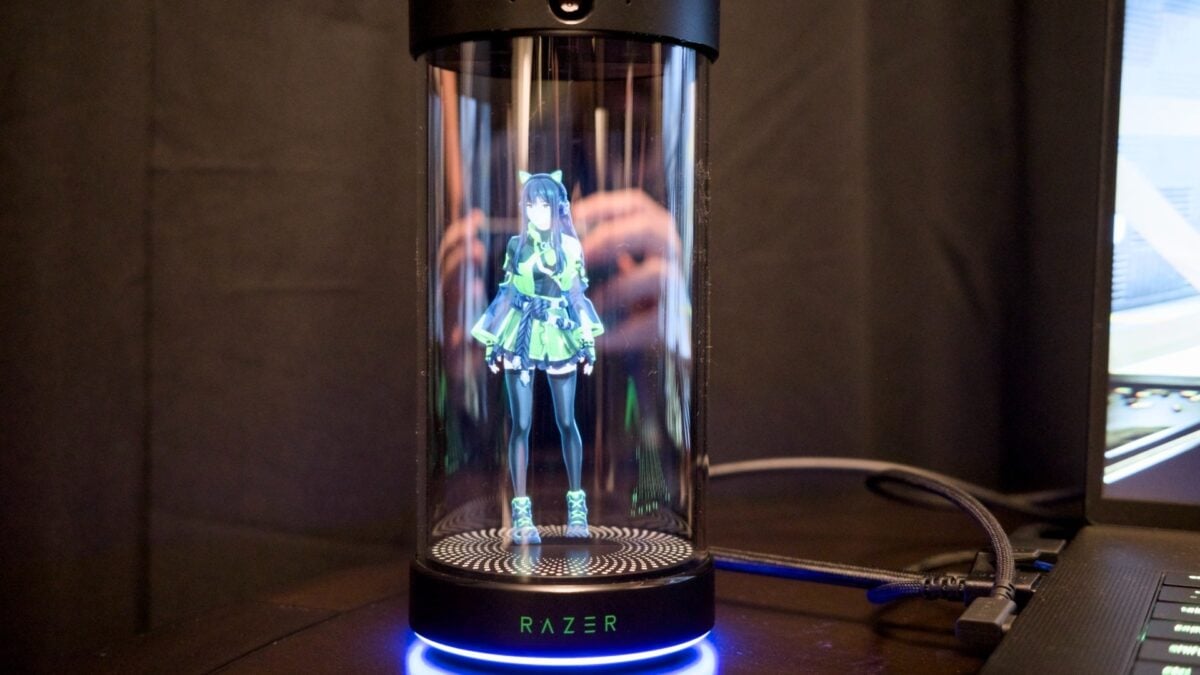
Razer is always good for a “wait, what did I just see?” moment at CES, and this year’s convention is no different. At CES 2026, Razer showed off a desktop hologram meant to embody its gaming assistant, known as Project Ava.
That’s right, Project Ava isn’t just an AI chatbot that gawks at your screen and tells you how to play games; it’s now a hologram that sits on your desk and tells you how to play games. The whole thing is very Razer, to be honest, right down to the customization options. The avatar inside the hologram chamber can be preselected from a few selections, including “exclusive Razer characters” like Kira, which is the waifu-coded avatar you see here. There’s also a male option called Zane, though I don’t know what Zane’s deal is or if he’s anything like Billy Zane.
There are other options, too, which include the green blob that represented Project Ava in its original iteration and also “esports legends,” though I’m not sure which “legends” that includes. I asked Razer if there were plans to let people customize their avatars in the future, and it seems that’s something they’ve considered, but for now, you have to take what Razer gives you.
 © James Pero / Gizmodo
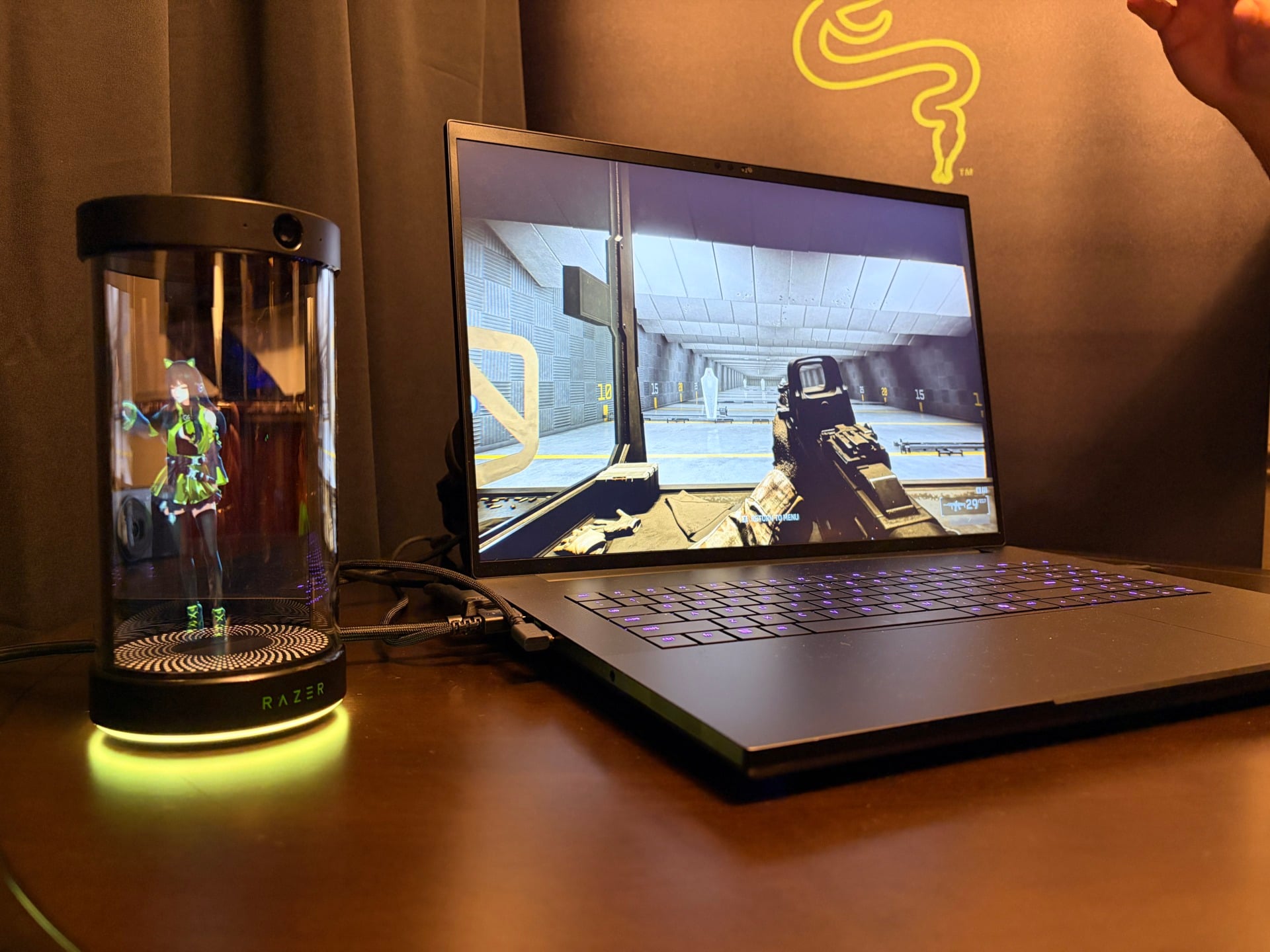
The addition of a camera on the hologram chamber changes the Project Ava game a little. While Ava was previously confined to just watching what was happening on your screen, Razer’s AI can now watch you. The company says that the ability to see your real self opens up new possibilities like… helping you style clothes? Theoretically, it could make Project Ava feel more companion-like, too, and I suppose it could help you check if you have any residual Cheeto dust stuck on your face while you’re gaming or something. As you can see, Project Ava hooks into your machine and is powered that way, though I don’t know what the exact power demands are.
I got a chance to chat with the hologram Ava a bit, and the experience is as wonky as chatting with any other AI chatbot out there. Sometimes it answered my questions while I was playing a Battlefield demo, and sometimes it went off on tangents that had nothing to do with what I was doing. The noise inside the room didn’t help, but generally speaking, this is just the way AI chatbot-infused voice assistants are going right now.
The hologram version of Project Ava is apparently running on xAI’s Grok model (the one that you can interface with on X), so I’ll let you make inferences there on what the experience could potentially be like. Clearly, Razer sees the hologram-ification of Ava as an expansion on what the gaming assistant can do, and is pitching the device as something that can do more general chatbot stuff, like check your email or offer you suggestions on what to eat for dinner.
The wild part is that Razer seems like it actually intends to sell this desktop hologram and is projecting a release date in the second half of 2026. There’s no price right now, but if you’re itching for a hologram on your desk, then you can put down a $20 refundable deposit.
Gizmodo is on the ground in Las Vegas all week bringing you everything you need to know about the tech unveiled at CES 2026. You can follow our CES live blog here and find all our coverage here.