
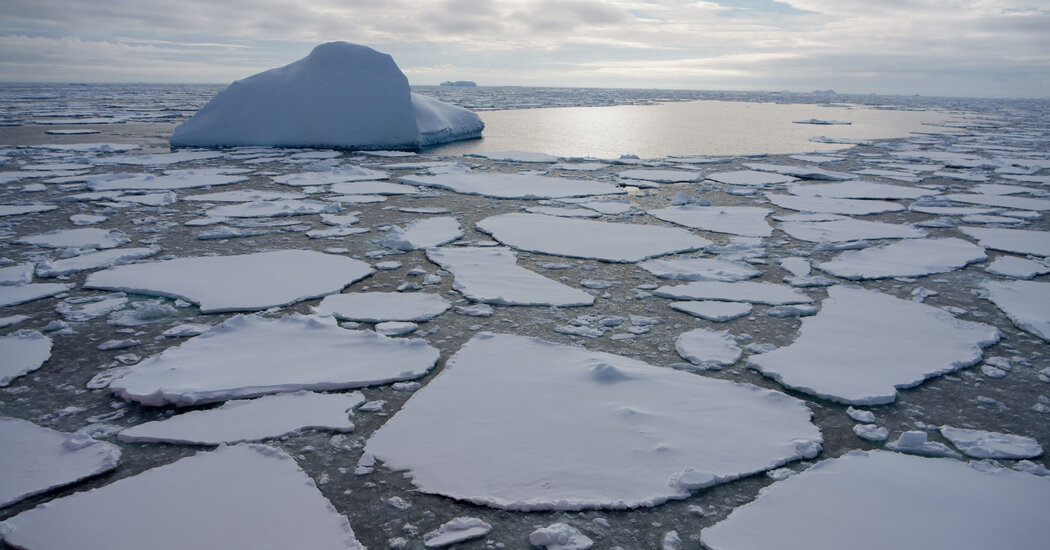
After 10 days with nothing in sight but open ocean and the odd iceberg, the Araon entered the zone of sea ice that surrounds Antarctica at roughly 5 a.m. on Monday, and the world was made anew. Suddenly there was floating ice as far as the eye could see, as brilliant and white as the open sea had been forbidding and inky.
The edges of the floes were rough and polygonal, almost like the plates of a turtle’s shell, but their surfaces were pillowy and pristine, with soft-sculpted contours like frosting on a cake. Filling the cracks between the ice was a messy mix of slush and seawater and broken icy bits. Lounging on top was the occasional seal, as apparently unimpressed by our ship as it was by the magnificent scene around it.
At 5:15 a.m., I hurried up to the bridge to talk with Siobhán Johnson, a sea ice scientist on the expedition. This was the day she’d been waiting for the whole trip.
Ms. Johnson, a doctoral student at the University of Cambridge and the British Antarctic Survey, didn’t set out to make a career out of studying sea ice, though she knew early on that she wanted to do something related to climate change.