
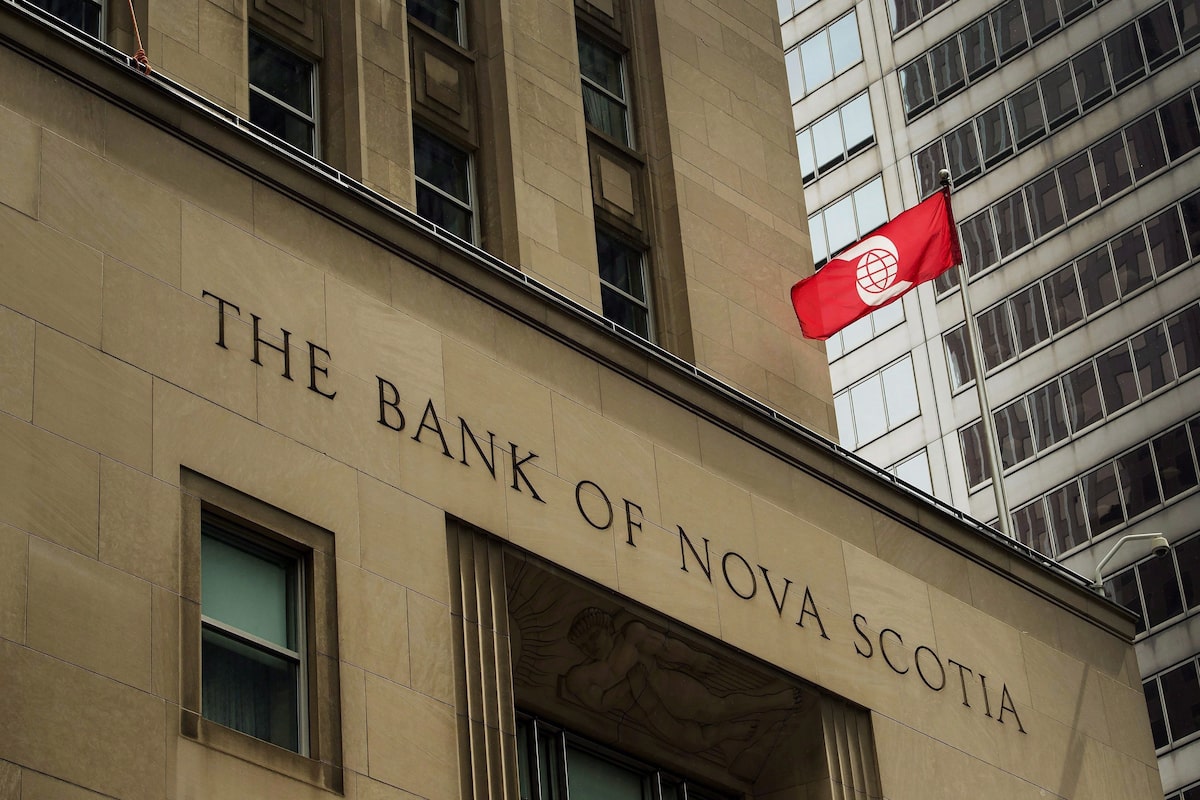
While Scotiabank does not have operations in Venezuela, chief executive Scott Thomson says a shift in the political environment will benefit the region in the long term.Nathan Denette
Bank of Nova Scotia BNS-T chief executive Scott Thomson said that an increasingly pro-business climate and rising U.S. influence in Latin America could benefit the lender’s growth strategy.
U.S. military action in Venezuela and the capture of President Nicolás Maduro – which were precursors to taking over the country’s oil and energy resources – has prompted concerns about uncertainty in Latin America and challenges for Canadian oil producers.
While Scotiabank does not have operations in Venezuela, a shift in the political environment will benefit the region in the long term after a “bit of a lost decade in terms of growth,” Mr. Thomson said at a Tuesday conference held by Royal Bank of Canada.
U.S. control of Venezuela’s oil reserves not a threat to Canadian producers, Carney says
Who’s in charge of Venezuela after Nicolás Maduro’s capture? Latest updates on Donald Trump’s plans
Scotiabank’s international business is focused on Mexico, Peru, Chile and Colombia. The division is key to the lender’s turnaround plan – which it launched in late 2023 – aimed at reallocating resources to North America to benefit from trade between Canada, Mexico and the U.S.
Mr. Thomson pointed to Chile’s election of right-wing candidate Jose Antonio Kast as president and Mexico’s increasingly business-friendly administration under President Claudia Sheinbaum as examples of changing political winds in Latin America that are positive for economic growth.
“You’re moving all these governments from left to right, or centre-right, and then you’re seeing more U.S. influence, which plays very well to our Western Hemisphere strategy,” Mr. Thomson said.
“There should be or could be some bumps along the way here … but longer-term, this is a good thing for the Western Hemisphere, it’s a good thing for the U.S., it’s a good thing for the Bank of Nova Scotia.”
Toronto-Dominion Bank analyst Mario Mendonca said in a Monday note that the situation in Venezuela could cause Scotiabank to take a more cautious approach to credit in Latin America by increasing provisions for loan defaults and easing up on lending.
Mr. Thomson said the “Trump Doctrine” – a recent adaptation of the 1823 Monroe Doctrine that opposed foreign interference in the Western Hemisphere – would be a positive development for growth.
Venezuela is home to the world’s largest reserves of oil, which is heavy crude similar to Canada’s oil. U.S. involvement in Venezuela could lead to a surge of its oil in global markets, potentially posing a challenge for Canadian producers.
Mr. Thomson said that added competition might accelerate Prime Minister Mark Carney’s plans to build more energy infrastructure in Canada.
“As Venezuelan crude re-enters the system over the next five to 10 years, having another pipeline here for Canada is really important,” Mr. Thomson said.
Scotiabank’s chief executive Scott Thomson in Toronto in 2023.Niv Shimshon/The Globe and Mail
Earlier on Tuesday, Mr. Carney reiterated that Canada welcomed the removal of Mr. Maduro from government, saying that the change “creates the possibility for democratic transition in Venezuela.” He added that increased oil production will benefit Venezuelans, but will not pose a threat to Canadian oil producers because it is lower risk.
On Monday, Canadian oil tycoon Adam Waterous told The Globe and Mail that building a new pipeline to the B.C. coast to increase access to global markets is now even more urgent. A pipeline would help prevent industry contraction if more Venezuelan oil enters the market, he said.
At the conference on Tuesday, bank CEOs signalled that they expect continued growth this year as uncertainty around the U.S economy eases and expectations for Canada’s economy improve.
National Bank of Canada NA-T chief executive Laurent Ferreira said there is a persistent reluctance to invest, even as Ottawa races to stem the loss of the U.S. as a reliable trading partner.
“The most concerning themes across the country are business investments that are on pause and this hesitation to invest in Canada,” Mr. Ferreira said at the conference.
Ottawa has been eager to bolster Canada’s waning productivity and stagnant infrastructure investment. The economy has been more resilient than expected, he said.
But, he added, the federal government must accelerate its decision-making process to tap Canada’s energy resources, critical minerals and manufacturing capabilities. “We are in a state of economic war – is how I would summarize what’s going on in the world right now.”
“If we want to be part of the new world order, we need to speed this up.”