

Listen to this article
Estimated 4 minutes
The audio version of this article is generated by AI-based technology. Mispronunciations can occur. We are working with our partners to continually review and improve the results.
Betty Kingsmith remembers her husband Gordon as a man who couldn’t say no — and wouldn’t let her say it either.
“If he had something big he’d planned for the day … He’d say, ‘Oh, yes, you can.’”
The 91-year-old resident of Calgary’s Wentworth Manor shared the memory during an AI song-writing workshop this month and, soon enough, there was a new tune about it echoing through the large workroom.
It was in the form of an old country ballad.
“… later came Gordon with a sparkle in his eye; a man who chased the sunset, reaching for the skies. ‘Oh, yes, you can,’ he’d always say.”
Kingsmith listened and wiped a tear away.
Educator and musician Bruce Callow created this workshop and has been running it with seniors, people with disabilities and people who are new to Canada. He says it can be a magical way to help people express themselves, because music makes those memories come alive in a different way.
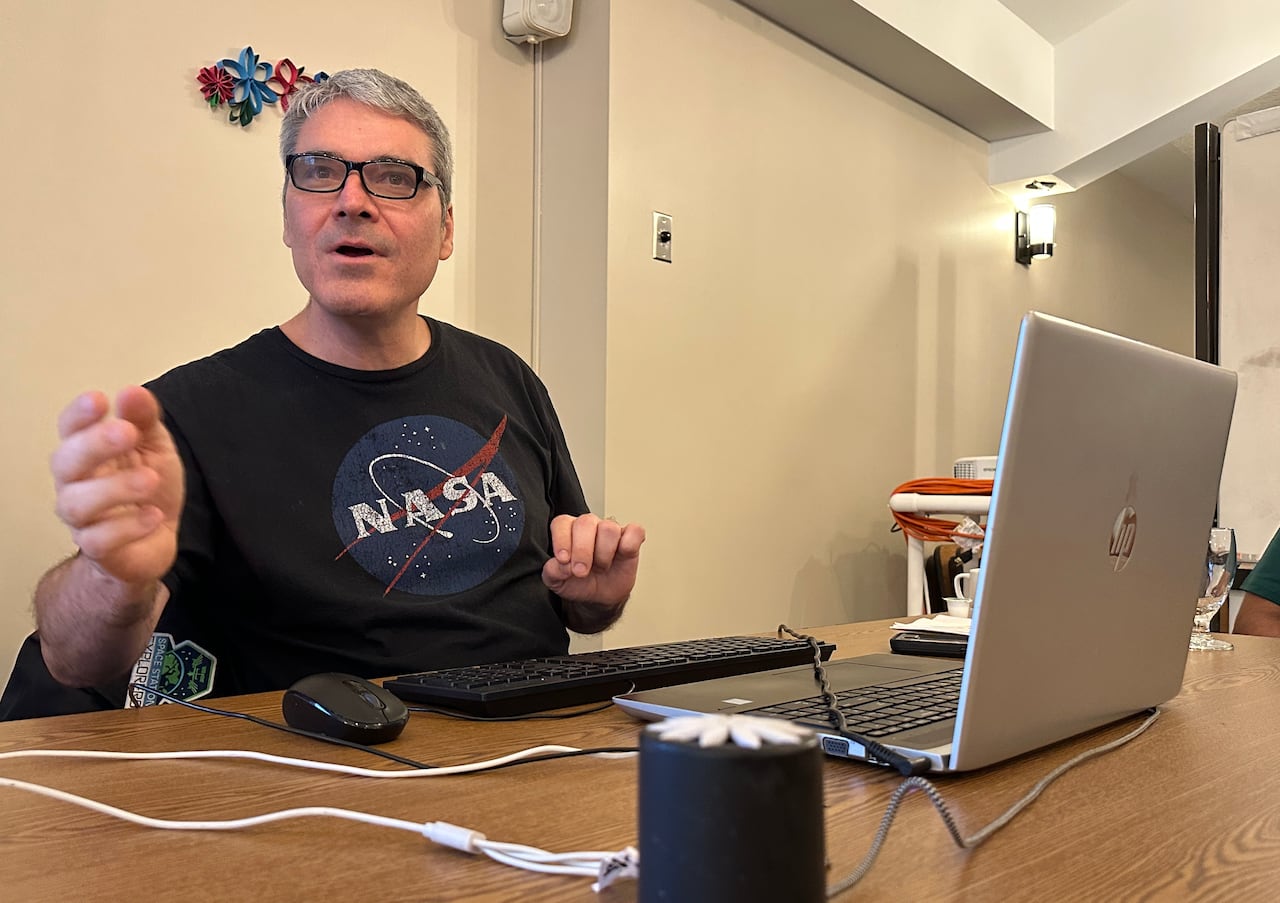 Educator and musician Bruce Callow runs workshops to help people turn memories into songs using artificial intelligence. (Elise Stolte/CBC)
In the workshops, Callow or another volunteer will ask questions to get people talking and take notes about the memory they want to share.
Then, they paste those notes into the Suno app, select a genre of music and, within minutes, they can play the song.
“I know there are a lot of people that are worried about AI and, in the music industry, it’s causing quite an upheaval. But for this purpose, I think it’s pure and ethical. No jobs are being lost and memories are being recorded and spirits are being lifted,” said Callow.
“Even my most reluctant musician friends have to admit what I’m doing here is good.”
At Wentworth Manor, seniors in the workshop created stories about growing up in England during the Second World War, special trips they took, and Christmas memories from decades ago.
Doreen Goodmanson got a ballad about growing up on a small Saskatchewan farm and sledding on the local hill with her siblings — a beautiful, peaceful wonderland she took for granted at the time.
She was so struck by the song, she said at the end: “So, who put that together?”
“AI. You did,” Callow replied.
“It couldn’t be me,” said Goodmanson, and the whole table laughed before she asked Callow to play it again.
“I’ve just had so many wonderful moments in my life. So rich — giving, receiving, sharing,” she said.
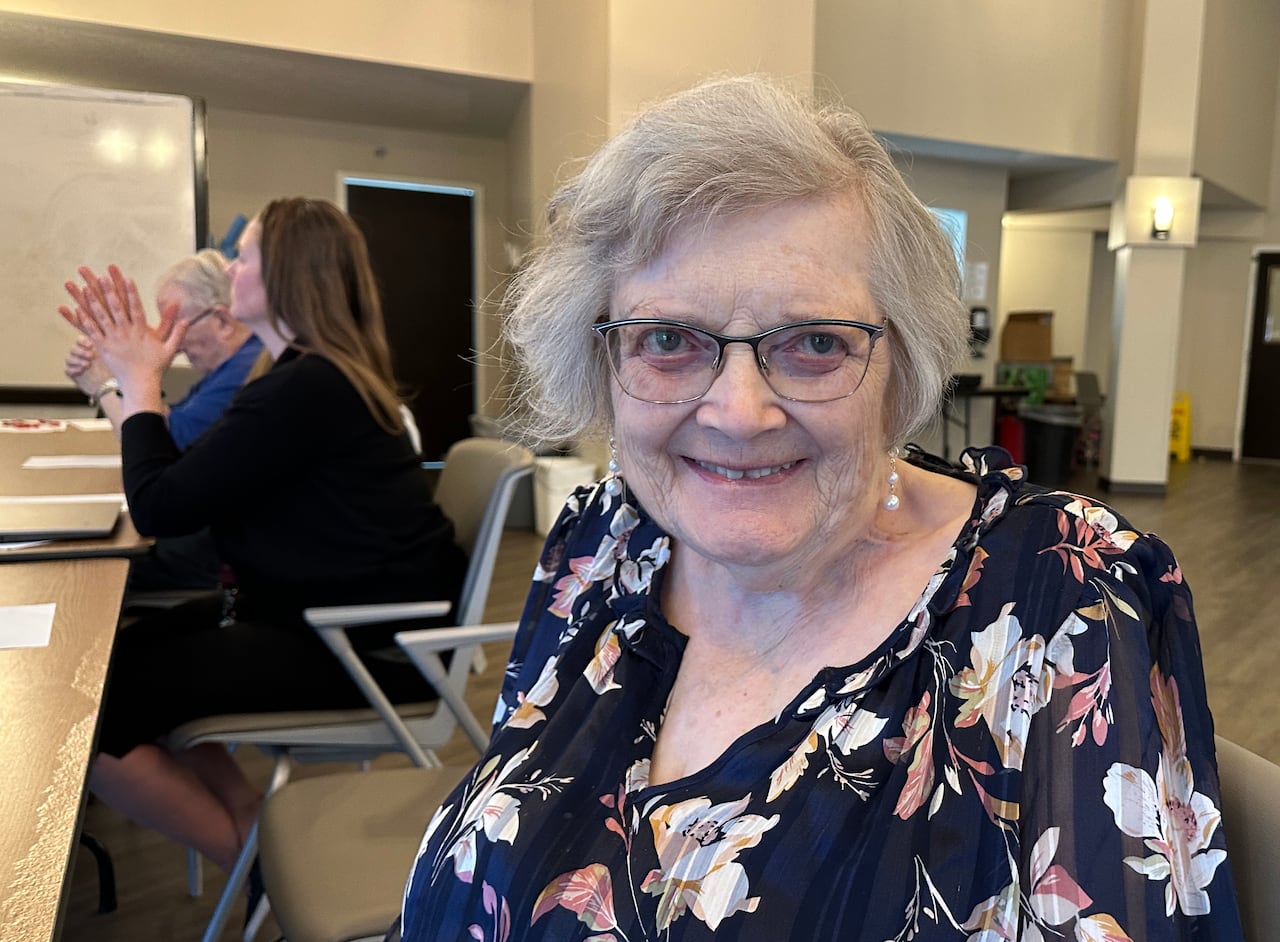 Doreen Goodmanson says creating the song brought back memories of the ‘wonderland’ that was the Saskatchewan farm she grew up on. (Elise Stolte/CBC)
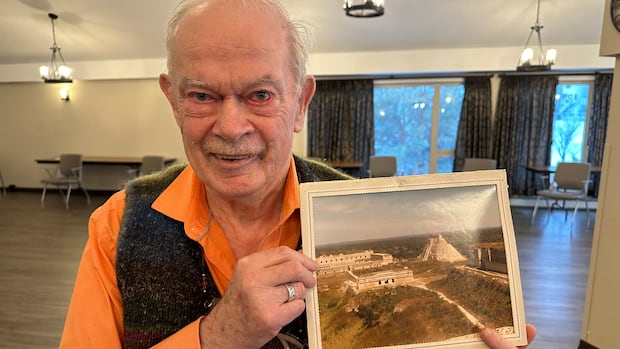
John Myles shared a memory of the time he visited the ancient Mayan city of Uxmal in Mexico.
“It’s fascinating because it gleams in a beautiful light, and it has some of the most fantastic architecture the Mayan people ever produced,” he said.
“Just to take in the immaculate beauty man can produce — it’s just startling.”
But the 86-year-old said he didn’t love the song AI generated about his trip because the voice was quite high.
He said he’s worried about other applications of AI. He’s concerned it will ultimately take away from human connection.
The human part of the process, Callow counters, is to listen carefully and create the space for people to share from the heart.
“It’s a gentle process,” he said, “and you need to be good at communicating and have the trust.”
Callow said anyone can run a similar workshop or work with someone in their life to create a set of songs they’ll cherish.
In addition to the workshop series, he’s working with his father on an album.