
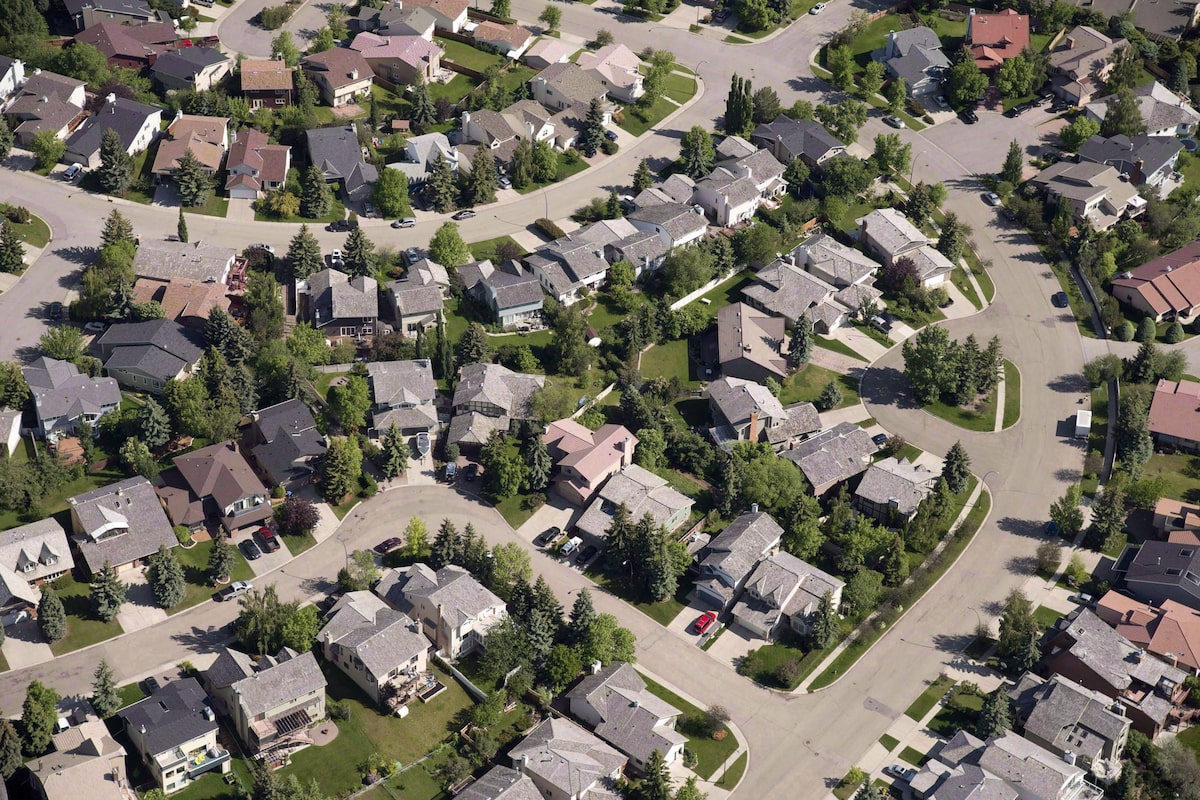
Across the country, supply of three- or four-bedroom houses with backyards remains tight, said Robert Kavcic, senior economist at Bank of Montreal.Jonathan Hayward/The Canadian Press
Across Canada, potential sellers and aspiring buyers in the real estate market are wondering if 2026 will be their year.
The homeowners contemplating a sale want to know if prices will rebound. Aspiring buyers are questioning whether valuations will continue to slide.
Robert Kavcic, senior economist at Bank of Montreal, is giving buyers the edge.
Mr. Kavcic is forecasting a “long and slow grind” toward affordability – with little to spark a resurgence.
Prices have come down from their peak and borrowing costs have decreased, but buying a house today is still not affordable for many people, says the economist.
“Incomes still need to catch up and that takes time,” Mr. Kavcic says in an interview.
Where’s the housing market headed in 2026? Keep an eye on these seven charts
Meanwhile, the investors who helped propel a high-octane run-up in prices have abandoned the market and have little incentive to return.
“We started calling this in 2022,” points out Mr. Kavcic. “We said it would take years – not months or quarters – to unwind all that froth.”
At the time Mr. Kavcic made his prediction, interest rates had fallen below the rate of inflation, speculation in real estate was rampant and demographics were beginning to shift.
In the intervening years, prices across the broader market fell about 17 per cent from the early 2022 peak, with more severe drops in some areas and price brackets.
Now, at the start of 2026, the Bank of Canada’s benchmark rate is in the neutral range, investors have fled, the federal government has restricted surging immigration and millennials are moving past peak homebuying age.
Across the country, prices have been stable in many cities since the spring, Mr. Kavcic points out, but he believes they have farther to fall.
The national heavyweight – the Greater Toronto Area – saw the average price of a detached house fall 8 per cent in November from the same month last year, while the average price of a condo apartment dropped 3.8 per cent in the same period.
Buyers are watching the market and seeing prices come down, Mr. Kavcic points out. They must weigh whether they risk buying too late and see prices take off – or too soon and see prices slip farther.
He notes that the spread between the amount sellers are asking for and what buyers are willing to pay is wide.
“The more time that goes on, the more sellers will relent,” he says. “It’s more likely that the ask will come down than the bid will go up.”
Taking a high-level view, Mr. Kavcic notes that the supply of the three- or four-bedroom houses with a backyard that many families want remains tight across Canada, but especially in the GTA, because developers have flooded the market with micro condos.
The relatively limited inventory of single-family homes helps to buttress prices, but buyers still struggle with affordability.
The condo segment in Toronto and other cities in Southern Ontario is likely to see further price declines, he cautions.
Mr. Kavcic is especially bearish on the outlook for the rental segment.
While Canadian housing starts for low-rise homes and condo buildings have slumped to their lowest level since 2010, starts for purpose-built rental projects have accelerated with the aid of incentives offered by Canada Mortgage and Housing Corp., the economist points out.
Meanwhile, buyers who purchased condo units in the pre-construction market in previous years are having trouble closing now that projects are reaching completion, he notes.
Many purchased when mortgage rates were hovering around 1.75 per cent. Today they face rates around the four per cent mark.
“There was just too much froth and exuberance.”
Developer fees could add more than $100,000 to price of new homes, CMHC finds
Also, buyers could, in the past, flip the contract in the assignment market or sell at completion. To do so now, those buyers take a hefty equity loss.
“The only choice left is to rent,” says Mr. Kavcic. “That reinforces my concern about the rental market.”
Meanwhile, demand has weakened with the dramatic drop in population growth and rents have decreased.
Against that backdrop, he sees no reason for investors to return.
“The real estate market is dead money,” says Mr. Kavcic, noting that equities have been on a tear.
As for sellers, real estate agents in Toronto say many homeowners pulled their listings in the fall with a plan to list again in the spring.
Cheri McCann, broker with McCann Realty, is expecting a consistent – but not booming – pace of sales in the opening months of 2026.
She predicts negotiations will remain tough.
“It seems like every penny counts on both sides,” she says. “I think the buyers are playing hardball and the sellers are playing hardball.”
She has noticed that sellers have become increasingly realistic when setting an asking price.
“Just because it was worth something three years ago doesn’t mean it’s worth that today,” Ms. McCann advises sellers.
Will Toronto’s land use plans meet the moment?
Andre Kutyan, broker with Harvey Kalles Real Estate, began photographing the pools and landscaping of some houses last fall in preparation for hitting the market early in the New Year, when they may still be buried under a layer of snow.
He plans to start launching new listings in mid-January.
“I’m curious to see how early the spring market will start this year,” he says.
Agents are also watching to see how much supply arrives on the resale market.
Many are hearing from baby boomers who have been holding onto their large homes with hopes of a recovery in prices, but have now decided to move ahead with a sale.
Some homeowners with high-priced properties are also choosing to downsize their investment as economic uncertainty continues.
Mr. Kavcic of BMO does not see a significant bounce in prices without a meaningful reduction in interest rates and a sound economy.
Those two things don’t tend to go together, he notes.
The fastest path to rate cuts is a poor economy and mounting job losses, which is not a healthy scenario for the housing market.
But Mr. Kavcic adds that sellers and buyers will continue to trade, even if prices move sideways for a while.
“You can only wait so long,” he says of the sellers. “There’s a cost to waiting, too.”
The attitude among buyers at the moment appears to be a reverse FOMO, or “fear of missing out,” he says.
“If you’re going to stick your neck out now and get into a property, you’d better really like it.”