
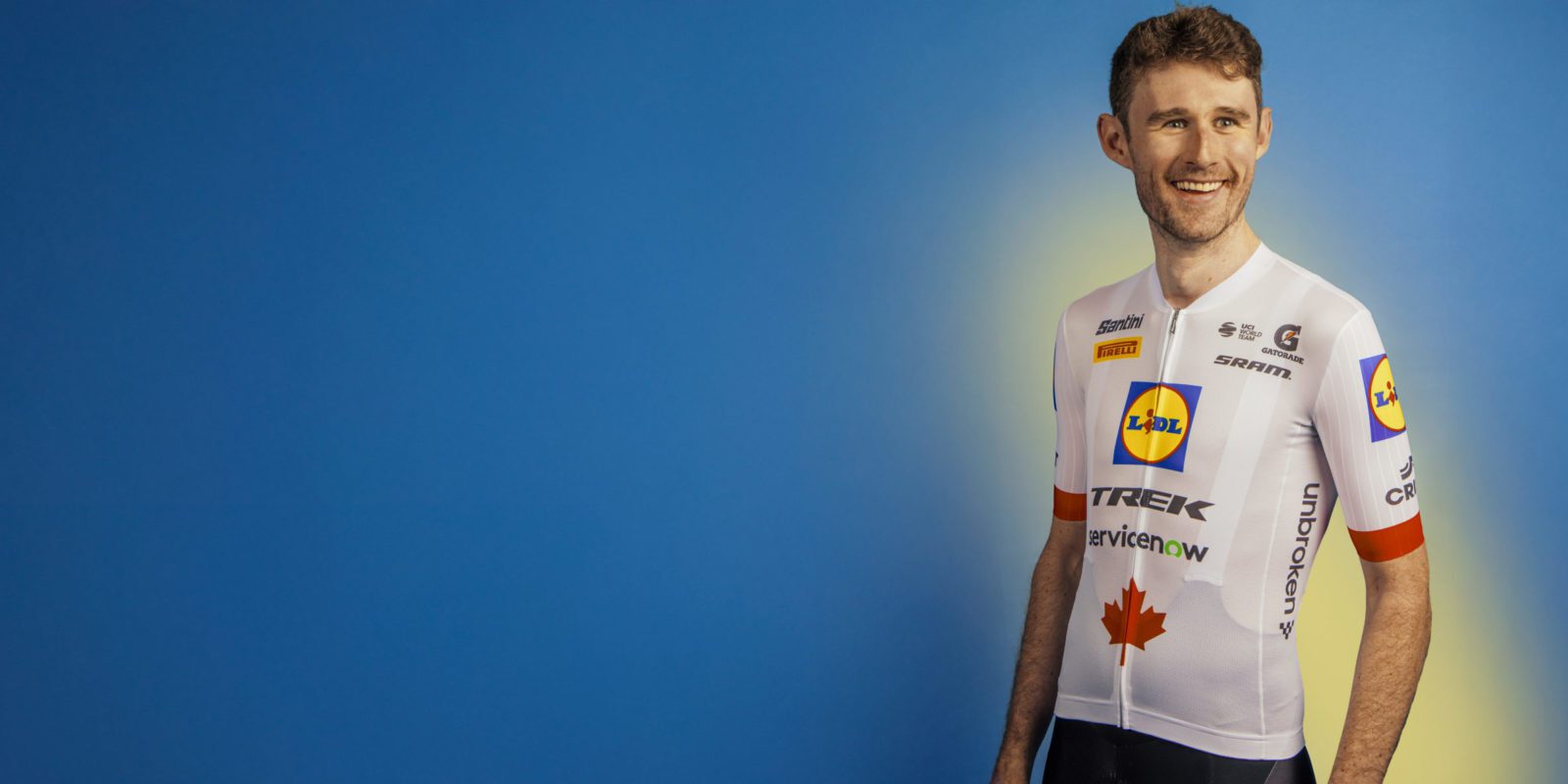
Marc Lemay knows the process that Derek Gee-West’s been through during the past five months better than most. Lemay, a former head of the Canadian Cycling Association and a UCI member largely credited with getting mountain biking into the Olympics (as well as a former Bloc Québécois MP), is the current president of the UCI’s arbitral board, a position he’s held for roughly five years. The judicial body is designed to solve disputes between athletes and teams, ideally resolving matters more quickly and cheaply than in the courts. Before Lemay became the head of the board, he gained experience representing athletes as well as teams. “But I cannot compare them because each case is different,” he said. In the case of Gee-West, Lemay couldn’t compare any detail, not just because it would be unethical, but because he made sure he had no knowledge of the case’s particulars. (Well, he does know one detail.) I spoke with Lemay the morning news broke that Gee-West was part of Lidl-Trek officially. Lemay was finding things out—like the simple fact that there was a resolution—at the same time as most of the world, through news stories online.
Podcast: The cloak-and-dagger story of how mountain biking became an Olympic sport
I knew there was only so much Lemay could reveal when I called. When I reached him last year at his home in Rouyn-Noranda, Que., I learned he had kept himself completely apart from Gee-West’s case to ensure the process’s impartiality. The mere fact that both Lemay and Gee-West are Canadian was enough for Lemay to make sure he was insulated from the case. He could tell me the basic makeup of the board that had been formed around the matter. In August, the team Israel-Premier Tech announced that it had been informed by Gee-West’s lawyers that the rider’s contract was terminated. The team disputed the termination, saying the agreement was in effect until 2028. A few days later on social media, Gee-West confirmed that his time with IPT was done. The rider said he was not in contact with any teams for a new contract. IPT was looking for 30 million euros in compensation from Gee-West. The group that was to address this dispute included three members: one from the team (IPT but rebranded NSN Cycling in November), one representing the rider and one named by Lemay for the UCI.
On Tuesday, when Gee-West’s spot on Lidl-Trek was public, I messaged the team for any information on the timeline that led to the Canadian national champion’s new contract. My contact could only say Gee-West was at the December team camp. Gee-West said the same to me, his time there running roughly Dec. 13 to 20. And that was it. Keeping the discussion centred on the new team, I reached out to Gee-West’s agents at Teamvision. “Though we have been Derek’s agents throughout this entire process, please understand that we cannot comment on the case. Please reach out to the teams for more information,” was the message there. In a statement on social media, NSN said, “NSN Cycling Team has finalized an agreement, approved by the UCI, with Lidl-Trek and Derek Gee-West, which will see Gee-West’s existing contract with our team conclude.”
I asked Lemay why confidentiality was so important here. “Because it’s the life of the athlete,” he said. “It’s really, really important to respect the confidentiality between the athletes and their team. For us, it’s not negotiable. It’s totally confidential. The representatives are named. Then it’s up to them to solve the problem.” Lemay added the confidentiality is to protect all parties involved, not just the athlete.
With the case closed up, it seems the conversation surrounding Gee-West will be back to racing, which will likely be more candid, except for race-day strategies.