
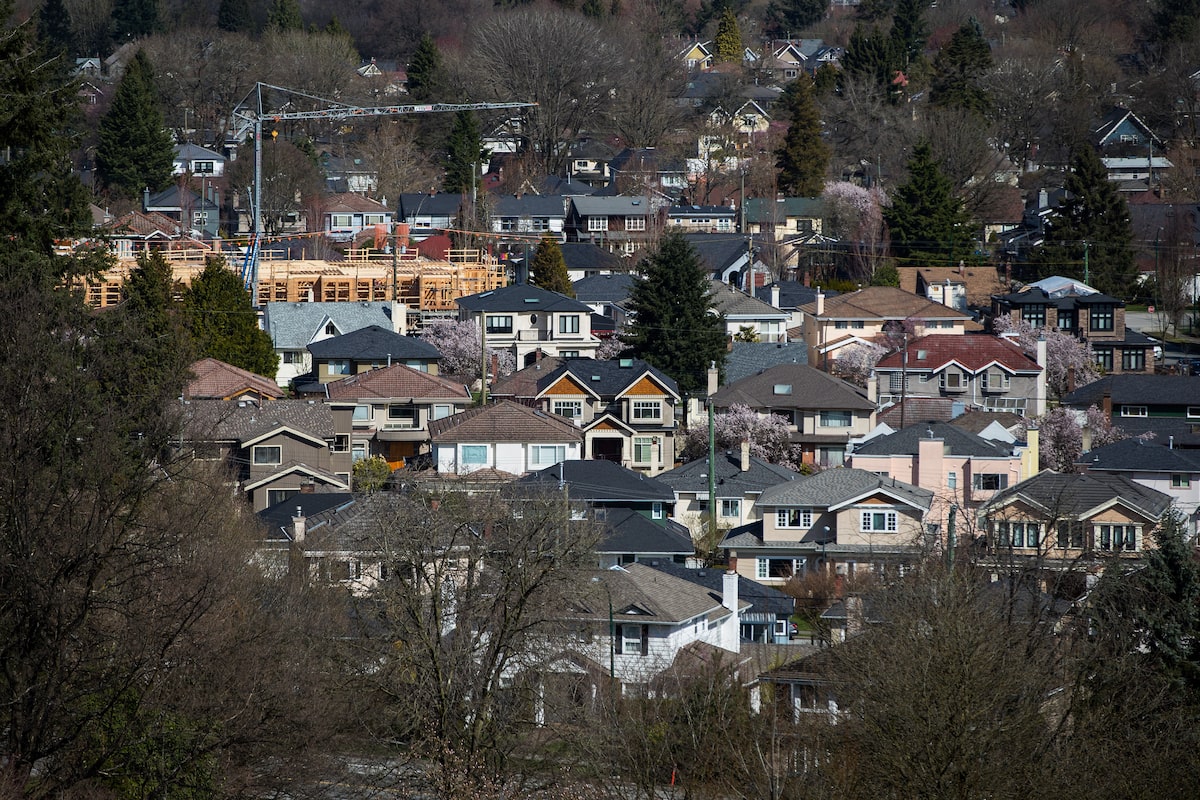
Despite falling prices in Vancouver, many potential first-time home buyers are still staying out of the market.DARRYL DYCK/The Canadian Press
For the last decade, the biggest story in Vancouver has been real estate.
The city’s high cost of housing has been a global talking point, with values on par with properties in London, New York and Hong Kong. It became an accepted fact that those prices were being fuelled, in large part, by foreign investors. This eventually prompted crackdowns on this class of purchaser by governments in Victoria and Ottawa.
Despite that, there still existed a housing crisis. Too few homes, for too many people, continued to drive up costs. Build more housing and prices would come down. It was that simple, we were told.
And, to some extent, this theory has held. More homes are available. Prices are coming down. But a funny thing has happened: many first-time home purchasers are still not buying what developers and others are selling.
Opinion: Who’s going to move to Vancouver now?
New data from the Greater Vancouver Realtors indicates that in 2025, the region recorded its lowest annual homes sales total in more than two decades. The association said sales were down 10.4 per cent from 2024 and nearly 25 per cent below the 10-year annual average.
This is a fascinating development, for several reasons.
First, we have been told repeatedly over the last few years that there wasn’t enough housing for all the people who currently live in the region. This is why legislation was passed by the B.C. government eliminating zoning for single family neighbourhoods in almost all parts of the province. Today, fourplexes and, in some cases, sixplexes are being built on lots once occupied by a single-family home. Meantime, condominium towers continue to go up in all directions, despite reports that some developers have halted plans for new builds because of low demand. So, there has never been more housing available than there is now.
Yet, there were more than 2,500 new condos sitting empty and unsold in Metro Vancouver as of October, according to the Canada Mortgage and Housing Corporation. It’s likely that number is only going to grow as more towers are completed over the course of this year and more units come online.
Condo buildings continue to be built all over Vancouver even as some developers have stopped construction because of low demand.ETHAN CAIRNS/The Canadian Press
But here’s the thing: while prices are coming down, they are not low enough to lure today’s more discerning buyer. The benchmark price for a detached home in Greater Vancouver in December was $1,879,800, which is a 5.3-per-cent decrease from the year before. Condo prices were also down by the same amount year-over-year with a benchmark price of $710,000. The price for a townhouse was $1,056,000.
That’s still a heck of a lot of money. And in today’s turbulent times, with so much economic uncertainty, many people are hitting the pause button on making big financial investments – especially young people who don’t know what the near-term future holds. But there is another interesting factor at play: these same would-be buyers don’t seem keen about forking over more than $700,000 to purchase a 450-square-foot condo. They’re saying, “Sorry, I’ll take a pass.” That’s a change from the past, when it was seen as important just to get into the market.
Greg Zayadi, the president of Rennie, a Vancouver-based real-estate marketing firm, told the CBC recently that the slowdown we are in the midst of has been building for three years, but accelerated in the last year. “The last time we saw this level of developer-owned unsold inventory was 24 years ago,” he said. He said the problem is people not wanting to live in a small box. They want something bigger – up to 1,500 square feet – if they’re going to pay north of $800,000 for a place to live.
And that seems more than reasonable.
But it’s also hard to see how that will happen, at least not for a while. Developers, in many cases, paid exorbitant amounts of money years ago for the land they are building on. They only recoup that investment, and ideally realize a profit, by charging a lot per square foot. Somehow, someone is going to have to pay the freight. Maybe provincial and municipal governments are going to have to reduce red tape to help developers cut their pre-build costs.
Vancouver rental builders, facing slowing demand, say government support needed
Anne McMullin, the president and CEO of the Urban Development Institute, says development costs have escalated so much in the last 10 years that building a unit is out of the price range of 80 per cent of the public in Metro Vancouver.
Things may begin to return to “normal” in 2026, but we don’t know. Housing prices are still decoupled from the income realities of many. The longer new home buyers can hold out for even more sanity in the marketplace to be restored, the better – for them and society at large.