
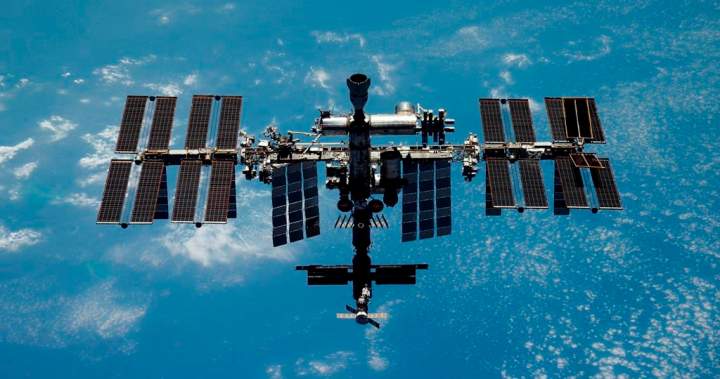
NASA will bring Crew 11 back to Earth months ahead of schedule after an astronaut on the International Space Station (ISS) experienced a medical issue, the aeronautics agency said Thursday.

The ill crew member, who is currently living and working aboard the orbital laboratory, has not been identified by NASA, but is said to be in stable condition and will be returned to Earth with the rest of the crew.
A medical diagnosis has not been shared, though NASA’s Chief Health and Medical Officer, Dr. James D. Polk, said he and a team of experts deemed it necessary to bring the astronaut home in order to complete more comprehensive testing.
“We have a very robust suite of medical hardware on board the International Space Station, but we don’t have the hardware we would have in the emergency department to complete a workup of a patient,” he said.
Story continues below advertisement
“The medical incident was sufficient enough that we were concerned about the astronaut,” Polk added, explaining that the best place to treat them was “on the ground,” but that it was not an “emergent evacuation,” which would require an immediate return within hours.
Polk said that was possible, but isn’t necessary in this instance.

Get breaking National news
For news impacting Canada and around the world, sign up for breaking news alerts delivered directly to you when they happen.
The medical issue is not an injury that occurred “in the pursuit of operations,” he said. “It’s mostly having a medical issue in the difficult areas of microgravity.”
Despite its non-urgent nature, this is the first medical evacuation in the ISS’s 25-year history, which NASA Associate Administrator Amit Kshatriya referred to as a “controlled and expedited return.”
The crew being sent home includes U.S. astronauts Zena Cardman and Mike Fincke, Japanese astronaut Kimiya Yui and Russian cosmonaut Oleg Platonov. They have been on the space station since August and were scheduled to be there until February.
UPDATE: @NASA is closely monitoring a stable medical situation involving one International Space Station crew member and evaluating all options, including an early Crew-11 return, with further updates expected within 24 hours. https://t.co/va6c2DZUBQ
— International Space Station (@Space_Station) January 8, 2026
Trending Now

Renee Nicole Good: What we know about the woman killed in Minneapolis ICE shooting

Canada’s 2026 census starts this spring — and 32K jobs are up for grabs
Story continues below advertisement
Three members of another crew would remain on board.
Crew 11 was manning the ISS as part of an ongoing rotation among international astronauts who maintain and conduct research in stints aboard the spacecraft.
News of the crew’s departure came a day after a scheduled spacewalk was postponed, also due to the medical issue.

5:13
Jeremy Hansen poised to make lunar history for Canada with upcoming Artemis Mission
Previous Video
Next Video
The space station is designed to be operated by a certain number of crew; if it is not sufficiently manned, those who remain on board would have to hold off on certain projects, Dr Simeon Barber, a space scientist at the Open University, explained to the BBC.
The International Space Station, which is operated by partners from the U.S., Canada, Japan, Russia and many nations of the European Space Agency, has been functional since 2000 and is the largest human-made object ever to orbit Earth.
More on World
More videos
© 2026 Global News, a division of Corus Entertainment Inc.