
Article by Liam Moore
We’ve all stood over that six-footer feeling like the world is about to collapse inwards. The pressure of that putt – which could be for the club championship or even for the final hole skin that’s been carried over the entire back nine – cannot be easily recreated when practicing. It’s highly unlikely that golfers are surprised to know that amateurs typically neglect their short game and their only form of practice is actually playing a course. Whilst the allure of spanking drivers continuously on the range is strong, improvement can surge if you took some time to work on your short game.
A typical goal for all levels of golfer is to avoid three-putting at all costs. If you were to record 36 putts from 18 holes, you’d be ecstatic with that performance and yet, those strokes typically account for at least a third of your overall shots. Considering this, it’s safe to assume that putting is where rounds quietly fall apart.
Why Do Many Golfers Avoid Short Game Practice?
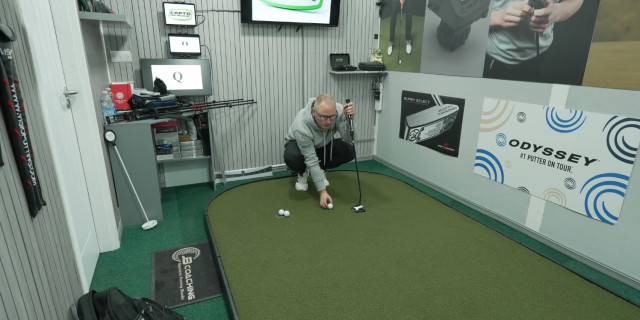
Golf is, without a doubt, a feel-based sport across all aspects of the game – but this is particularly true for putting and chipping. If you grip the club too tightly or lightly for those intricate chips, the likelihood is one result: sculling one across the green and trudging over the putting surface with nothing but shame plastered across your face. So why do golfers continuously neglect short game practice?
Boredom would probably be a good start. There is no denying the dopamine hit you get from striking your driver as well as possible, sending it rifling down the range before landing in the perfect spot. Can the same be said about putting? The contrast of a ball whistling through the air and one rolling gently towards its target is a juxtaposition at best, but practice across all areas of your game should be non-negotiable.
With interactive driving ranges like Toptracer and Trackman, it’s safe to say that golf has moved into the modern day. Practice hubs were usually reserved for the most ardent of golfers, but interactive games via the software have helped introduce the sport to a more rounded audience. Long game practice has well and truly arrived in the 21st century and it could be argued that a lack of engagement could be a reason why, historically, many avoided working on their ability with the flat stick.
However, putting tuition is evolving long past the mundane cycle of hitting continuous putts to the same static target – and, just like the modern driving range experience, technology is to thank for that change. Ranges powered by technology are user-focused, whilst technology in putting requires a skilled eye to achieve the greatest results. The era of the specialised putting coach is now upon us, and with the thankful aid of advanced innovative technology, the putting lesson experience has improved dramatically. This is something that Joe Bray, Specialist Putting Coach out of Saltford Golf Club, prides his services on.
Could a Specialist Putting Coach Transform Your Game?
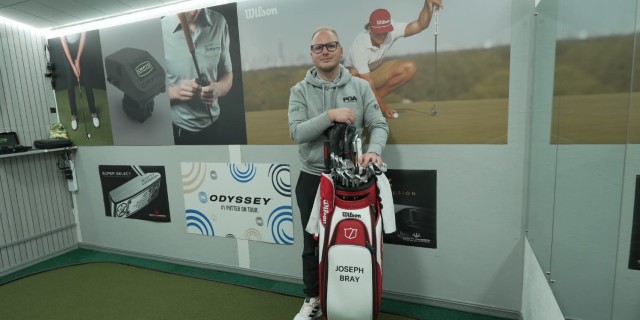
“I’m quite a fun guy,” Joe opens with. “By having fun and having a laugh with the person, it helps to make them feel comfortable. I think a lot of people come into facilities like this, see the data, see the training aids, see the mirrors and maybe get a bit nervous. I think I’m quite good at putting people at ease and making them feel comfortable here.”
Arguably, that is the strongest trait of a coach. You’d be shocked to know how many higher handicappers are embarrassed by their ability, and their fear of being judged prevents them from developing their skill through lessons. We’ve already covered the importance of joyfulness being important to longevity (interactive driving ranges) and the standard of golf lessons has risen alongside it as a consequence. We know, through plentiful data, that the short game is somewhat neglected by the majority of players, but you’d be surprised to know that its lack of coverage is across all aspects of the sport.
“I’ve always had an interest in putting,” Joe revealed. “When I did my PGA training, there was not a lot about putters at all – it was all about custom fitting within the long game. Iron fitting, driving fitting, sports science – there was a lack of putting knowledge that I had and that I wanted to get. I did my own research and did a few courses and I learnt from a few very good putting coaches and what they’re doing.”
Joe’s love for putting has resulted in prestige too, as he is the Ladies First Team Coach at the Somerset Golf Union.
If PGA Professionals are naturally being guided to long-game coaching, then it’s fairly obvious that putting is neglected across the board. If you visit your local golf club, is specialised putting tuition advertised – or even offered at the hub? Putting lessons from the 2000s and before would typically involve the student trying to hole as many putts on the green as possible before the session has ended. Remember the same technology that innovated the driving range experience? That data has finally been introduced to the greens, too.
“My philosophy around teaching putting is to keep it simple – but by using technology. I like to be able to identify what’s going on by using data and then allow the player to understand what they’re doing but to also see what they’re doing.”
The feel-based aspect of the sport will never change – nor should it as a crucial element of the game – but with the inclusion of data, it’s never been easier to improve your putting.
It’s important to remember that results drive improvement, but the engagement needs to be there too. The archaic method of teaching putting is no longer sufficient for modern day players, and this is something that Joe is exceptionally aware of. “My experience of having putting tuition was – and is probably still the experience of most people – to go onto the putting green, roll a few putts then maybe change this, change that and off you go and hopefully you putt better. I don’t think that is the way that putting tuition should stay. There should be a better experience of putting tuition, seeing data and using training aids.”
How is Modern Technology Used in Putting Lessons?
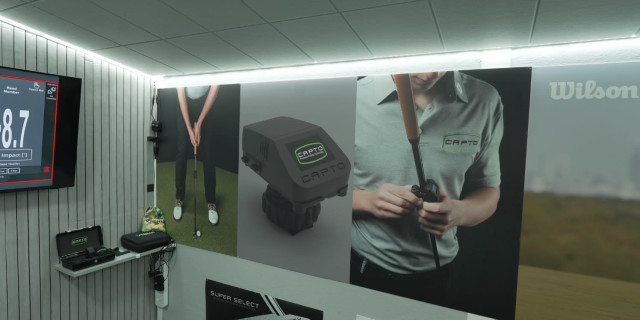
We know the impact that Trackman Range has had on the everyday golfer; just knowing your carry distances alone can be extremely helpful. If you tie this in with all the other intricate data that’s provided about your swing, it’s easy to see why these technology-driven ranges are so successful. However, were you aware that similar software existed for putting? Capto Putting Software, in Joe’s case, has changed the game for club golfers who are eager to improve their confidence with the putter.
The intelligent software provides a plethora of details regarding the putting stroke, and it is this precise information that helps golfers improve on the green – which Joe brings to life through his modern putting studio. “I’m always pro around four key areas: alignment, aim and start line, pace control and green reading,” he said. “I’ve had children come through this door wanting to improve their putting and I’m still using the Capto software. I appreciate I’m not going into the in-depth stuff, but again, even for a seven or 10-year-old child, to be able to use the technology or the laser I might use to see where they’re aiming, is not only helpful but fun for them too.”
Joe is part of a growing shift when it comes to golf tuition. World-renowned coaches like Phil Kenyon started the change towards dedicated coaching and that is now seeping through to all levels of the game.
However, it’s still somewhat uncommon to see coaches drift to just one section of golf. Within the Bristol area, only two specialised putting coaches are advertising themselves as such on Google, which is a very small minority. Despite this, the era of the specialist coach is here to stay and as we progress through time, it seems inevitable that more will branch off and focus on just one area of the game.
Should I Start Taking Putting Lessons?
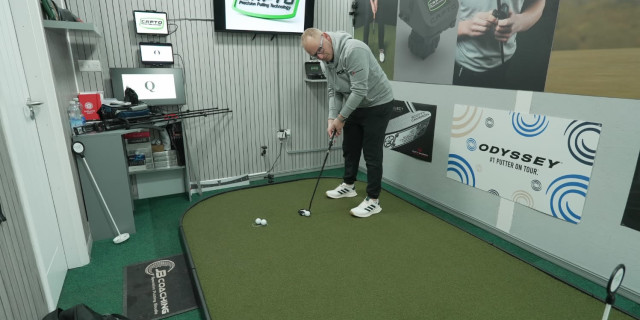
Marginal gains dominate golf and the search for perfection lives on everyday, occasionally bringing in new characters who are grasped by this notoriously difficult sport. However, outdated putting coaching is something of the past thanks to Joe and coaches like him. If we consider the importance of the greens – where the outcome of the match is typically decided – it’s a wise idea to invest in that area of your game if you want to improve and enjoy bragging rights from your Wednesday roll-up.
“I think the evolution of the standard club golfer is partly data-driven but I also think a better experience of putting lessons. We’re not using data to confuse players but to help support the changes and feelings that we recommend to golfers,” Joe closed with. If you’re someone who neglects their putting practice in favour of the alluring driving range, it’s time to give putting tuition a go – you’ll be thanking yourself in a few months’ time!
For too long, golfers have neglected short game practice for the thrill of hitting their driver as hard as possible. The surge of excitement from hitting a driver purely cannot be denied, but how often does that tactic work on a tight, tree-lined golf course? By spending time with a specialist putting coach like Joe, you’ll gain incredible insight into your shortcomings, and then be issued the correct advice to help you score more efficiently on the greens.
Since transitioning to putting, Joe has seen hundreds of students come through his doors and he’s helped all of them to gain a better understanding about putting and green reading through both his knowledge and the helpful aid of technology. If you’re interested in learning more about Joe, you can follow his Instagram or you could take a deeper look at the services that he offers.