
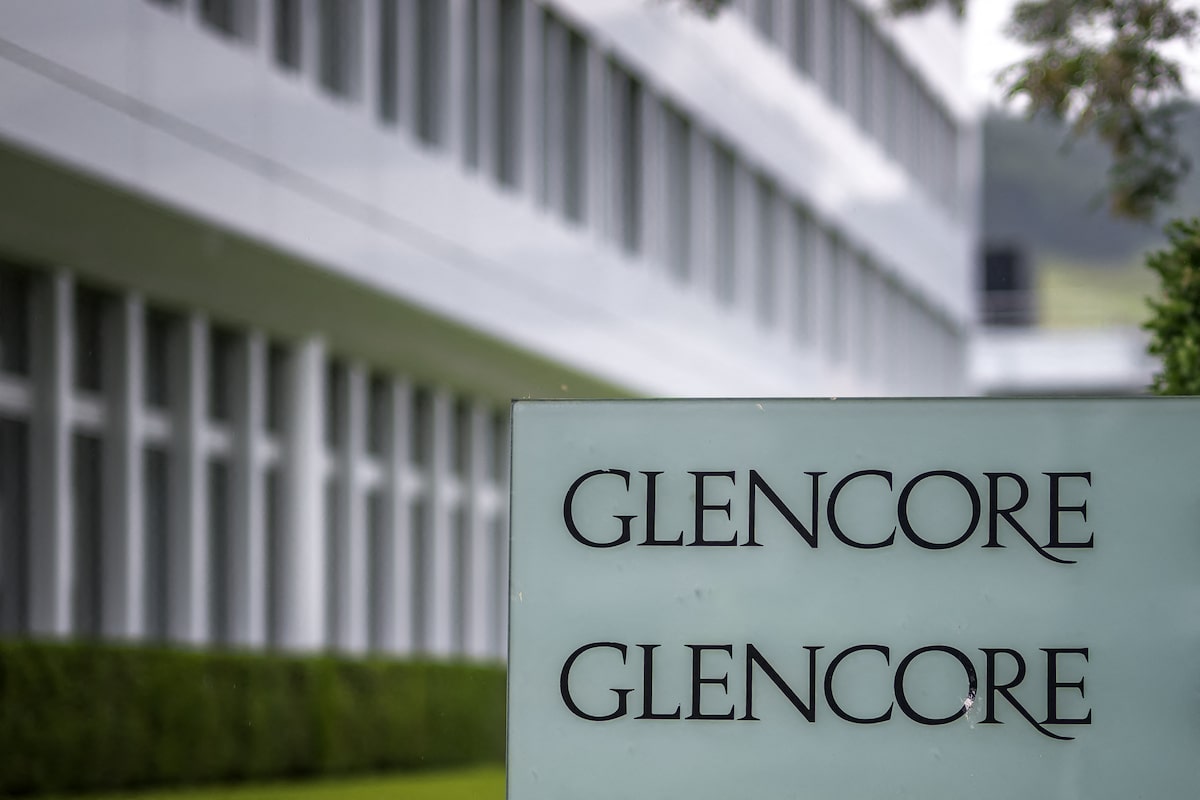
Glencore’s headquarters in Baar, central Switzerland, in May, 2025. Glencore have tried to cut a deal with Rio at least three times in the past 12 years or so.FABRICE COFFRINI/AFP/Getty Images
On and off for more than a decade, Glencore GLCNF and Rio Tinto RTPPF have courted one another. The courtship never led to marriage, despite proposals, but there’s a good chance it will this time. Copper, the hot commodity, is Glencore’s dowry.
On Thursday evening, in response to a leak first reported by the Financial Times, the two mining giants announced they were in “preliminary discussions” about a union that could see an all-share merger. There were no details, and mining investors have heard this story before. Glencore CEO Gary Nagle and his predecessor, Ivan Glasenberg, had tried to cut a deal with Rio no fewer than three times in the past dozen years or so.
The surprise is that Simon Trott, the Rio CEO who has been on the job for only five months, is open to the idea. He is known as a “mining guy” – that is, not a takeover artist. Mining investors in general and Glencore in particular had expected the Australian iron ore specialist to spend a year poring over his resources empire, tweaking this and that, before making a bold, business-reshaping move – or not make one at all, since historically Rio has been M&A and risk averse. They were wrong.
Copper encouraged him to fling open the door.
In the past couple of years, the mining world has been galloping after the metal. Since 2024, BHP, the world’s biggest mining house, has made two attempts – both duds – to buy Anglo American, whose copper assets in Chile made it a world-class copper player.
Rio Tinto in talks to buy Glencore in deal that would make it world’s largest miner
Vale, Glencore to study $2-billion copper joint venture in Sudbury
In September, Anglo American announced its takeover of Canada’s copper-heavy Teck Resources (shareholders of both companies approved the deal in December).
Since Mr. Trott became CEO, copper has gone from less than US$10,000 a tonne to more than US$13,000 – a record high. The share prices of mining companies loaded with the metal have been on fire.
You could argue that the price is in bubble territory; you could equally argue that, given the relentless demand for copper and the lack of new discoveries, the price may look like a bargain in five years. Militaries need copper for bronze artillery shell casings and missile electronics. AI needs massive amounts of copper for data centres and chips. And copper is an essential component of EV batteries and electrical transmission networks.
Rio is the world’s second-biggest mining company and made its fortunes from vast, low-cost iron ore operations, somewhat less so its aluminum business (it owns Montreal’s Alcan). Its copper portfolio is expanding but lacks enough large-scale, low-cost assets to guarantee compelling growth.
Glencore’s copper projects in Latin America could fill the hole. It also owns 44 per cent of Chile’s long-life, high-grade Collahuasi mine, one of the biggest and most valuable of its kind in the world. It could add its enormous commodities trading arm to the combined business.
Glencore, for its part, would gain vast exposure to two commodities it covets – aluminum and iron ore – plus, it hopes, a fat premium for its shares in any takeover or all-share merger. Glencore would be a tough negotiator, but the company has broadcast to everyone that it does not jealously guard its independence. In a recent conference call, Mr. Nagle said that “everything is for sale at the right price,” including “the entire company.”
Together, Rio and Glencore would be a globe-trotting monster, pushing BHP into the industry’s No. 2 position. According to Barclays, the enlarged company would have a market value of more than US$200-billion, industrial revenue (which excludes commodities trading) of US$133-billion per year and underlying profits of almost US$17-billion, based on 2026 projections. The synergies – code for cost-cutting – would come to a hefty US$10-billion, Barclays says.
Copper and iron would each generate about a third of operating income, with aluminum landing at about 12 per cent and a smattering of other products (zinc, lead, coal) in the single digits. There is a good chance that Glencore’s big coal business, anchored by Teck’s former metallurgical coal division in British Columbia, would be sold or spun off. Rio ditched coal in 2018 and probably has no desire to bring it back.
While the merger or takeover by Rio makes strategic sense, a lot could go wrong for Mr. Nagle, Mr. Trott and Rio’s ambitious chairman, Dominic Barton, the former managing director of McKinsey & Company and Canada’s ambassador to China from 2019 to 2021.
High on the risk list is BHP. Mike Henry, its Canadian CEO who will probably retire near the end of this year, might like to go out with a bang instead of a whimper. He couldn’t make an offer for Rio, because the two companies would have market-clobbering exposure to iron ore that would attract the scrutiny of trust busters. But he could go for Glencore to bolster BHP’s copper division.
Another risk is a complicated cherry-picking attempt by Rio, which could make an offer for Glencore’s copper assets alone. Mr. Nagle would probably reject such an attempt unless the price were outrageously high.
Still another risk is deciding who would run the new company. Mr. Nagle is no shrinking violet and could make demands that Mr. Trott could not accept. The two companies have made three failed attempts to unite. A fourth cannot be ruled out.