

Listen to this article
Estimated 4 minutes
The audio version of this article is generated by AI-based technology. Mispronunciations can occur. We are working with our partners to continually review and improve the results.
Quirks and Quarks54:00New dinosaur species identified in fossilized dino barf, and more
On this week’s episode of Quirks & Quarks with Bob McDonald:
Loss of fresh groundwater is now the leading driver of sea level rise
Quirks and Quarks8:38Loss of fresh groundwater is now the leading driver of sea level rise
Our world is facing an increasingly dangerous shortage of freshwater, most of which comes from below-ground aquifers that take centuries to replenish. A team, led by James Famiglietti of the School of Sustainability at Arizona State University, analyzed more than 20 years of satellite data from NASA’s Gravity Recovery and Climate Experiment, or GRACE. The researchers found that our loss of groundwater has become so extreme that it’s now contributing to sea level rise even more than the planet’s melting ice sheets and glaciers. The work was published in the journal Science Advances.
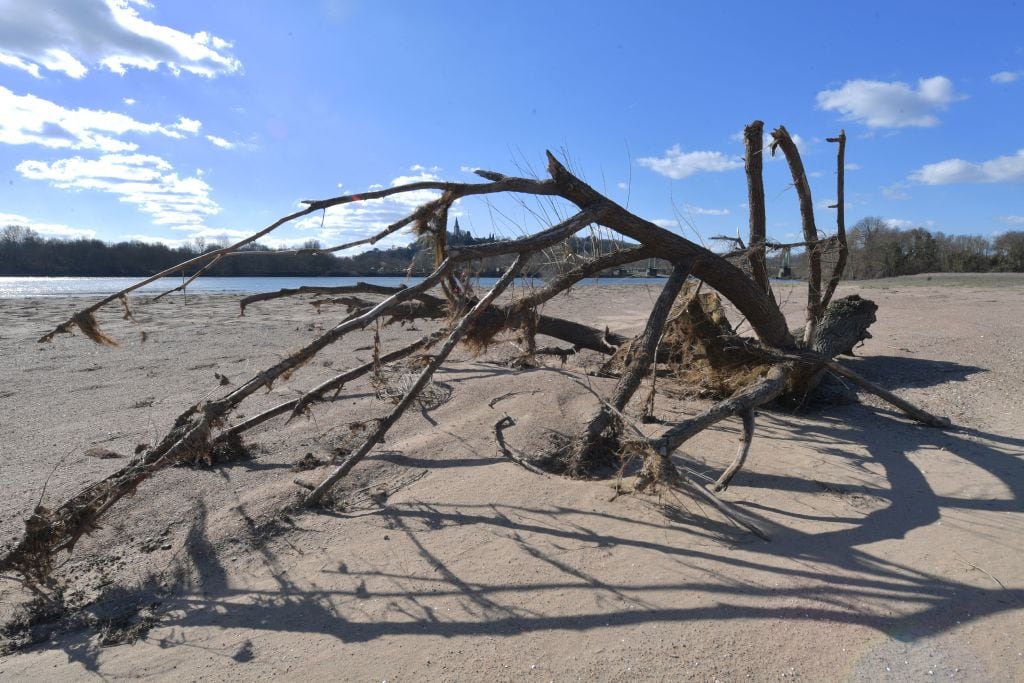 France experienced severe droughts in 2023, with some areas receiving essentially no rainfall over a one month period. A recent study found that the depletion of groundwater is accelerating, making it the leading driver of sea level rise. (Jean-Francois Monier/AFP/Getty Images)How doubting your self-doubt makes you doubt less
Quirks and Quarks7:54How doubting your self-doubt makes you doubt less
Science has shown there’s a surprising way to stick with your New Year’s resolutions. Since having doubts can stop you from reaching your goals, scientists wondered what could stop self-doubt. Patrick Carroll, a professor of psychology from Ohio State University at Lima, investigated how a person focusing on their confidence or self-doubt could influence their commitment to their long term goals. It turns out that doubting your self-doubt can boost the confidence you have in your ability to achieve long term goals. His research is published in the journal Self & Identity.
 Research shows that questioning your self-doubt can help you become more committed to achieving your goals (pathdoc / Shutterstock)110 million-year-old dino barf led to the discovery of a new species of pterosaur
Quirks and Quarks7:57110 million-year-old dino barf led to the discovery of a new species of pterosaur
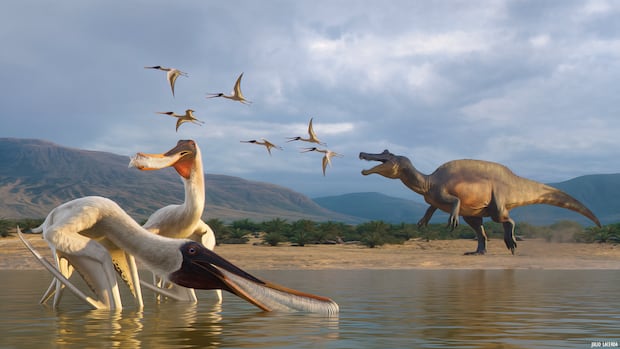
A new species has been discovered in fossilized vomit for the first time. Researchers looking at an unassuming fossilized slab in the basement of a museum in Brazil made the discovery that not only was it actually 110-million-year-old dinosaur vomit, but inside that vomit contained the bones of two seagull-sized filter-feeding pterosaurs that are new to science. The research team, including paleontologist Aline Ghilardi from the Federal University of Rio Grande do Norte in Brazil, believe the animal that regurgitated the pterosaurs could have been a spinosaurus. The research was published in the journal Nature.
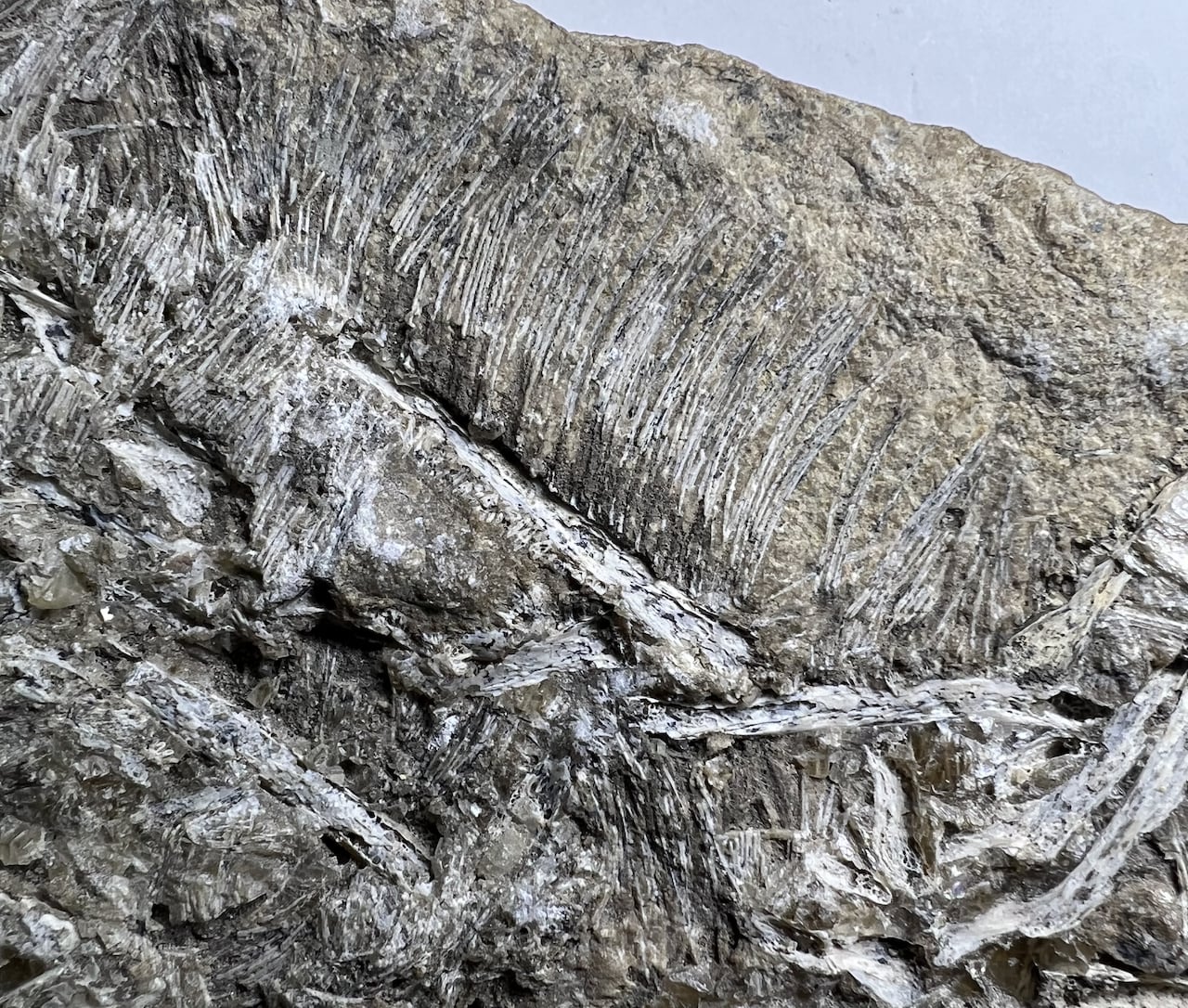 This segment of fossilized dinosaur vomit shows the preserved pterosaur jaw with comb-like teeth jutting out. (Aline Ghilardi)A huge black hole in a peculiar galaxy may date from the universe’s earliest moments
Quirks and Quarks8:11A huge black hole in a peculiar galaxy may date from the universe’s earliest moments
Most black holes form when a star collapses at the end of its life, leaving an invisible hole where gravity is so extreme that not even light can escape. But theorists have also speculated that a type of black hole known as a primordial black holes could have been created in the very early universe, shortly after the big bang. Now, observations made by Boyuan Liu of Heidelberg University of a distant galaxy made with the James Webb Space Telescope, along with computer simulations, suggest that these primordial black holes may really be out there in the universe. The research has not yet been published, and has been posted to the preprint server Arxiv.
 An unusual, nearly starless galaxy within thia Abell 2744 galaxy cluster appears to contain a primordial black hole formed in the immediate aftermath of the big bang, according to a new study. (NASA/ESA/CSA/I. Labbe/Swinburne University of Technology/R. Bezanson/University of Pittsburgh/A. Pagan/STScI)Shining a light on where viruses hide out in our bodies, and how they make us sick
Quirks and Quarks18:24Shining a light on where viruses hide out in our bodies, and how they make us sick
At any given time, there are around 300 to 400 trillion viruses throughout the average human body. Most are benign, and some are beneficial. But other particularly crafty and menacing viruses can lie dormant for years at a time, just waiting for the perfect time and circumstance to gear back up, and make us sick. Scientists are investigating where some of the more destructive viruses can lurk in a person’s body, like the viruses behind AIDS and the one now thought to cause Lupus, which they hope could lead to better treatments for the disease they cause.
We spoke with:
Stephen Barr, a virologist from Western University, about his recent research uncovering HIV’s strategy for hiding out in the human body. His work was published in the journal Nature.Bill Robinson, a professor of immunology and rheumatology at Stanford University, about his recent discovery that Epstein Barr Virus is the cause of the autoimmune condition Lupus. His work was published in the journal Science Translational Medicine. The chickenpox virus is one of the viruses that can stay dormant in the human body long after the initial infection, and can reactivate as shingles later in life. (9Gawin / Shutterstock)