
While I greatly admire physicists producing more and more detailed information about the universe (“‘We’re on the cusp of something really exciting’”, Lunch with the FT, Life & Arts, December 20), unlike your interviewee, space scientist Maggie Aderin-Pocock, I’m sceptical about “life out there”. As there are 300bn stars in our galaxy, it’s comprehensible that some kind of “life”, described by artificial intelligence as “a complex, self-sustaining process in organised matter, characterised by traits like growth, reproduction, metabolism, response to stimuli, adaptation, and homeostasis”, would have arisen in one or more of those stars or planets.
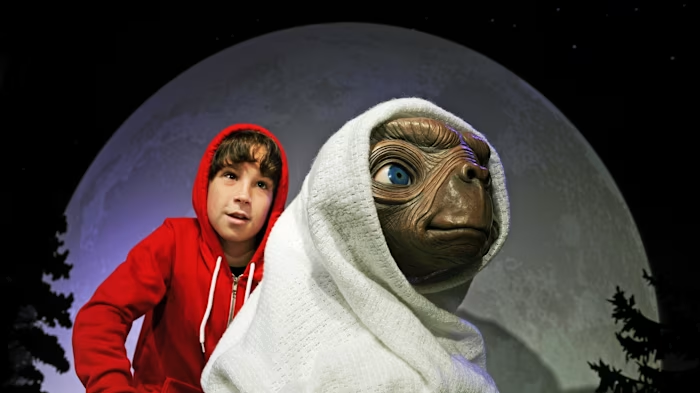
But if we think of life as something ET-like, ie capable of contacting and socialising with us, my “natural intelligence” considers it highly unlikely. Just think about the complex evolution before Homo sapiens emerged. Maybe some statistician could calculate the real odds of truly intelligent life elsewhere in the universe.
Timo Strandberg
Professor Emeritus, Helsinki University Hospital, Helsinki, Finland