
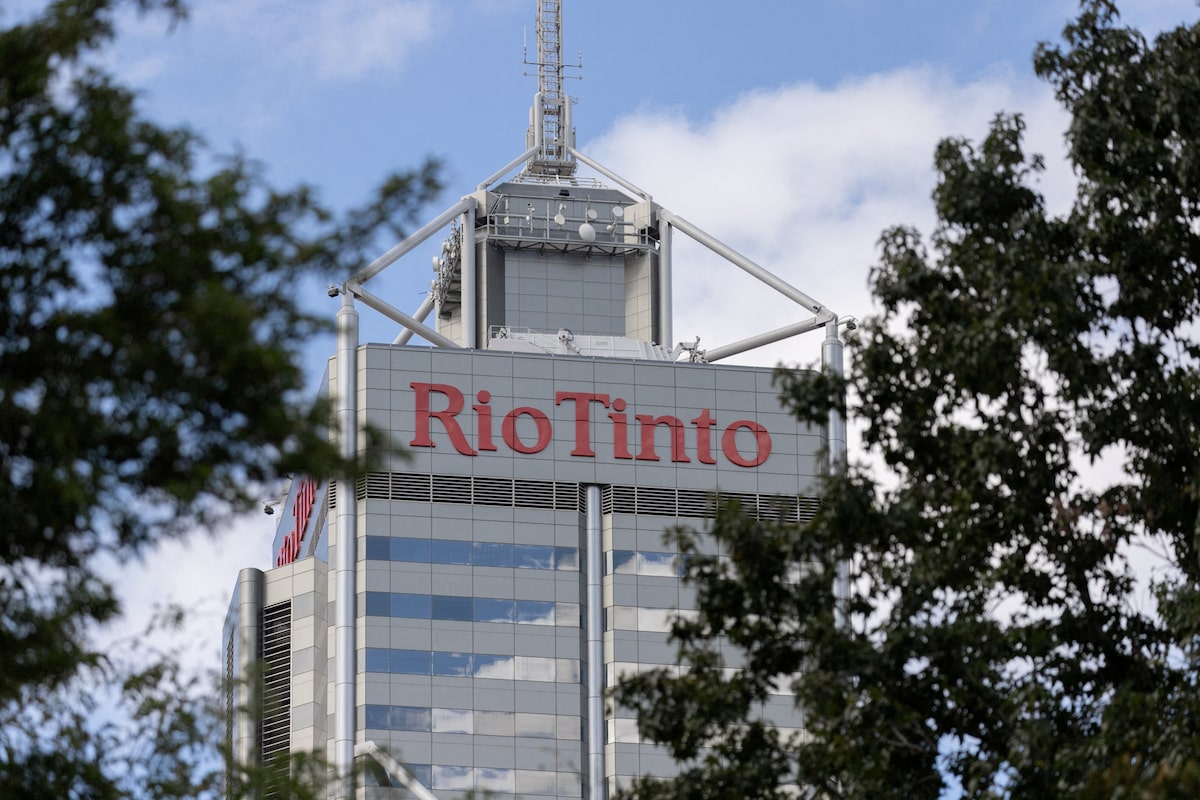
A Rio Tinto building in Perth, Australia, in April, 2025. London-based Rio is in talks to potentially acquire Glencore.Christine Chen/Reuters
The federal government will only have a limited regulatory say if British miner Rio Tinto PLC RTPPF ends up buying Glencore PLC GLCNF of Switzerland, even though both companies have extensive operations in Canada.
On Thursday, London-based Rio said it was in talks with Glencore to potentially acquire it. If the deal happens, Rio would pass BHP Group Ltd. to become the world’s biggest mining company.
Rio would also consolidate its position as Canada’s biggest metals and mining company. It already has massive aluminum operations in Quebec thanks to its acquisition of Alcan Inc. in 2007. Rio also mines diamonds at the Diavik site in the Canadian Arctic, and produces iron ore in Labrador City, N.L.
Glencore also has an extensive footprint in Canada, with a big copper smelter and refinery in Quebec as well as giant nickel-mining operations in Quebec and Ontario. In addition, Glencore is Canada’s largest producer of steelmaking coal and the second-largest producer of refined zinc.
Glencore in 2024 significantly bulked up its presence in Canada by acquiring a majority stake in the metallurgical coal business of Vancouver’s Teck Resources Ltd. for US$6.9-billion.
Rio Tinto in talks to buy Glencore in deal that would make it world’s largest miner
Even though an acquisition of Glencore by Rio could have broad ramifications for Canada, including the potential sale of the coal business formerly owned by Teck, this country will only have minor influence over the deal, lawyers say.
Subrata Bhattacharjee, national chair of the competition and foreign investment review group with Borden Ladner Gervais LLP in an interview said that unlike Glencore’s acquisition of Teck’s coal business, the Rio-Glencore transaction would not be subject to a net benefit test. Rio would be compelled only to “notify” Ottawa of the deal. The British miner would not be compelled to prove the deal is of net economic benefit to Canada or face the prospect of it being rejected by Ottawa. That’s because the Investment Canada Act was primarily designed to scrutinize deals that involve a foreign company acquiring a Canadian entity.
“That whole piece of legislation originally was designed to try to protect Canadian interests where foreign companies were buying Canadian companies,” said Mr. Bhattacharjee.
“It became clear that if the company was already foreign control, then it didn’t make sense.”
A Rio acquisition of Glencore, however, would be subject to a national security review and be reviewed under the Competition Act. However, neither is expected to raise any major concerns with Ottawa, Mr. Bhattacharjee said.
The competition review would look at the impact the deal would have on commodities markets in Canada, on labour markets and whether the combined entity has too much power. In the case of these two companies, however, their operations are mostly distinct: Rio is a powerhouse in aluminum and Glencore in nickel, with little overlap.
If Rio buys Glencore, however, it would inherit Glencore’s legal obligations, and they include promises the Swiss miner made to the federal government in 2024, when it acquired Teck’s coal business.
Among them was a commitment to maintain a Vancouver head office for its Canadian coal business for 10 years, and a pledge to maintain “significant” employment levels for five years.
A wild card, however, is whether Rio is interested in retaining that business.
Several analysts believe that Rio, which doesn’t have any coal in its portfolio, and divested the last of its exposure to the dirty commodity in 2018, will end up selling, or spinning it out.
In the event of a sale of the business to a third party, the commitments Glencore made in Canada in 2024 would essentially be up for negotiation again. And while Ottawa may want those promises to be kept, there’s no guarantee they will be.
“It depends on what the new foreign investor is able and willing to do,” said Mr. Bhattacharjee.
Bryan Yu, chief economist at Vancouver-based Central 1 Credit Union, said he believes there should be requirements to maintain operational and corporate footprints in all mining deals occurring in Canada, even if both parties are foreign-owned.
“There needs to be commitments to the communities and households in these regions that there is decision-making locally,” Mr. Yu said in a statement. “This does not mean that operations cannot be curtailed under weak market conditions, but conditions should require some minimum level of operation over a longer period of time.”
The extent to which the Canadian government will have a say in any proposed deal between the two mining giants may also depend on the intricacies of how the transaction is structured, which is not known at this point.
Still, regardless of the structure, there is reason to believe that the outcome for Canada will ultimately be positive given the historic track record of investment by Rio and Glencore in Canada.
“Both companies have been pretty good corporate citizens so I’m not sure there’s going to be that much pushback,” said Josh Krane, who leads law firm MLT Aikins’ competition law and foreign investment practice.
Gabrielle Landry, press secretary for Industry Minister Mélanie Joly, in an e-mail to The Globe and Mail declined to comment.