
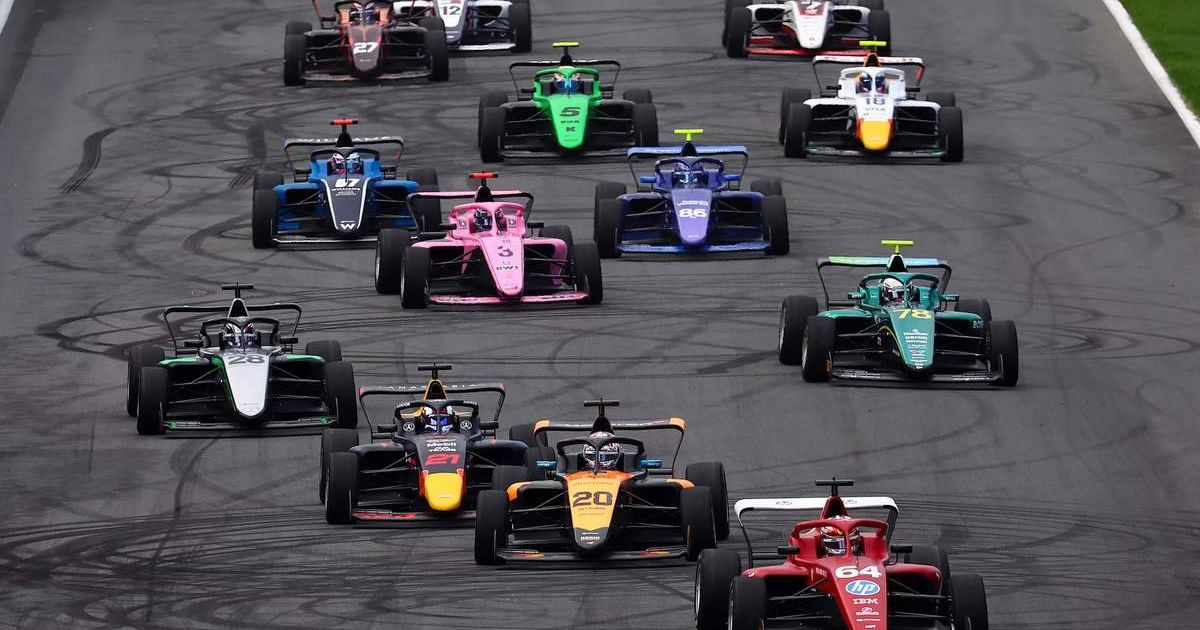
F1 Academy launched with a clear objective: get a female racing driver into Formula 1. But we’re still no closer to seeing one! With no standout star and no tangible progress, is it just a waste of time? In the run-up to F1 Academy’s fourth season, now feels like the perfect time to take stock. If the series were running as planned, I’d be able to reel off a list of talents knocking on the door of F1’s team bosses. But this simply isn’t the case. Even its tragic W Series predecessor did better. At least Jamie Chadwick’s dominance earned her a chance in IndyCar. Who can you name in F1 Academy? Chloe Chambers and Bianca Bustamante gained fame thanks to Netflix, and Doriane Pin has been given exposure by Mercedes. This is all well and good, but “inspiring people” is one thing; prepping women for F1 is another.
F1 Academy only represents a step forward in one regard—it offers ties to motorsport’s top-tier teams. But how is this beneficial? Are we seeing women in free practice? No.
On every other level: funding, the cars, super license points, it’s completely failing. And worst of all? F1 doesn’t care. It virtue signals, then continues with the status quo.
F1 Academy: Barely a flash in the pan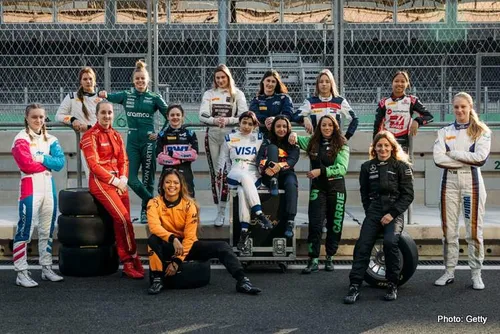 Let’s start by doing away with some of the bullsh!t around this topic and assume that women are absolutely capable of driving F1 cars. If it’s not a skill issue, it must be a systemic one. In this respect, F1 Academy has done nothing to move the needle. It’s just a rebranded feeder series shamelessly appealing to the Netflix fanbase Liberty has assembled. These “fans” don’t watch the sport anyway, so why not pretend change is happening? In reality, motorsport needs more than a facelift if it’s going to bring equal opportunity.
That starts with the car. F1 Academy only races F4 spec. How are drivers supposed to demonstrate they’re capable of competing at a higher level in sub-par machinery?
This also feeds into the issue of superlicense points. Within the current framework, drivers need to earn 25 of these points to take part in an F1 practice session.F1 Academy awards its title winners just 10 points, 5 less than Chadwick got for winning W Series. If being signed by Ferrari or Mercedes doesn’t provide access to the senior team, why even involve them? Call me cynical, but it seems like a marketing ploy.
Then there’s the elephant in the room: money. What’s the main thing you need to succeed in motorsport? Cash… and lots of it. A few years ago, Toto Wolff said that F3 cost £1 million per season.
You can bet that figure has gone up as well. This makes funding critical to any driver’s future—man or woman. Structural issues take many forms, and money remains top of the list!
Too much hot air, not enough substance 
In an ideal world, F1’s many feeder series would be all about nurturing talent. Occasionally, this idea can be left by the wayside in other categories, but F1 Academy is especially prone to sidelining skill and focusing on exposure, which is a distraction.
It should be a case of getting their heads down and mastering their craft. Instead, Netflix has them performing for TV. Bustamante is the standout example of how this backfires. McLaren saw enough potential to sign her for their Academy. Instead of knuckling down, she pranced about doing Vogue interviews, talking a good DEI game, only to get the sack. Get a grip! Arguably, it’s a bit like the situation with Lewis Hamilton. When he was winning every other week, no one could question his extracurricular activities. Now things are a mess at Ferrari, teams (and fans) just want him to focus on bouncing back. When you slip down the pecking order, any off-track messages carry less weight too. F1 Academy drivers should do the same as Lewis. Let your driving do the talking. What next? Start with less virtue signaling
If F1 was serious about getting women involved, it’d tackle the real issues, provide funding where needed, and up the training and car specifications. Faster drivers, a better spectacle, actual equality. Not the virtue-signaling b******s we’re currently being subjected to.
Getting them in the same cars gives the F2 & F3 teams a real decision to make. Right now, they’re faced with the prospect of promoting a prima donna that’s unprepared to make the step up or a battle-hardened young man. Spare us the PR spin; equip women to take these drivers on. If they’re faster, it’ll show. As Max Verstappen said last year, this is the route to F1. The fact of the matter is, it isn’t happening. Ultimately, “representation” only takes you so far. Liberty has proven itself a brilliant marketing machine, but just like in the senior sport, it doesn’t seem to value substance. If we’re going to see women return after a 34-year hiatus, a bigger overhaul is needed.
Otherwise, the sport will continue to move in the same old circles, and all this pandering will have been for nothing.
What’s stopping women from making it into Formula 1?