
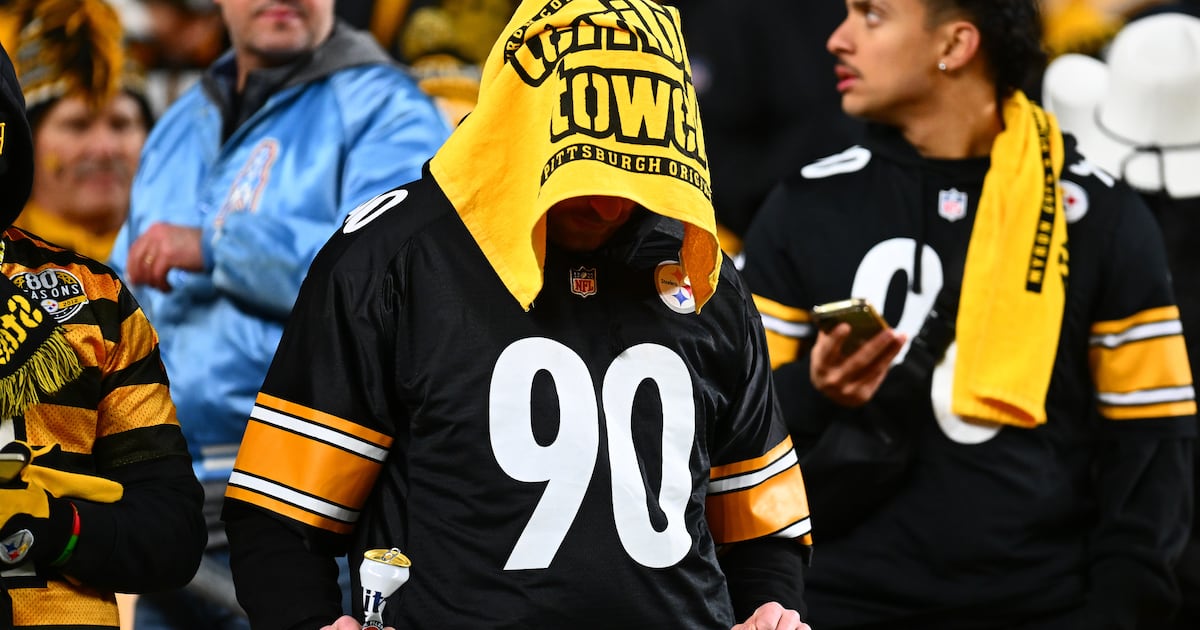
PITTSBURGH – You could feel Aaron Rodgers’ patience waning and frustration mounting over the course of three quarters during Monday night’s AFC Wild-Card Game between the Pittsburgh Steelers and Houston Texans.
His Steelers trailed the Texans 7-6 entering the fourth quarter, despite the Pittsburgh defence having taken the ball away from Houston quarterback C.J. Stroud three times.
The result of those three takeaways, however, was just 27 yards of offence and three points, a good indication of the problems Pittsburgh was having moving the ball against the NFL’s best defence.
And Houston’s defence showed up to the postseason exactly as advertised – able to generate fierce pressure on most passing downs by rushing only four. Backed by a secondary that includes two elite corners in Derek Stingley Jr. and Kamari Lassiter, not to mention safety Jalen Pitre, the Texans were able to take away all of the Steelers’ reliable options on offence.
Pittsburgh’s No. 1 receiver, DK Metcalf, had two catches early on and that was it for the night, only targeted once beyond the first quarter. The run game struggled to generate yards. And in a game where the Steelers’ tendency to unload quick passes to their running backs to make gains in open space should have been an effective counter to the Texans’ constant pursuit, that wasn’t working either.
The scoreboard through three quarters betrayed what was happening on the field – especially on third downs, where the Steelers converted just two of 14 opportunities on the night.
And Rodgers knew it.
The Steelers were never going to score with a 10-, 12- or 14-play drive. It simply wasn’t in the cards. Rodgers would have to go big-play hunting if Pittsburgh was going to pull this one out.
You could see him looking for those opportunities during the second half. The obvious risk of that strategy was that Rodgers rarely had time to complete intermediate passes against the Texans, much less allowing the time for his receivers to separate from coverage deep downfield.
But on the scale or risk versus reward, it was easy to understand what the Steelers quarterback and offensive minds were thinking. Playing it safe was certain defeat.
So, early in the fourth quarter, trailing 10-6 after the Texans had added a field goal, it was time for Pittsburgh to go for it.
Rodgers threw a deep ball to Calvin Austin on first down that fell incomplete. After a two-yard loss on a running play, the Steelers faced third-and-12 at the Pittsburgh 43-yard line when Rodgers dropped back and looked deep again.
Only this time defensive end Will Anderson Jr. and defensive tackle Sheldon Rankins both got to Rodgers before he could unleash the ball, causing a strip-sack fumble that Rankins picked up and took 33 yards for a touchdown to make it 17-6 and effectively end the game.
The NFL playoffs have thus far been characterized by some remarkable fourth-quarter lead changes and momentum swings, but not on this night.
Turnovers aside, Stroud was not at his best during the game’s first three quarters, but when you’ve got a lead and the NFL’s best defence there’s no reason for desperate offensive football.
That’s the luxury that Stroud enjoyed against the Steelers Monday night, just as he has most of this season.
Despite Stroud losing two fumbles during the first half – after going the entire season without losing a single one – and adding a red-zone interception early in the third quarter, the Texans played like a team that believed its defence would take care of business.
That’s exactly what transpired, with Pittsburgh’s final two possessions after the Rankins touchdown resulting in their sixth punt of the night and pick-six to close out the game’s scoring at 30-6.
How much did Houston’s defence dominate?
Well, consider that if the Texans’ offence had never taken the field, their defence would have outscored the Steelers 14-6. Or that in a league where winning the turnover battle is highly correlated to victory, Pittsburgh managed to do so and still lost the game by 24 points.
Pittsburgh’s seventh consecutive postseason loss under head coach Mike Tomlin was its most humbling. Understandably, losing in that fashion is going to bring all kinds of discussion about what changes should follow, with the quarterback and Tomlin, who is in his 19th year, at the centre of that talk.
Monday night’s loss wasn’t on Rodgers, but it’s hard to imagine him returning to a place where the home fans booed the offence much of the night and the season ended so badly.
Tomlin is a different story, but the fact he would be instantly employable elsewhere in the NFL makes one wonder if he might decide it’s time to go.
Any season where a team wins its division is never regrettable, but the ending can be. The only question now is how many endings actually took place Monday night.
Related Stories