
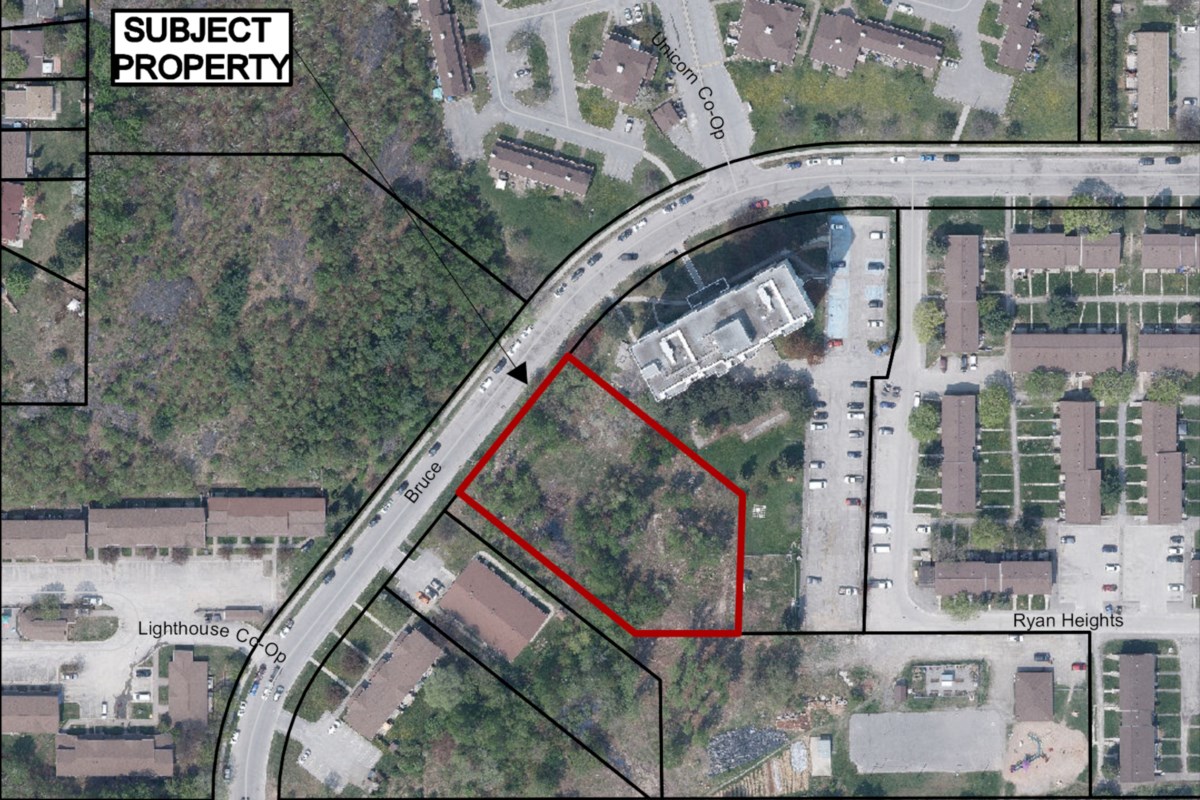
City staff have recommended a city-owned parcel of land west of 720 Bruce Ave. be used to house a 40-unit supportive housing building
As the city grapples with senior levels of government to secure funding, staff have recommended a Bruce Avenue property to house a 40-unit supportive housing building.
The city-owned property is southwest of 720 Bruce Ave., a high-rise rent geared-to-income building the city also owns.
It’s one of several “potential shovel-ready sites” city staff investigated, which included alternate locations on Bancroft Drive, Lorraine Street and in Chelmsford.
These properties are either owned by the city or Greater Sudbury Housing Corporation, carry appropriate zoning and proximity to bus routes and services. These variables help make the city’s application to the Build Canada Homes fund more attractive, city Housing Operations director Barbara Dubois said in a report to the finance and administration committee of city council.
The committee will consider whether to proceed with Dubois’ recommendation during their Jan. 20 meeting.
“A supportive housing building at this location would be an asset to the GSHC portfolio, as its proximity to existing housing may allow for expanded support services for Bruce Street residents,” according to Dubois’ report.
The proposed resolution which city council members will vote on whether to support would have the city apply for funding under the federal Build Canada homes Supportive Housing Program Stream and approve ongoing operating costs and commit to working with other levels of government to fund support services.
Once Build Canada Homes eligibility is confirmed, staff will present a capital financing plan report to city council members.
As outlined in Dubois’ report, ongoing operating costs range from $1.25 million to $2 million, “depending on the level of supports offered. These ongoing costs will be included in future years’ operating budgets funded from the tax levy pending funding from other levels of government.”
In the case of the 40-unit transitional housing complex on Lorraine Street which the federal government helped fund the construction of, the province agreed last year to fund its operational costs for three years. Between this and 48 scattered supportive units, the province has committed to spending $6.3 million annually.
Meanwhile, the city established a need for two more transitional and supportive housing unit projects within last year’s largely unfunded Roadmap to End Homelessness by 2030, of which the Bruce Avenue location would comprise one.
The Ontario Big City Mayors, including Greater Sudbury Mayor Paul Lefebvre, have pushed the province to declare a state of emergency to shore up funding, and the city is advocating for funding from senior levels of government to help fund transitional and supportive units.
The city has drafted two business cases which propose new complexes totalling 65 units, with 25 in a youth building and 40 in an Indigenous building. Although unadopted during 2026 budget deliberations last month, the proposals wait in the wings for when funding is freed up.
The city has approximately $18.9 million in its Social Housing Capital Reserve Fund (in part due to the sale of 53 single-family houses during the past few years) which can be used toward the development of transitional and supportive housing.
Last month, Lefebvre described supportive housing as “the phase after Lorraine.” Although supportive housing provides residents with support to help them maintain permanent community housing, it’s less intensive than the support which the chronically homeless in transitional housing receive (at Lorraine Street, support is 24/7).
“More transitional and supportive housing is needed, not just today but yesterday,” Lefebvre told Sudbury.com last month. “This is an urgent need, but when all three levels of government come together, real change can happen quickly.”
Tyler Clarke covers city hall and political affairs for Sudbury.com.