
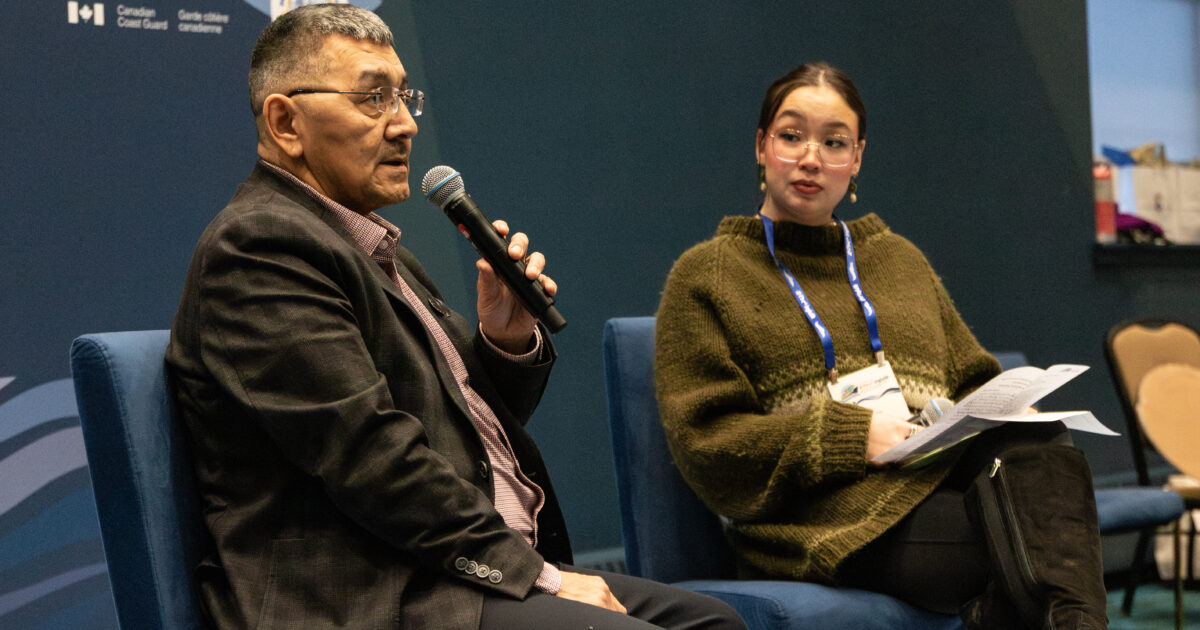
Qikiqtani Inuit Association president Olayuk Akesuk says Inuit should play role in collecting data
Some Inuit are calling for the collection of baseline data to get a better sense of how Arctic shipping affects marine mammals.
The idea was raised by hunters Tuesday at the Ingiulik Nunavut Shipping Symposium in Iqaluit.
“We all know all communities have been affected,” said Olayuk Akesuk, president of Qikiqtani Inuit Association. “We know the ships are not going to stop. The Inuit organizations have to be involved.”
Akesuk made the comments as he fielded questions from National Inuit Youth Council president Gwen Natsiq during an afternoon presentation titled Leaders in Conversation: Shipping Impacts and Regional Priorities.
He said marine traffic, which includes industrial vessels to cruise ships and private yachts, is disrupting wildlife migration patterns and leaving pollution behind.
He warned the future is “not pretty” if Arctic shipping continues unabated.
Akesuk said he wants to see monitoring of shipping routes before, during and after vessels pass through Arctic waters.

A lack of baseline data is a problem, he said, adding the path to improvement should be propelled by Inuit Qaujimajatuqangit, or Inuit traditional knowledge.
Several audience members chimed in with comments from the floor.
David Matoo, secretary treasurer of the Aiviit Hunters and Trappers Organization in Coral Harbour, raised a concern about decreased walrus numbers on Coats Island, about 140 kilometres south of the community.
The island used to be teeming with walrus, he said, but in recent years it has been empty.
“For the past two years we haven’t seen any,” Matoo said in Inuktitut, through a translator. “We’ll see one or two, but the island used to be full of walrus.”
Matoo blames years of industrial shipping traffic for the change.
“I have no data, but it’s true,” he said.
Iviq Hunters and Trappers Association chair Jeffrey Qaunaq raised a concern about a shift in marine mammal populations he has observed while hunting in his region, which includes Grise Fiord.
“I am quite aware how mammals are affected,” he said. “The whales in our waters are not the same. They’re not from our area.”
Other delegates expressed concern about invasive species, including new insects and birds, appearing on the land and shore.
The four-day conference is co-hosted by Nunavut Tunngavik Inc., the representative organization of Inuit across Inuit Nunangat, and the Canadian Coast Guard.
The conference continues Wednesday and Thursday.