
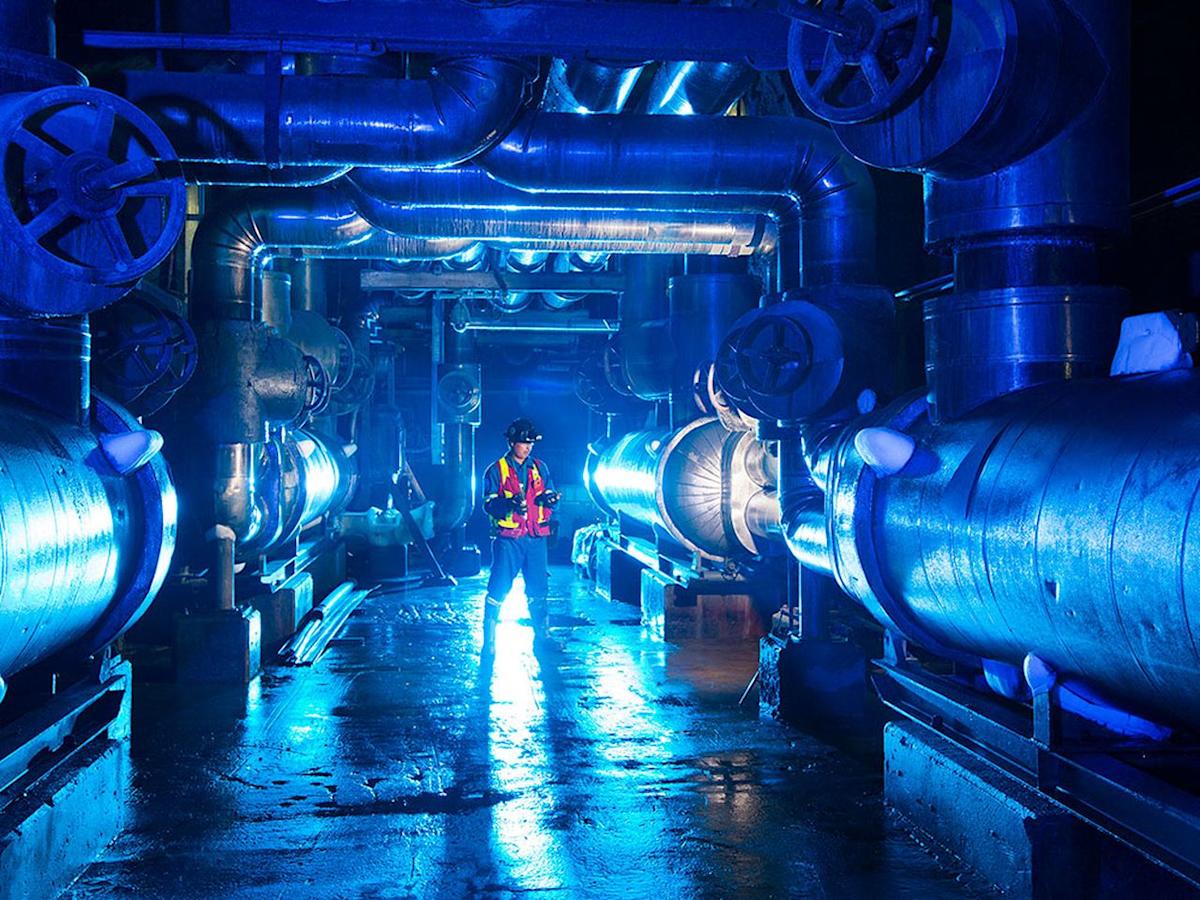
 A Cameco employee works in a mine in northern Saskatchewan. The uranium miner had to cut its output forecast last summer because of development delays, partly linked to labour shortages. (Credit: Cameco Corp.)
Canada’s mining sector is booming as demand and prices grow for various commodities such as gold and copper, but it’s now facing a shortage of skilled workers that could delay projects and further expansion.
Mining is “the hottest it’s ever been,” driven by record prices for gold, silver and other commodities, Gustavo Jurado, senior economist at the Mining Industry Human Resources Council, said. The Bank of Canada’s metals and minerals price index hit a record 1,093.9 last month, reflecting surging global demand.
As a result, employment in mining and quarrying has climbed to a record 100,000 workers nationwide, roughly 20 per cent higher than the previous peak. Unemployment in the sector sits at just 2.6 per cent, compared with 6.8 per cent nationally.
“Every mining operation is running at full cylinders; everyone’s expanding, everyone’s exploring and there’s a lot of investment,” Jurado said.
But the boom is creating a bottleneck because mining companies are struggling to find skilled workers, particularly in the trades.
“We’ve been hearing about people having difficulty filling trades positions like mechanics and electricians,” he said.
Jurado said some operations have been forced to pause production because a single specialist was unavailable. “We’ve heard of cases where a mine had to shut down because one mechanic was sick and they had to send everybody home for two weeks.”
To keep projects moving, many operators have become increasingly reliant on out-of-province labour, particularly in Saskatchewan and British Columbia, where local labour pools are not growing fast enough, he said.
The pressures are already visible. This past summer, Cameco Corp. said development delays — partly linked to labour shortages — would reduce its 2025 uranium production forecast at the McArthur River/Key Lake operations in Saskatchewan, cutting expected output to between 14 and 15 million pounds from 18 million pounds.
In the East, NexGold Mining Corp. chief executive Kevin Bullock has said he is concerned about finding the roughly 400 workers needed to build the company’s proposed Goldboro mine project in Nova Scotia.
In the long term, Jurado said, the global energy transition will add further pressure on miners’ need for workers as demand for critical minerals grows and Canada positions itself as a key supplier.
“In the next 10 to 20 years, we’re going to want to expand significantly, but we’re going to come up against this labour constraint, which is already being felt,” he said. “And it’s going to get worse.”
One reason is demographics. About 20 per cent of Canada’s mining workforce is older than 55, so retirements will continue to drain experience from the sector. At the same time, mining is struggling to attract younger workers.
Story Continues
Immigrants concentrate in cities, not rural areas, so they’re unfamiliar with mining
Gustavo Jurado, senior economist, Mining Industry Human Resources Council
Mining ranks last among industries young Canadians would consider working in, according to surveys conducted by the mining HR council. Roughly two-thirds of respondents under 30 said they would probably not or definitely not pursue a mining career, often citing perceptions of hard labour, environmental concerns and remoteness.
Mines are typically located far from major population centres, making recruitment difficult, especially among newcomers.
“Immigrants concentrate in cities, not rural areas, so they’re unfamiliar with mining,” Jurado said.
Immigrants make up about 30 per cent of Canada’s workforce overall, but only seven per cent to eight per cent of mining employment, mostly in office-based roles.
The worker shortages come as Ottawa is pouring money into the industry.
The Critical Minerals Strategy, launched in the last budget, includes a $2-billion sovereign fund, $371.8 million to support production through the First and Last Mile Fund, $1 billion for northern roads and ports and participation in the G7 Critical Minerals Production Alliance, which has already backed 26 projects. There are five mining projects on the Major Projects Office nation-building list.
Provinces have also moved to speed approvals. Ontario and New Brunswick introduced “one process” frameworks in 2025 to streamline permitting, while Nova Scotia dropped its long-standing ban on uranium mining and introduced similar fast-tracking measures.
But Jurado said training programs are struggling to keep pace, with enrolment in mining-related post-secondary programs failing to match labour demand. For example, mining engineering enrolment peaked at more than 1,400 students in 2014, but fell to roughly 800 by 2020. A shortage of instructors — who can earn far more working in the field — has added to the problem.
“In the short term, we don’t think we can do much other than recruitment and increasing wages,” he said. “But longer term, financial incentives are usually the path of least resistance.”
Those incentives could include more money for scholarships, wage subsidies, co-op placements and support programs aimed at helping workers transition into mining, particularly those from Indigenous and underrepresented communities.
Jurado said Canada could look to Australia for solutions since mining there is designated as a priority sector, allowing students to complete certifications in mining technology, machinery operation and civil construction at no cost. Eligible apprentices in priority mining roles can also receive up to $10,000 AUD in direct payments to help cover living costs while training.
Mining accounts for more than 13 per cent of Australia’s gross domestic product compared to about four per cent in Canada.
“They haven’t solved everything, but they’re often a step ahead on policy,” Jurado said.
Canada, by contrast, lags in how quickly it brings mines into production. From discovery to operation, Canadian mines take an average of 17.9 years, compared with 13 years in the United States and 14.5 years in Australia, a gap Jurado attributes to regulatory complexity and labour shortages.
“Without policy intervention, we don’t see the situation getting easier,” he said.
• Email: arankin@postmedia.com