
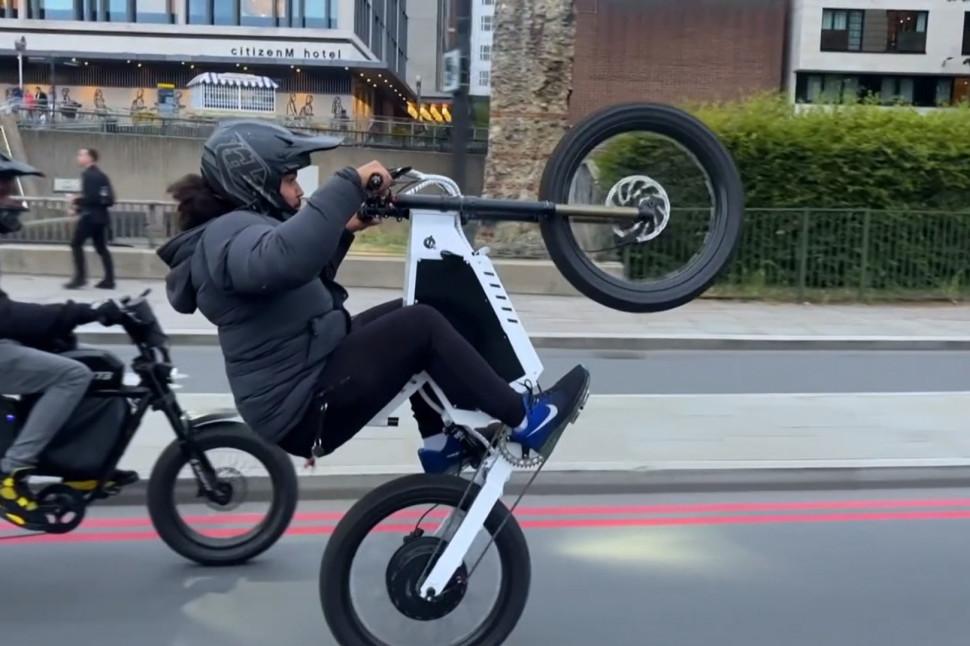
One in 12 cyclists who took part in a cycling insurance company’s recent road safety survey claimed that they now believe illegal e-motorbike riders pose a greater threat to them than motorists in the UK.
The poll, commissioned by bike insurance specialist Cycleplan, surveyed 500 ‘regular’ cyclists among its policy holders, and found that eight per cent of respondents “fear” illegal e-motorbikes – often erroneously branded as e-bikes by the public and press – more than any other vehicle on the roads.
Under UK law, it is legal to ride electrically assisted pedal cycles (EAPCs), which are restricted to a maximum continuous rated power output of 250 watts and a cut-off assist speed of 15.5mph, on the roads. Riders of these compliant e-bikes do not need to register or insure their bicycle, which must also have pedals to propel it.
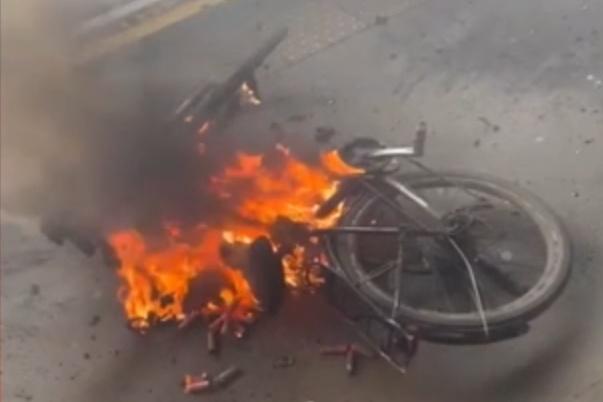 Rayners Lane e-bike fire (credit: Twitter video (Andy Calvert))
However, the increasing use of illegally modified high-powered bikes, which can easily exceed the 15.5mph legal limit – and therefore are legally classified as electric motorcycles – and cheap conversion kits have led to growing concerns about dangerous riding and the sharp rise in fires caused by cheaply made, poor-quality batteries which fail to comply with UK fire safety standards.
These electric motorbikes require a licence, registration, Vehicle Excise Duty, and the rider to wear an approved motorcycle helmet.
According to Cycleplan, a number of their respondents highlighted what they regarded as the erratic riding of these illegal e-motorbike riders – which they believe is harming the reputation of legal e-bikes and their owners.
“The biggest problem is dark dressed, no lights, electric bikes doing very high speeds at junctions,” one of the cyclists surveyed said. “You’re far more likely to see a car and can predict how they move.”
Meanwhile, another wrote: “The amount for times I’ve seen modified e-bike users almost hit something in the last year is very unhelpful for all cyclists who use an electric bicycle properly.”
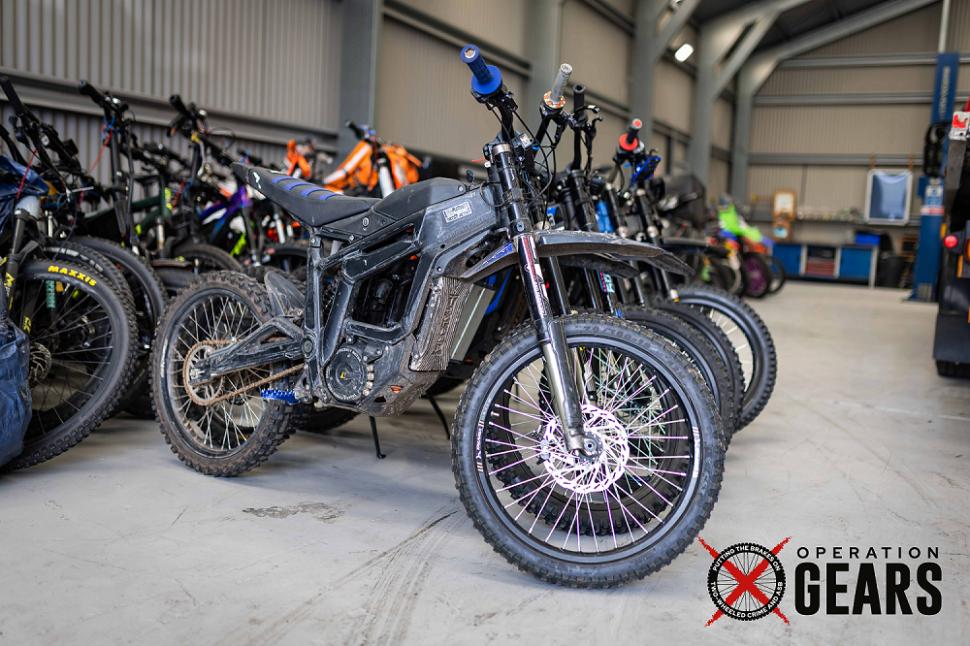 Illegal e-motorbikes seized by Merseyside Police (credit: Merseyside Police)
Elsewhere in Cycleplan’s survey, just 18 per cent of respondents said they feel safe cycling on UK roads in 2026, a sharp drop from the 27 per cent who reported that they felt safe as part of the company’s most recent poll, in 2023. One respondent highlighted by the insurer claimed that they are “literally too scared to cycle now”.
Meanwhile, 40 per cent of those surveyed reported that they had been involved in a crash or collision, or a near miss, in 2025, once again up on the 33 per cent who said the same three years ago.
“The drop in how safe cyclists feel on the road is both striking and concerning,” Cycleplan’s CEO Alan Thomas said in a statement following the survey’s publication.
“However, perhaps most notable is that some riders now see other cyclists, or at least illegally modified e-bikes, as part of the problem. That suggests enforcement around e-bike speed limits hasn’t kept pace with adoption.
“Often, the issue isn’t just speed, but how unpredictable modified e-bikes can feel – particularly on cycle lanes and pavements designed for slower road users. Our research suggests the traditional cars-versus-cyclists narrative may no longer tell the full story of where riders feel most at risk.”
Last year, we reported that the All-Party Parliamentary Group for Cycling and Walking (APPGCW) warned that the government’s failure to tackle the unsafe and illegal use of e-motorbikes threatens to irrevocably damage the reputation of the UK’s legal e-bike industry, as well as undermine its efforts to promote cycling and active travel as a whole.
A report published by the cross-party group of MPs and peers also called for stricter laws to prevent online retailers from selling potentially dangerous electric bikes and conversion kits, including closing a loophole which enables sellers to list illegal e-motorbikes under the pretence that they should only be used off-road.
The group has urged the government to give the police new powers to seize unsafe “fake” e-bikes and introduce a scrappage scheme, to be funded by food delivery companies, for dangerous bikes used by their couriers.
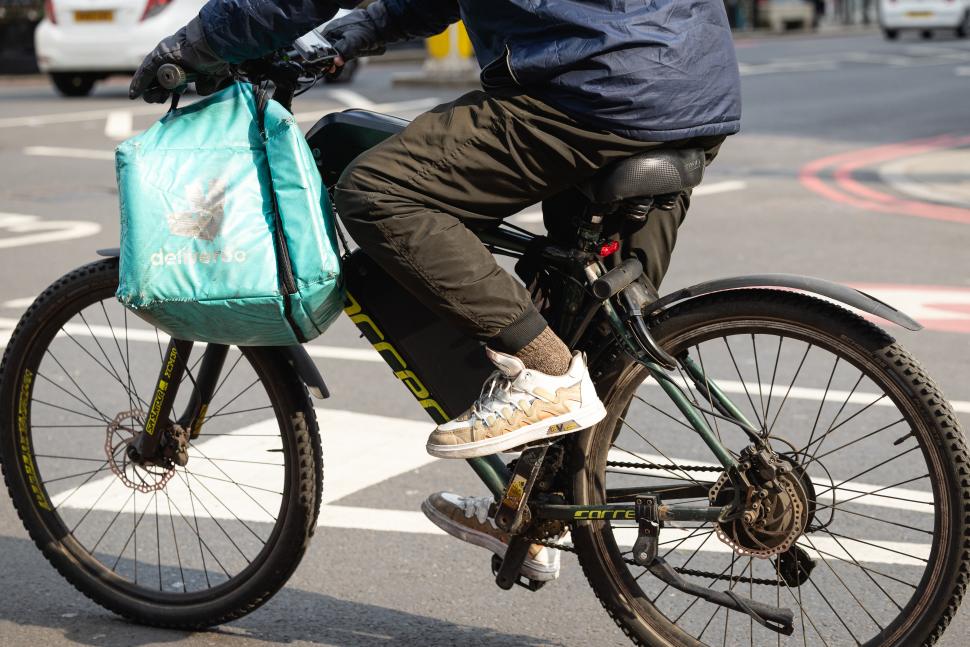 Deliveroo rider’s illegally modified e-bike (credit: All-Party Parliamentary Group for Cycling and Walking)
Focusing on the gig economy, and its widespread use of high-powered, illegal e-motorbikes, the APPGCW said couriers should be given wider guaranteed rights and protections, while their employers should be required to carry out safety and compliance checks on their bikes.
During the APPGCW’s inquiry, the group was able to “easily” find e-bikes capable of 40mph speeds being sold by major online retailers and marketed “for city commutes”, as well as a 2,000-watt bike with a throttle pictured being used on city streets – both of which are illegal.
Another search on Amazon found an unsafe charger with an unfused clover leaf plug and multiple charging cables supplied, both of which are considered a fire risk by experts, the group said.
Shortly before the APPGCW published its report last summer, Labour MP Tom Hayes also called on the government to introduce stricter e-bike and e-scooter laws, arguing that the current “situation is unsafe” and that “battery safety, speeding, and enforcement” needs to be addressed “before more people are hurt”.
In 2024, the CEO of folding bike manufacturer Brompton called for a crackdown on “poor quality” e-bike batteries before public perception “snowballs into a world of fear” around e-bikes in general.
As part of their 2025 report, the APPGCW noted that stories about illegal e-bikes – including last year’s BBC Panorama special, which was widely criticised for its failure to properly distinguish between legitimate electric bikes and their illegal counterparts – have led to confusion for the public, as well as landlords, insurers, and transport operators.
A study by the Electric Bike Alliance found that only 63 per cent of people aged 25 to 34 – the demographic mostly likely to purchase an e-bike – indicated they would be able to determine if an e-bike was road-legal, and nearly one in four current e-bike owners felt unable to distinguish between road-legal e-bike products and non-legal, potentially hazardous aftermarket alternatives.
This confusion has therefore helped instigate a rise in blanket bans on e-bikes in some workplaces and travel networks, while cyclists with legal e-bikes have been refused insurance, affecting legitimate users as well as disabled people who rely on electric bikes to get around.
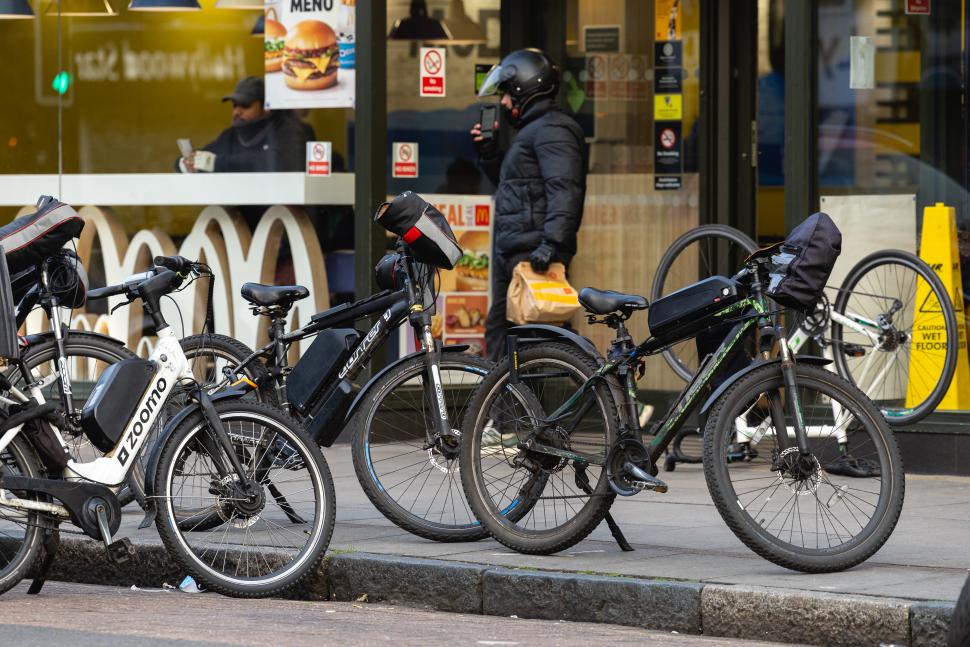 Deliveroo riders’ illegally modified e-bikes (credit: All-Party Parliamentary Group for Cycling and Walking)
Cycling campaigners have long pointed out the danger in incorrectly calling these electric motorbikes ‘e-bikes’, with incidents involving high-power vehicles often wrongly attributed to legal EAPCs by the public and press.
In September, for example, the BBC was forced to amend its coverage of a collision in Scotland which it claimed involved the rider of an e-bike, a vehicle that was in fact an electric motorbike, following complaints from readers.
And last year, in an interview with road.cc, Active Travel England commissioner Chris Boardman joined the chorus calling for government action to crack down on the sale of illegal e-motorbikes and dangerous batteries.
“In a sense these are all great problems to have,” Boardman said. “Because suddenly you’re swamped in them because of popularity. So, I’d much rather be coming in that direction. But because it’s happened really quickly, we haven’t kept up.
“Some of it is a trading standards problem, that we have got illegal and non-certified products coming into our market and people have said that they will buy batteries, chargers, bikes online if it’s cheaper, and they don’t mind if it’s non-brand.
“There’s a lot of risks associated with that, so I think there’s a government aspect to this, to legislate and properly police trading standards, so those products that are illegal don’t reach our market.
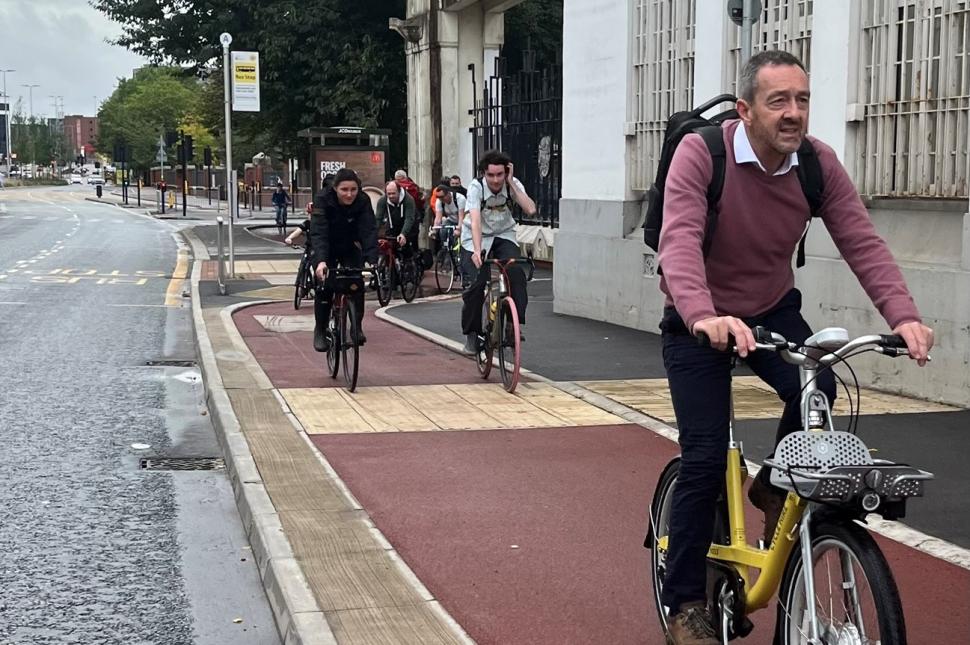 Chris Boardman (credit: Active Travel England)
“Lithium battery fires are horrendous, and they make headlines – but there are 50,000 fires that the fire brigade attend each year at the moment, and lithium batteries of e-bikes are responsible for 0.07 per cent, so it’s a tiny fraction, but it will grow with popularity,” Boardman notes.
“And if you’ve ever seen a lithium fire, it is pretty horrific. You cannot put them out, you just have to wait until it’s spent. So, we need education around that.
“The simplest way around it is to go to a reputable bike shop and you buy a brand that you recognise. But when it comes to the difference between an e-bike and an e-motorbike, over half of people are saying ‘I don’t know what you’re talking about’. In its simplest terms, any bike which has an engine that cuts out at 15 miles an hour and you have to pedal is a pedal-assisted bike.
“If you see somebody who’s not pedalling and they’re going over 15 miles an hour, that’s an e-motorbike and if it hasn’t got a registration on it and the driver hasn’t got a licence, then it’s illegal.
“And we’re seeing a lot of that in delivery riders, the gig economy, and they just want the cheapest thing they can get, or they gaffer tape extra batteries to the bike. They just need to work and that’s the problem. I think that they need to address it.”
However, Boardman also warned against diverting too much attention to e-bikes – like in Cycleplan’s survey – when, statistically, other road safety issues are much more pressing.
“We shouldn’t lose sight of the fact that 99.5 per cent of the deaths and serious injuries on our roads are caused by people in motor vehicles, so it is not a massive problem and that context is really important,” he said.