
The head of a national network that tracks the spread of wildlife diseases says a persistent funding shortfall is undermining Canada’s ability to detect and respond to emerging threats to biodiversity, agriculture and human health.
Damien Joly is the chief executive officer of the Canadian Wildlife Health Cooperative, a network of Canada’s five veterinary schools and the B.C. government’s Animal Health Centre. The cooperative works with federal, provincial and territorial governments to monitor wildlife diseases across the country.
In an interview with The Narwhal, Joly said the organization is “cash strapped across the board.”
“We do not have the resources we need to effectively monitor these diseases,” he said.
That warning comes as Canada grapples with the spread of highly transmissible diseases, such as chronic wasting disease, a fatal infection that afflicts deer, moose, elk and other cervids. At the same time, avian influenza, which has caused huge die-offs of wild birds and triggered mass culls at hundreds of infected poultry farms across the country, continues to spread. Hundreds of dead wild birds found in southern Manitoba in recent months have been linked to bird flu, as have the deaths of wild birds in Ontario.
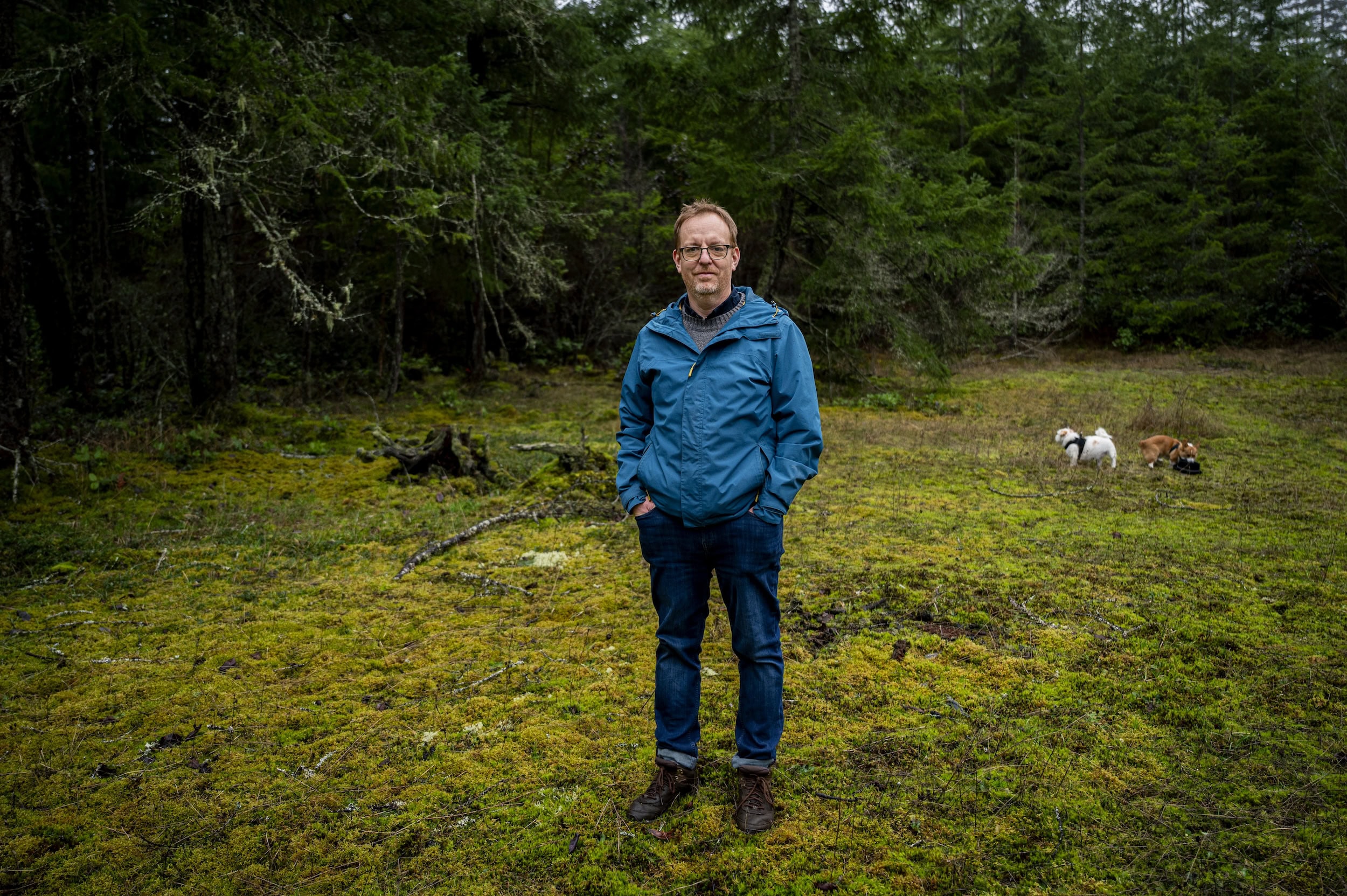 Damien Joly, the chief executive officer of the Canadian Wildlife Health Cooperative, warns a lack of funding for wildlife disease monitoring is undermining Canada’s ability to detect and respond to emerging threats to biodiversity, agriculture and human health. Photo: Shane Gross / The Narwhal
In Atlantic Canada, Joly said the cooperative is scraping together whatever funding it can find to continue monitoring the spread of avian flu, keeping a particular eye out for mutations in the virus.
“We’re seeing massive die-offs in Europe and it’s not going to be long before that particular strain finds its way over the Atlantic into Canada,” Joly said.
Environment and Climate Change Canada is the cooperative’s primary funder, contributing almost $1.2 million in 2024-25. Funding from other federal agencies and departments, as well as provincial and territorial governments, brought the cooperative’s total budget to $3.5 million for that fiscal year, according to its annual report.
While Joly said the cooperative’s partners in government work hard to secure funding for wildlife disease monitoring, budget shortfalls remain a persistent problem.
“Every region is in a deficit situation,” Joly said. The result is the cooperative is being forced to dip into its rainy-day funds to cover costs.
Now he’s calling for federal, provincial and territorial governments to renew their commitment to implementing the Pan-Canadian Approach to Wildlife Health strategy, which most environment ministers endorsed in 2018 at an intergovernmental conference.
Joly estimates at least $10 million a year is needed to implement that strategy, half for the cooperative and the rest to be shared among provincial and territorial governments to strengthen wildlife disease monitoring and response.
At a minimum, Joly said more streamlined and consistent funding would give the cooperative and its staff more stability. Currently, he said, he’s managing reporting for more than 20 different funding pots for the cooperative’s national office alone.
In a statement to The Narwhal, Keean Nembhard, a press secretary for Julie Dabrusin, minister of environment, climate change and nature, said the federal government remains committed to conservation, addressing key threats to biodiversity and the principles of the Pan-Canadian Approach to Wildlife Health. But, he said, implementing that approach would require coordinated efforts and funding from federal, provincial and territorial governments.
Nembhard said Environment and Climate Change Canada has committed to providing the cooperative almost $360,000 in core funding for another two fiscal years to support monitoring and diagnostics of wildlife pathogens. But that’s only a fraction of the funding the cooperative needs, meaning the organization is still being left to juggle a piecemeal funding model.
Wildlife disease tracking is key to defending against emerging threats
For three decades, the Canadian Wildlife Health Cooperative has been tracking the causes of death for wild animals assessed by the network’s pathologists. That record gives researchers a clear picture of the pathogens and diseases that spread among wildlife and how deadly they usually are.
Having a baseline is crucial for being able to detect and respond to emerging threats to biodiversity quickly, Joly said.
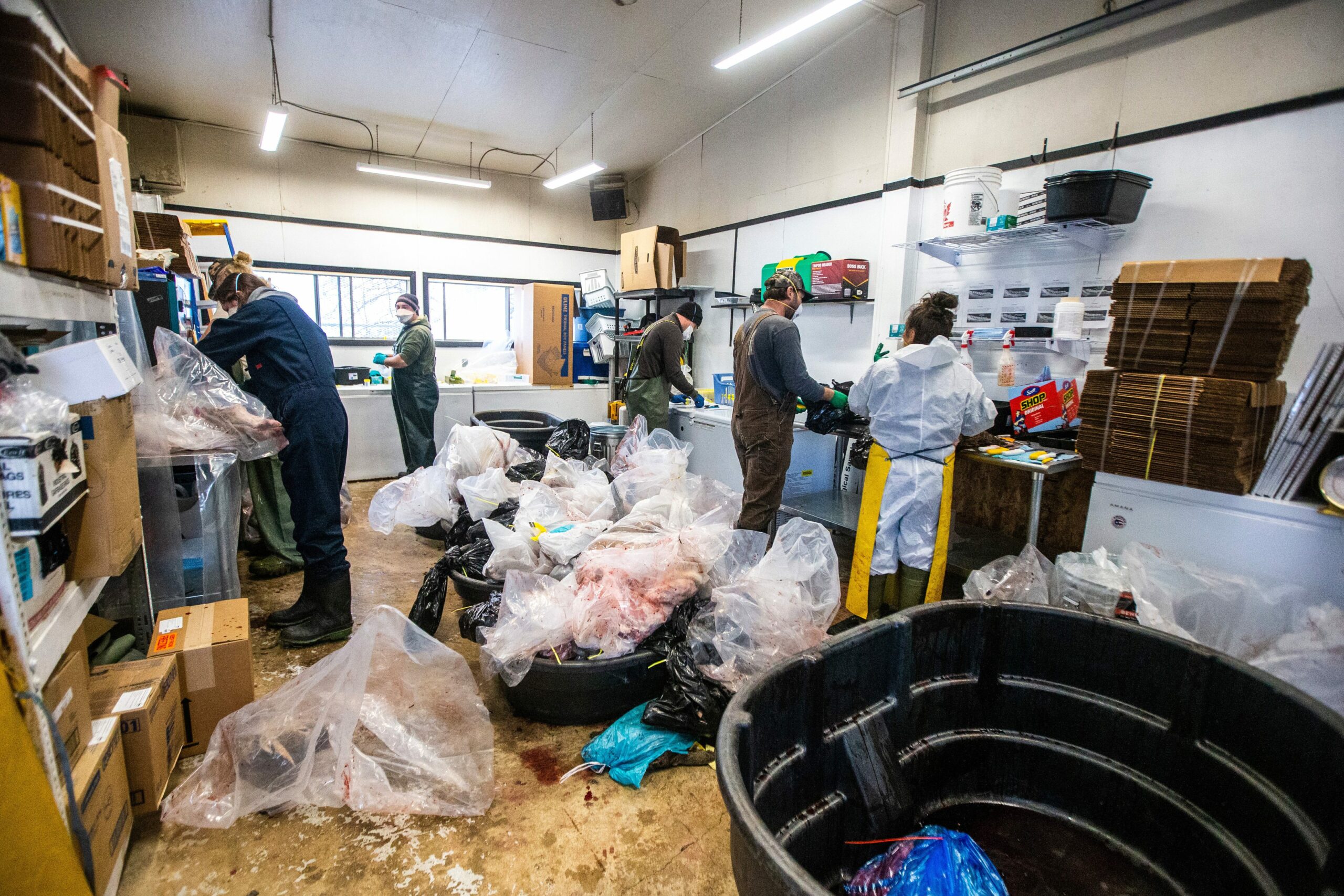 For decades Manitoba has collected, dissected and tested thousands of deer, moose and elk heads as part of its program to monitor and contain chronic wasting disease. Photo: Mikaela MacKenzie / Winnipeg Free Press
Take chronic wasting disease, which was first detected in Canada on a Saskatchewan elk farm in 1996. Since then, the disease has spread through wild populations of deer, elk and other cervids. With cases now being detected in British Columbia, Joly said the risks to caribou are particularly scary.
“This is a species that’s in trouble already,” he said.
Researchers knew the disease was a looming threat for B.C. long before the first case was detected in the province in 2024, according to Kaylee Byers, an assistant professor in the School of Population and Public Health at the University of British Columbia.
As monitoring showed the disease had spread to Alberta and neighbouring regions in the United States, the risk that it would move into B.C. grew.
Knowing where and how a disease is spreading can give governments and researchers a chance to target their response, Byers said. That could mean, for instance, increasing sample collection and testing in high-risk areas or putting in place new protocols for transporting animal parts.
Byers, who is also the deputy director of the B.C. arm of the Canadian Wildlife Health Cooperative, said wildlife disease monitoring today largely relies on the public to report sick, injured or dead animals.
“What’s really challenging about that, is it’s not the full picture,” she said, adding that more funding could allow for expanded monitoring.
“Take something like avian influenza,” she said. Wild birds land in plenty of remote wetlands where there’s potential for the virus to spill over into other animal populations. But, if people aren’t frequenting these areas, that spread might not be captured by current monitoring programs, she warned.
Wildlife diseases can threaten human health, livestock and international trade
Understanding the pathogens and diseases spreading among wildlife is important for people as well. These diseases can threaten the wildlife populations hunters rely on for food. They can pass to and spread rapidly among livestock, putting animal welfare in jeopardy and farmers’ livelihoods at risk. And they can threaten our own human health.
Many of the diseases that affect people today are zoonotic, meaning they’re caused by germs that can spread between animals and people.
 Poultry farms in the Fraser Valley region east of Vancouver, B.C., adopted strict measures to defend their flocks against bird flu infections, as the virus wreaked havoc across the country and around the world in recent years. Photo: Darryl Dyck / The Canadian Press
Scientists have worried for years about the potential for bird flu to cause a human pandemic. While it has wreaked havoc around the world in recent years, it hasn’t caused widespread disease in people so far. There have been dozens of human cases in the U.S. since 2024, mostly among workers exposed to the virus at infected poultry and dairy operations. In Canada, a teenager was infected with a severe case of the virus in late 2024. Advanced testing showed the closest match for the virus she contracted was found in wild birds in the Fraser Valley. The teen spent almost two months in hospital before she was released.
Though human cases remain rare, bird flu has taken a significant toll on poultry farmers across the country. Since 2021, there have been outbreaks at 591 poultry farms in Canada. Millions of farmed birds have been culled as a result.
As a member of the World Organisation for Animal Health, Canada is obligated to monitor and report on certain diseases, including avian flu, that spread not just among livestock but also wildlife.
“Identifying disease risks in wildlife early ensures timely intervention strategies, reduces the risk of disease spread to other animals or people (so-called spillovers) and reduces the impacts on wildlife themselves and on biodiversity and ecosystems,” Claire Cayol, the organisation’s project manager for wildlife health information systems, said in a statement to The Narwhal.
Founded in 1924, the international organization sets standards related to animal health, including for surveillance of certain wildlife diseases, that allow for global trade of animals and animal products.
What that means, Joly said, is the work the Canadian Wildlife Health Cooperative does is also vital to Canada’s ability to trade beef, poultry and other food products.