

Listen to this article
Estimated 4 minutes
The audio version of this article is generated by AI-based technology. Mispronunciations can occur. We are working with our partners to continually review and improve the results.
The sight of a cyclist in January in the Yukon can prompt confusion from some onlookers — but historians say bicycles were being used to get around the territory in winter long before cars.
Nearly 130 years ago, cyclists were travelling up the Yukon River on their way to Dawson City in search of gold. The Klondike Gold Rush happened during a period of economic downturn in the U.S. that coincided with a surge in popularity for bicycles.
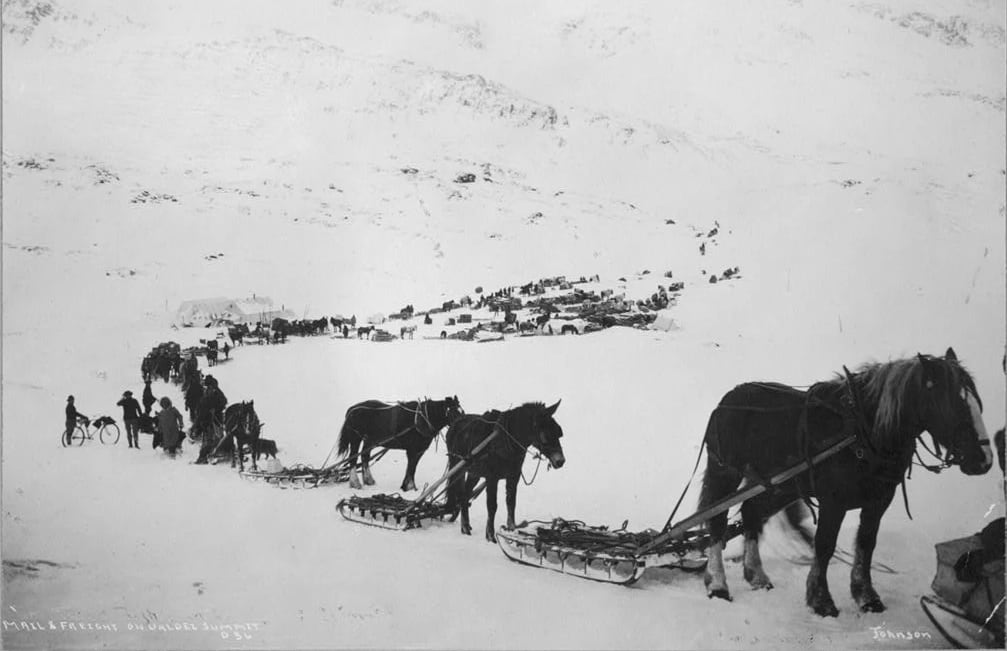 A bicycle can be seen on the left in this image of stampeders on the White Pass during the Klondike Gold Rush. (Library of Congress)
“There was this worldwide craze for bicycles because in many ways they represented freedom,” said Karl Gurcke, a historian with the Klondike Gold Rush National Historical Park in Alaska.
“Before bicycles came into common usage, the ordinary person would basically have to walk to get anywhere,” he said. “Horses, you know, cost money. They had to be fed. And in some places, they had to be picked up after.”
Gurcke says while some may see northern cycling as a more recent phenomenon, imported from the south by southerners, there’s actually a long history of cycling in the North.
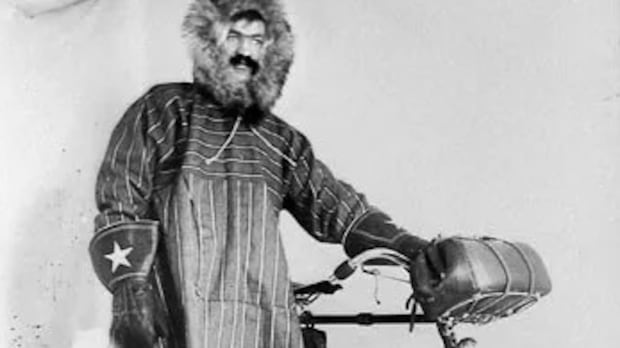
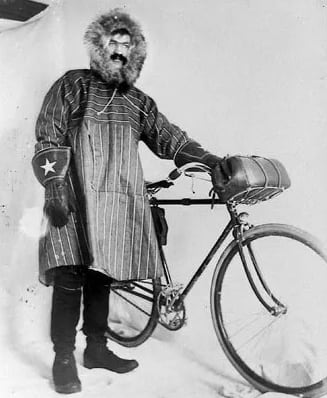 Bjorn H. Svendsen rode a bike from Skagway, Alaska, to Dawson City around 1900, according to the inscription on this photograph from the Yukon Archives. (Yukon Archives)
“There are a number of photographs of bikes on the White Pass trail,” he said. “There’s a picture of a crate of bicycles on the White Pass.
“Of course, a lot of those Klondike stampeders were people from the south … but they did it, they used them. Bicycles are all over the place up here, and it goes back to the Gold Rush.”
By the early 20th century, newspapers reported bikes had become a common sight on the White Pass, and a “nuisance” in Dawson City.
Perhaps the most famous Gold Rush-era cyclist was Edward Jesson, who taught himself to ride at –48 C in Dawson City, and then rode 1,200 kilometres to Nome, Alaska.
“He would always ride behind the dogs, so kind of in the ruts on the frozen ice that the dogs had occupied,” said Sean Ridder, executive director of the Yukon Transportation Museum.
“He was quite the puzzle to a lot of people on the trail, I think.”
 Sean Ridder is the executive director of the Yukon Transportation Museum. (Submitted by Sean Ridder)
Ridder says when Jesson made it Nome, people in town “thought he was a really fast dog team from far away.”
“And then they realized he was a guy on a wheel, as they called it at the time.”
In his 2014 book Yukon Sport: An Illustrated Encyclopedia, John Firth wrote that for most of the territory’s history, bicycling “was a means of winter transportation rather than a competitive summer pastime.”
In December 1905, when the Dawson City Nuggets hockey team famously challenged for the Stanley Cup in Ottawa, a number of players reportedly set off to Whitehorse on bicycles.
The popularity of biking persisted in the Yukon well into the ’50s and ’60s, to the point where Ridder says the City of Whitehorse required all bikes – including those owned by children – to have licence plates.
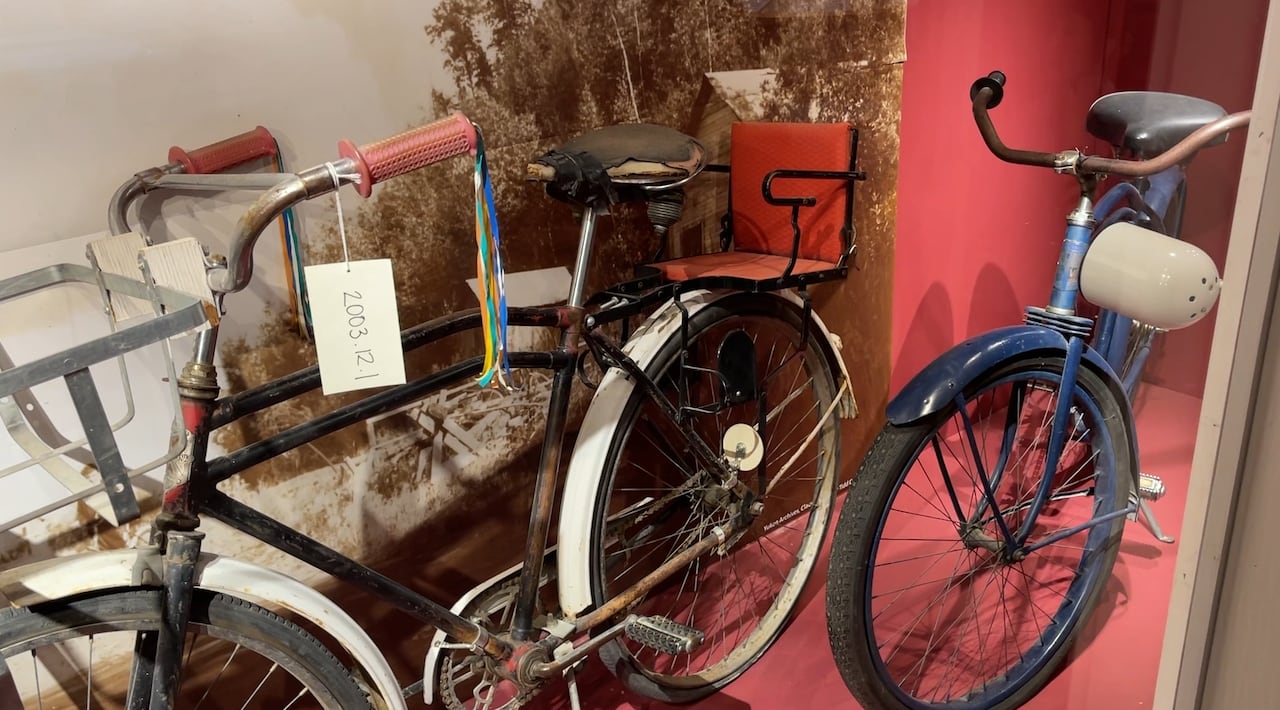 A ’60s-era bike featuring a child seat on display at the Yukon Transportation Museum in Whitehorse. (Peter Pineda/CBC)
Ridder says while for many, snowmobiles and planes come to mind when they imagine the best ways of getting around in the North, human-powered transportation also has a rich history in the Yukon.
“We’ve got skis and snowshoes and boots and bikes … all of these things are also technology,” said Ridder. “And you know, early technologies are sometimes the things that work the best.
“Have we really figured out a better way to get from point A to B than a canoe or a bike?”
WATCH | When cyclists ruled the Klondike: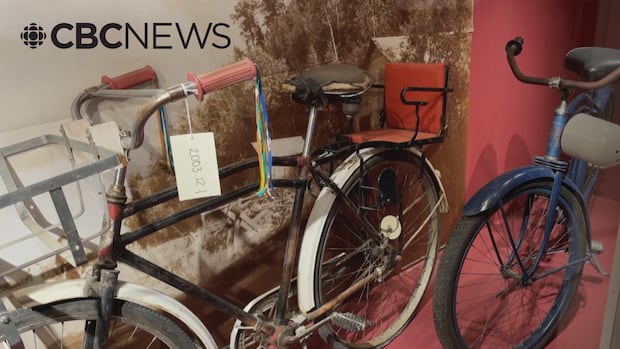
When cyclists ruled the Klondike
Biking to work in the winter is pretty commonplace in the Yukon. But when did it start? As Caitrin Pilkington tells us, earlier than you might think.