
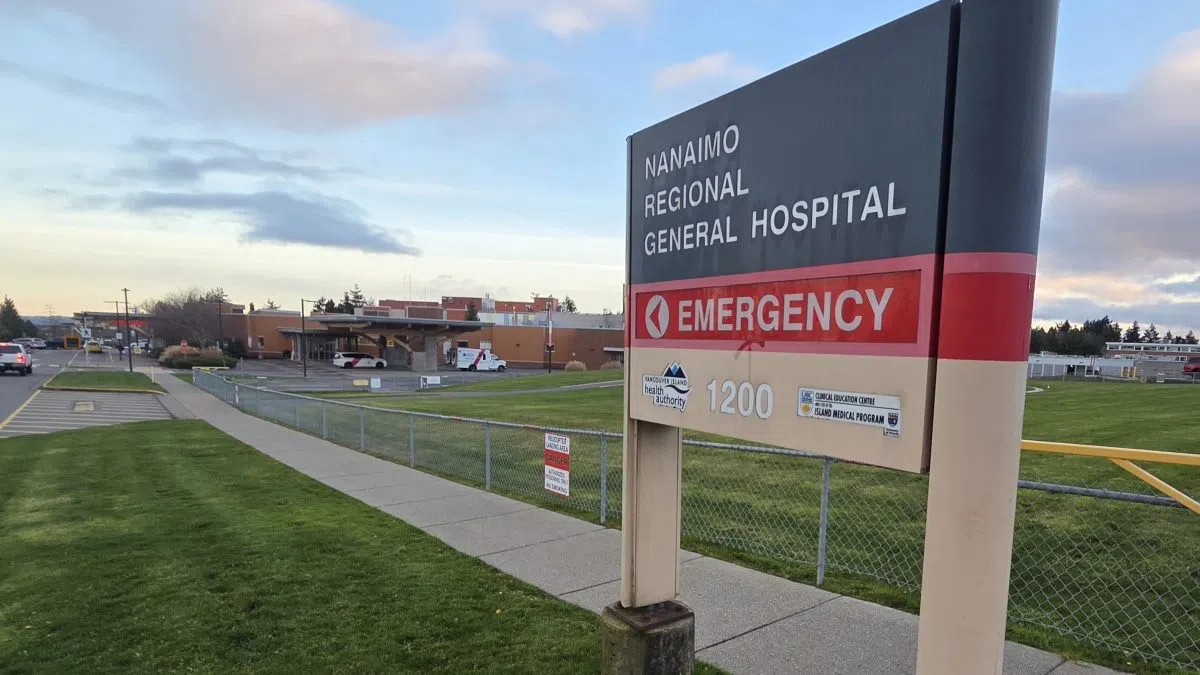
Both a cath lab and patient tower were key promises from the BC NDP during the 2024 provincial election, however neither have had any meaningful progress since.

Government officials, including all three local-area MLAs, say work continues behind the scenes and the projects remain a priority.
Hais, along with others from local industry and advocacy, will be in Ottawa looking to leverage Prime Minister Mark Carney’s ties to the Harbour City, where both his mother and sister live.
They’ll also be looking for clarity on $5 billion worth of federal money included in last fall’s budget, specifically earmarked for hospital construction.
To aid in these efforts, Hais said Fair Care has hired multiple lobby firms in Ottawa and on Vancouver Island, to better connect with federal and First Nations officials.
Hais said they’re being as proactive as possible, even in the face of active resistance to cardiac care on central Vancouver Island.
“When it comes to the cath lab, cardiology in Victoria is absolutely, obstinately opposed to Nanaimo having those services here. They have blocked us at every turn, and that conversation has to change.”
Hais told Nanaimo Regional Hospital District directors on Tuesday, Jan. 13, meetings between directors and Island Health in February must include direct, evidence-based reasoning to properly articulate the dire need for local healthcare improvements.
The state of Nanaimo Regional General Hospital
Dr. David Forrest, NRGH infectious disease and critical care specialist, joined Hais on Tuesday, speaking with Hospital District directors.
He said the current hospital patient tower, built in 1963, originally served a population of around 15,000 in the City of Nanaimo and 40,000 across the entire RDN, accounting for five hospital beds per 1,000 population.
The 370-bed facility now serves 110,000 people in the City and over 190,000 across the RDN, or just two beds per 1,000 population.
It places NRGH below the Canadian average (2.5/1,000) and the average of countries belonging to the Organization for Economic Co-operation and Development (4.2/1,000).
“Two beds per thousand is only for the population in the RDN. We are below that for the population that we serve in terms of our regional responsibilities. The physical plan is woefully inadequate, there is no capacity to expand. We have the busiest Emergency Department on Vancouver Island…and acute care medical demands are growing rapidly.”
Concept plans for a 550-bed patient tower would only barely meet current Canadian averages, but would again fall behind if projected population growth by 2050 materializes.
It’s more likely an 800+ bed facility would be needed to not only cover current needs, but allow room for projected population growth.
Additions of a Cancer Centre, currently under construction, and other specialty services, would also put pressure on the availability of beds in Nanaimo.
Forrest said when a nephrology program, treating kidney and urinary disease, opened in Nanaimo, a one per cent increase in bed usage was forecast, however between five and 10 per cent occurred.
He was highly critical of Island Health’s long-term planning, saying recent hospital upgrades in Campbell River and Comox/Courtenay barely dealt with current issues, going from 166 to 258 beds.
“That’s still only 2.2 beds per 1,000 population, and both of these hospitals opened their doors at more than 100 per cent capacity. They weren’t built for future, they were built for the present state, and that’s when they opened several years ago. It is getting steadily worse.”
‘Build it and they will come’ — tried and failed
Forrest said a cath lab must come to Nanaimo before any meaningful improvement in outcomes for a wide array of patients can occur.
Timing is crucial when delivering cardiac care, and current options for those north of the Malahat involve either a long trip to receive proper care or outdated treatment.
Creation of a proper facility in Nanaimo would service an overwhelming segment of the population, offering modern care solutions in a timely manner.
“We would be able to serve not just Duncan, in fact, parts of Victoria, all the way up to Campbell River. If we had both cath labs in Nanaimo and Victoria, we would actually be able to provide primary percutaneous coronary intervention catheterization for heart attacks for more than 80 per cent of our population.”
He said Island Health attempted to bring professionals in first, without the proper infrastructure, and it failed miserably.
Several physicians were recruited in 2014 and the years following, but with little to no investment in proper surroundings, all but one left by 2021.
“Nanaimo is a place that is well known across the country by cardiology fellows as a place where you career goes to die. You don’t come to Nanaimo, because there’s no progress, no cardiologists will come here without a commitment to a cath lab. The notion is that we should build a program first, and then we’ll get it, but we tried that in 2014.”
The Nanaimo Regional Hospital District have committed $50 million in up-front construction costs for a cath lab at the NRGH campus, but have said they will financially support immediate development of the facility no matter what the cost.
They are required to pay for 40 per cent of all capital project costs at NRGH, and are hopeful a move to effectively loan the province funding for a cath lab up front will see the project move up the priority list.
We’re on Bluesky! Stay up to date on news across central Vancouver Island through Bluesky, by following @NanaimoNewsNOW.bsky.social.
Follow us on: Twitter (X) | Bluesky | Facebook