
 Photo: Aru Das/3DownNation. All rights reserved.
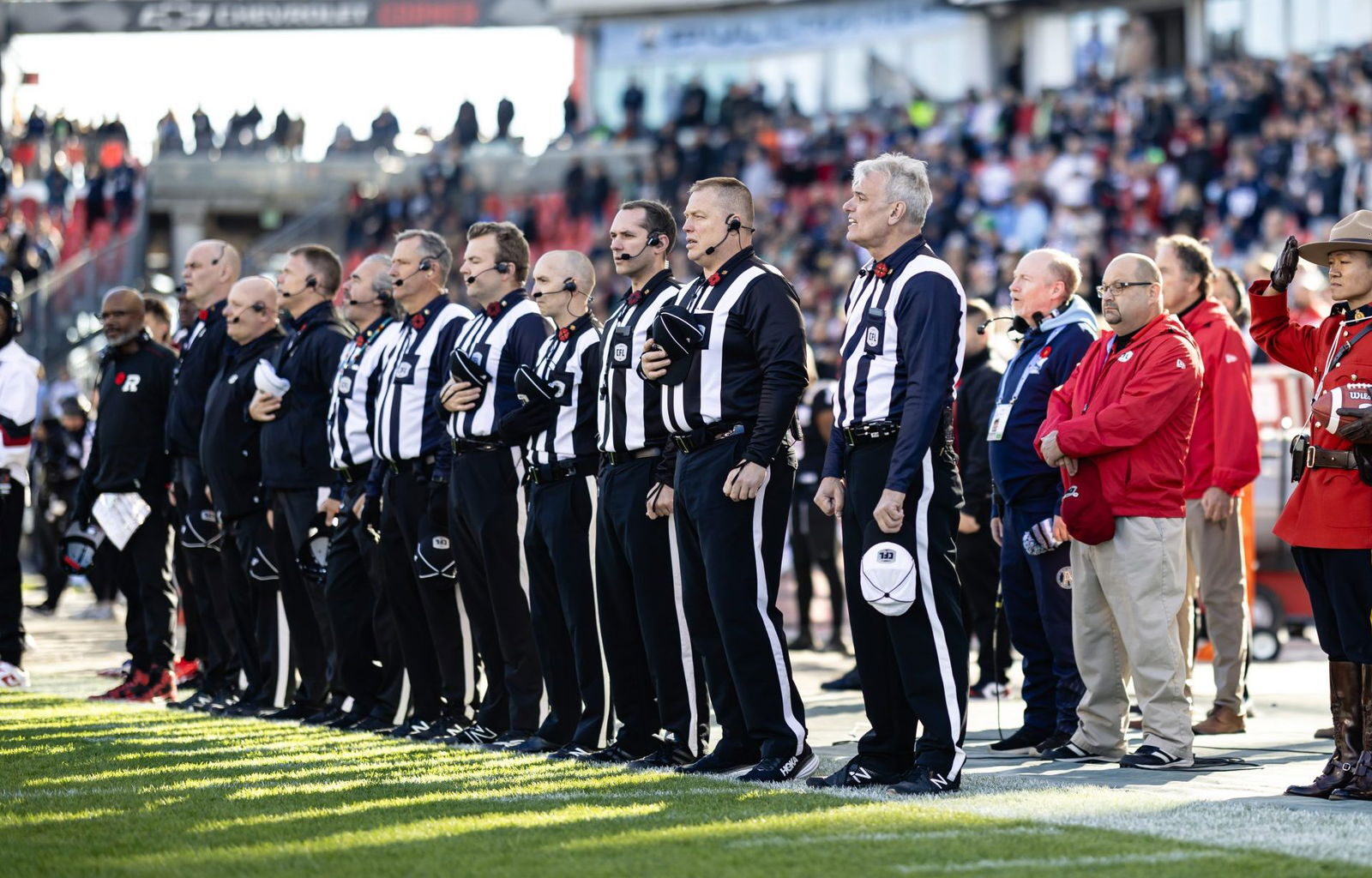
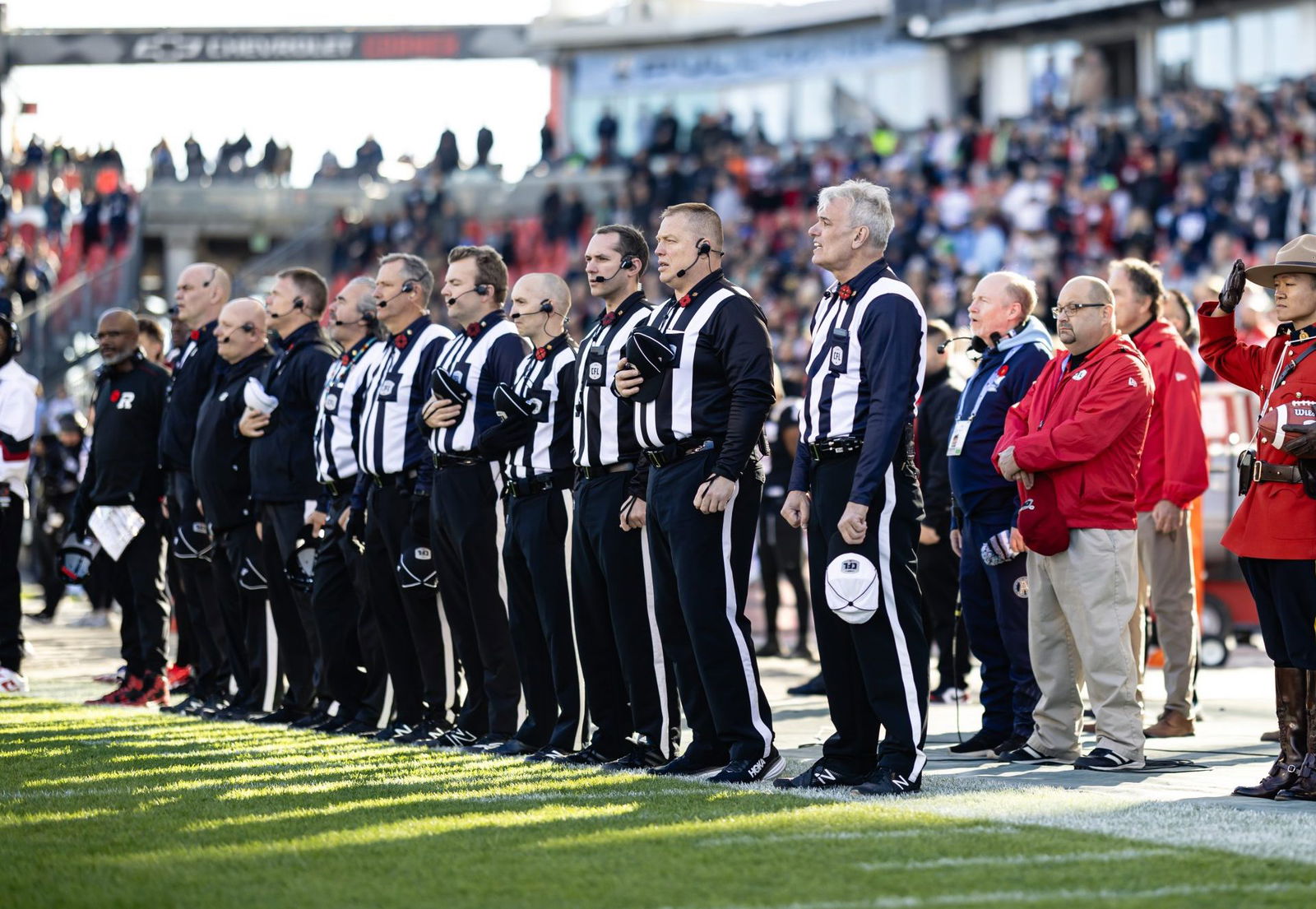
The CFL’s replay centre isn’t going anywhere, but commissioner Stewart Johnston wants it to take a less prominent role going forward.
Speaking from the CFL’s Winter Meetings in Calgary, Johnston indicated that a review of the replay centre’s mandate remains ongoing, but that he believes its importance will be reduced in light of recent structural rule changes.
“It’s an important piece for game flow, something we talk about every single year. We know there will be fewer stoppages with the automatic 35-second clock, and we need the on-field officials relying less on the replay centre,” he said.
“We are trying to balance, of course, getting the call right with game flow and making sure the game is moving at pace. The expression we use is ‘clear and obvious.’ If there’s an egregious error that’s clear and obvious, let’s have the replay centre step in. But otherwise, it’s the job of the officials on the field to run the game. We’re going to do more research on how we can implement those objectives, and there are future rules committee meetings coming up in the next couple of months where we will discuss again.”
The league’s replay centre, formerly known as the command centre, underwent a change in mandate in 2024 to focus on that “clear and obvious principle.” The alteration was made amid considerable fan blowback, and limited replay officials to overturning plays only when provided with an unobstructed view of the action and unmistakable evidence of an error.
However, calls made — or not made — by the replay centre continue to be a hot-button issue with fans. The league has faced persistent complaints about the consistency of calls made by the video officials, as well as confusion as to when they will or won’t halt play to conduct a review. Even head referee Andre Proulx has expressed dissatisfaction with the review process, believing some prominent calls to be incorrect.
When the replay centre does chime in, it can be disruptive to the pace of the game, something that the CFL is looking to improve with its new running play clock next season. Johnston was unable to provide an average duration for review and said he was unaware of any proposal to cap the time spent on any replay decision, but indicated that the league has to walk a fine line between accuracy and expediency.
“Number one, we want the officials on the field driving game flow. Make the call, and then the replay centre is used to correct clear and obvious errors or mistakes,” he said. “You’re going to see us focused on time, but we don’t want to focus so much on time that we do miss a clear and obvious play.”
Critics of the replay centre would argue that those mistakes are already happening, but with an added drag on game flow built in. While the CFL is taking steps to increase urgency and quicken the pace of play, the commissioner noted that they are already well-positioned in that area.
“I’m very proud of our group, our entire league, and everyone involved in putting on game day presentation, in that if you compare the CFL to the NFL or NCAA football, we run significantly faster games. We are in the two-hour-50 mark, low 50s, and if you go all the way to the NCAA, it’s well past three hours,” Johnston said. “The key threshold is keeping it under three, and that’s full start to finish from a broadcast perspective, let alone game time. We don’t have a specific number. We just want to continue to be as efficient as possible in providing the most entertaining product that we can on the field. And to be entertaining, you’ve got to manage downtime.”
Right now, the replay centre provides too much of that, and the league will continue to look for ways to adjust its mandate to get the best possible results.